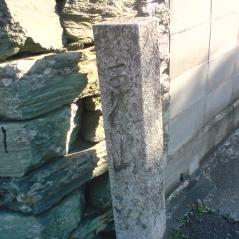
The inner moat and stone walls. Tokushima Castle's walls are built of local bluish-green schist, known as aoishi. October 2007.
663highlandCC BY 2.5Wikimedia Commons

Tokushima · Tokushima

Tokushima Castle

徳島城

Tokushima, Tokushima

CastleHilltop castle (hirayamajiro)Japan's 100 Fine Castles No. 78

What makes this castle distinctive

Not a single original building survives, but walls of local blue-green stone, aoishi, still show the shape of the castle.

Why?

Tokushima Castle's walls are built of crystalline schist quarried locally, known as aoishi or blue stone. The city's castle museum describes it as a castle with no buildings but superb stone walls and a garden. You can compare walls from different periods, from the rough stacking of the 1580s to later Edo-period work.[2][6]

Three things not to miss

01
A corner of the stone wall facing the moat, built from flat slabs of schist. October 2007.663highlandCC BY 2.5Wikimedia Commons

Blue-stone walls and the oldest stacking east of the main enclosure

Where
Shiroyama hill (east side of the main enclosure) and the walls along the moat
What to look at
The flat, bluish slabs and how they are stacked; and east of the main enclosure, rough walls of unworked stone (nozura-zumi)
Why it's interesting
The rough nozura-zumi walls date from the castle's construction around 1586, and the museum recommends them as a highlight. Because local stone was used, the walls look different in color and shape from the pale granite walls of many other castles.[2]
Can you see it?
Visible from outsideInside Tokushima Central Park and free to view. Steps lead up Shiroyama.
02
The pond area of the Former Tokushima Castle Omote-goten Garden, a National Place of Scenic Beauty, set with large blue-green stones. October 2007.663highlandCC BY 2.5Wikimedia Commons

Former Tokushima Castle Omote-goten Garden

Where
Next to the Tokushima Castle Museum
What to look at
Two gardens, one a dry landscape garden and one with a pond; large blue stones; and a blue-stone bridge in the dry garden that is split in the middle
Why it's interesting
This was the garden of the lord's living quarters and formal hall, and the city attributes it to Ueda Soko, a warlord and tea master. It became a National Place of Scenic Beauty in 1941. A story says the first lord split the stone bridge by stamping in anger, but the museum says it is not historical fact.[4][2]
Can you see it?
Visible from outsideAdmission 50 yen for adults; free with a museum ticket.
03
Washi-no-Mon, the castle's main gate. It burned in the 1945 air raid and was rebuilt in 1989. July 2019.TōjichiCC BY-SA 4.0Wikimedia Commons

Washi-no-Mon, the rebuilt main gate

Where
The southeast of the park, by Washi-no-Mon Square
What to look at
A gate in the yakuimon style
Why it's interesting
This was the castle's main gate. It survived the Meiji-era demolitions but burned in the 1945 Tokushima air raid, and was rebuilt in 1989 for the city's 100th anniversary. Tradition says it got its name because the site was registered as an eagle-keeping facility to make permission from the shogunate easier.[4]
Can you see it?
Visible from outsideFree to view from outside.

At a glance for visitors

Nearest station
10 min walk from JR Tokushima Station
Climb
Some climbing
Time neededEditors' estimate
About 1 hour for the walls and garden; about 2 hours with the museum.
Admission
Regular exhibits: adults 300 yen, high school and university students 200 yen, free for junior high and younger (groups of 20+: 240 / 160 yen). Special exhibitions: adults 500 yen.
Hours
9:30–17:00 (last entry 16:30)
Access
Open to visitors

Tokushima Central Park is free to enter. The museum and the Omote-goten garden charge admission (the garden is free with a museum ticket).

Checked:

The story of this castle

01
Historical record

A small hill between rivers

In 1585, after Toyotomi Hideyoshi's campaign in Shikoku, Hachisuka Iemasa became lord of Awa and immediately began building a castle on Iyama, today's Shiroyama. The site was chosen by Hideyoshi himself; a letter from him says Iyama would be a good place for Iemasa's castle. The castle used the Sukenito and Terashima rivers as moats.[2]

02
Historical record

Built by Hachisuka Iemasa

On Hideyoshi's orders the castle was built with help from Kobayakawa Takakage, Chosokabe Motochika and monks from Mt. Hiei, and it is said to have been finished in 1586. Iemasa also renamed the area, then called Inotsu, as Tokushima, and gathered merchants to build a castle town at the same time.[2][3]

03
Historical record

Seat of a 257,000-koku domain

In the Edo period Tokushima Castle was the home and government seat of the Hachisuka family, who ruled the two provinces of Awa and Awaji, worth 257,000 koku. Enclosures (kuruwa) such as the main enclosure sat on top of Shiroyama, and at its foot stood the Omote-goten, the lord's residence and offices.[2][6]

04
Historical record

Buildings gone, walls and garden remain

In the early Meiji era the keep and other buildings were torn down, and almost nothing remains. A photograph taken around 1872 is the only known photo of the castle before demolition. Washi-no-Mon, which had survived, burned in the 1945 air raid. Parts of the stone walls and moats, and the Omote-goten garden, survive.[2][3][4]

05
Historical record

Tokushima Central Park and national designation

The castle site became a park in 1906 and is now Tokushima Central Park. Washi-no-Mon was rebuilt in 1989, and with the opening of the Tokushima Castle Museum the grounds were developed as a castle park. On January 26, 2006, the castle ruins were designated a National Historic Site.[4][2]

People of this castle

Timeline

  1. Hachisuka Iemasa becomes lord of Awa and begins building on Iyama[2]

  2. The castle is said to be completed[2]

  3. around

    The only known photo of the castle before demolition is taken[3]

  4. The site becomes a park (today's Tokushima Central Park)[4]

  5. Washi-no-Mon burns in the Tokushima air raid[4]

  6. Washi-no-Mon is rebuilt[4]

  7. Tokushima Castle ruins designated a National Historic Site[4][2]

Buildings and remains

The keep today

Keep lost

The keep and other buildings were torn down in the early Meiji era and have not been rebuilt.

The site today

The site is Tokushima Central Park (free), with stone walls on Shiroyama, part of the moats, the Omote-goten garden and the Tokushima Castle Museum. It lies just northeast of JR Tokushima Station.

Main buildings

Modern reconstruction

Washi-no-Mon (main gate)

The main gate (yakuimon style). Burned in 1945, rebuilt in 1989.[4]

Lost

Keep (tenshu)

Torn down in the early Meiji era. A photo from around 1872 shows its roof on the hilltop.[3]

Key facts

Type
Castle
Setting
Hilltop castle (hirayamajiro)built on a low hill rising from the plainEditorial article
Period
Early modern (1570s–1871)Editorial article
Keep (tenshu)
Keep lostthe castle had a keep, but it no longer stands (its stone base may remain)Editorial article
Built by
Hachisuka IemasaJapan Castle Foundation
Built
1586Japan Castle Foundation
Main lords
Hachisuka clanJapan Castle Foundation
Abandoned
1869Wikipedia (ja)
Remains to see
Stone walls, Moats, Gates, Baileys / enclosures (kuruwa), Fortified gateways (koguchi)Editorial article
Designation
National Historic Site (Tokushima Castle ruins) (2006); Place of Scenic Beauty (Former Tokushima Castle Omote-goten Garden) (1941)Editorial article
Selection
Japan's 100 Fine Castles No. 78Japan Castle Foundation

Visiting

Access

Open to visitors

Tokushima Central Park is free to enter. The museum and the Omote-goten garden charge admission (the garden is free with a museum ticket).

Address

1-8 Jonai, Tokushima-cho, Tokushima 770-0851 (Tokushima Castle Museum)[1]

Checked: 2026-10-03

Nearest stations and how to get there

JR Tokushima StationJR Kotoku, Tokushima and Mugi lines

about 10 min walk · Some climbing

About 10 minutes' walk from the station to the museum and park, or 5 minutes from the city bus stop "Tokushima Koen Washinomon-mae". Steps lead up Shiroyama.[1][4]

Checked: 2026-10-03

Hours and admission

Tokushima Castle Museum
Hours
9:30–17:00 (last entry 16:30)
Closed
Mondays (open on holidays), the day after a holiday (open if that is a weekend or holiday), December 28–January 2, and days for fumigation or exhibition preparation
Admission
Regular exhibits: adults 300 yen, high school and university students 200 yen, free for junior high and younger (groups of 20+: 240 / 160 yen). Special exhibitions: adults 500 yen.[1]
Checked: 2026-10-03
Former Tokushima Castle Omote-goten Garden
Hours
9:00–17:00 (last entry 16:30)
Closed
Mondays (open on holidays), the day after a holiday (open if Sunday or a holiday), December 28–January 4
Admission
Adults 50 yen, children 30 yen; free for museum visitors[4][1]
Checked: 2026-10-03

By car / parking

East lot (89 cars) and west/south lot (116 cars) at Tokushima Central Park; 310 yen per car per visit. About 10 minutes from Tokushima IC.[4]

Checked: 2026-10-03
Grounds opening hours
Not confirmed (no park hours listed officially)Checked: 2026-10-03
Time neededEditors' estimate
About 1 hour for the walls and garden; about 2 hours with the museum.
Steps, slopes and footing
The park at the foot is flat; steps lead up to the main enclosure on Shiroyama.[2]
Wheelchairs and strollers
Park lots have wheelchair-accessible spaces, and parking is free for cars used by holders of disability certificates. Museum entry is free for certificate holders and one caregiver.[4][1]Checked: 2026-10-03
Toilets and rest
Five toilets in the park, including multipurpose toilets.[4]
English signs / audio guide
Not confirmed. Volunteer guides are available in the museum (languages not confirmed).[1]
Seasons
The rose garden on the east side of the park is best from mid-May to early June and in October.[4]
Photography
The museum has rules for cosplay photography; other rules are not confirmed.[1]
Works, closures and restrictions
The museum is closed October 8–9 and November 25, 2026, to prepare exhibitions. The autumn special exhibition runs October 10–November 23, when adult admission is 500 yen.[1]Checked: 2026-10-03

Editors' guide

An editorial guide based on sources and confirmed information — not a first-hand visit report.

Who will enjoy it

Good for fans of stone walls and gardens, and for anyone looking for a castle within walking distance of the station.

What makes it interesting

With no buildings left, focus on the color and stacking of the walls. Compare the rough walls east of the main enclosure with the big blue stones in the Omote-goten garden to see how local stone was used.

Before you go

No keep or turrets survive, and Washi-no-Mon is a 1989 reconstruction. The museum closes on Mondays and on exhibition-preparation days such as October 8–9.

Ways to enjoy it

A museum ticket also covers the Omote-goten garden, so start in the museum to learn what the castle looked like, then walk the garden and walls. The walls are said to look bluer on rainy days. On weekends and holidays, volunteers serve tea to museum visitors (small fee).

Visitor reviews

Be the first to review

Have you visited this castle? We'd love to hear from you.

Write a review
Rating

We do not publish reviews that are not based on a visit, advertising, or posts containing personal information.

Open questions

Sources

  1. 1
    ご利用案内徳島市立徳島城博物館officialChecked:
  2. 2
    とくしまヒストリー第2回 城下町誕生秘話 ―徳島築城―徳島市立徳島城博物館officialChecked:
  3. 3
    とくしまヒストリー第1回 城下町徳島の誕生徳島市立徳島城博物館officialChecked:
  4. 4
    徳島中央公園徳島市municipalChecked:
  5. 5
    日本100名城 一覧公益財団法人日本城郭協会jokakuChecked:
  6. 6
    徳島城(補助資料)Wikipedia日本語版otherChecked:
  7. 7
    List of Japan's 100 Fine Castles and the Next 100公益財団法人日本城郭協会jokakuChecked:
  8. 8
    Wikipedia「徳島城」Wikipedia日本語版wikipediaChecked:
  9. 9
    Wikidata Q8011246WikidatawikidataChecked:
  10. 10
    OpenStreetMap node/12285186670© OpenStreetMap contributors (ODbL)osmChecked:

Listing status

  1. Candidate foundChecked
  2. Confirmed as a castle siteChecked
  3. Basic informationChecked
  4. In-depth articleChecked
  5. Photo rights checkedChecked
  6. Visit info checkedChecked

Castles nearby

Tell us if something has changed, looks wrong, or if you know of a photo we may use.

Suggest a correction or a photo