GusukuMountain castle (yamajiro)Japan's 100 Fine Castles No. 99
What makes this castle distinctive
Stone walls that amazed Commodore Perry's expedition, and the one gusuku where you can compare all three Ryukyuan styles of stonework side by side.
Why?
Nakagusuku was built over several generations from the late 14th century by the lords (aji) of Saki-Nakagusuku and enlarged in the 15th century by Gosamaru. Its older enclosures use rough natural stone (nozura-zumi) or squared blocks laid in courses (nuno-zumi), while the newer ones use stones cut into interlocking polygons (aikata-zumi), so you can watch building skills develop as you walk. Members of Commodore Perry's 1853 expedition praised how the stones fit together without any mortar.[1][2][3][15]
The interlocking stonework of the third and north enclosures
Where
The third and north enclosures on the castle's northeast side.
What to look at
Stones cut into polygons that lock together without gaps, and walls that curve up at the corners.
Why it's interesting
Aikata-zumi, also called "tortoise-shell" stonework, cuts stones into polygons that interlock, making very strong and durable walls. It appears in the third and north enclosures built in Gosamaru's time; the third enclosure, a later addition, is even nicknamed Mi-gusuku, the "new castle." Compare it with the rough stonework of the south enclosure and the coursed blocks of the first and second enclosures to see the difference.[3][6][7]
Can you see it?
Visible from outsideAdmission required. Visible up close from the visitor route.
The rear gate on the northeast side of the north enclosure.
What to look at
The stone arch and the thickness of the wall it passes through.
Why it's interesting
In 1853, on its way to Japan, Commodore Perry's squadron stopped in Ryukyu and sent an exploring party to survey Nakagusuku, leaving drawings and measured plans. According to the official site, the party described this arched rear gate as Egyptian in style. Few castles can point to American naval officers recording their surprise at local stonemasonry.[1][8][15]
Can you see it?
Visible from outsideVisible from the visitor route.
Stone places of worship such as the Shuri Worship Place, facing the king in Shuri, and the Kudaka Worship Place, facing the sacred island of Kudaka.
Why it's interesting
The official site says there are eight places of worship inside the castle and that people still come to pray at them. A gusuku was a lord's residence and stronghold, but also a sacred place. The World Heritage listing puts weight on exactly this: a distinctive Ryukyuan faith that is still alive today.[4][17]
Can you see it?
Visible from outsideOpen to view. They are still in use, so do not touch them or move any offerings.
At a glance for visitors
Time neededEditors' estimate
Allow about an hour to walk through all six enclosures.
Admission
Adults 500 yen, junior and senior high school students 300 yen, elementary school children 200 yen. Groups of 20+: 400 / 200 / 100 yen. Free for preschoolers accompanied by a guardian.
Hours
Entry 8:30–17:00 (until 18:00 May–September); the gates close 30 minutes after entry ends.
Access
Open to visitors
Admission required. A free electric cart runs from the ticket office to the area near the main gate at the far end of the site, so you can follow the route from the main gate. Pets are allowed if carried or in a cage. Keep out of restricted areas.
Nakagusuku sits on a limestone ridge 150–170 m high that straddles the villages of Nakagusuku and Kitanakagusuku. On the southeast is a sheer cliff more than 15 m high, and on the northwest a steep slope, so the only approaches are along the ridge from the northeast and southwest: easy to defend, hard to attack. It is also famous for its views, east over Nakagusuku Bay to the Pacific and west to the East China Sea.[1]
02
Historical record
The Saki-Nakagusuku lords and Gosamaru
No one knows exactly when building began, but the Saki-Nakagusuku lords are said to have built the south, west, first and second enclosures over several generations in the late 14th century. Around 1440, Gosamaru, lord of Zakimi Castle, moved here on royal orders and added the third and north enclosures using the best techniques of his day. Aji were the regional lords who ruled Okinawa's districts.[1][2]
03
Tradition
1458: the Gosamaru–Amawari incident
Gosamaru was posted to Nakagusuku to keep watch on Amawari, the increasingly powerful lord of Katsuren Castle. In 1458 Amawari attacked Nakagusuku as commander of the royal army, and Gosamaru took his own life. Tradition says Amawari falsely told the king that Gosamaru was plotting rebellion, and that Gosamaru, loyal to the king, chose death rather than fight the royal banner; the story became a favorite subject of kumi-odori, Okinawa's classical music drama. But this is the royal court's version, and some see Amawari as the real hero.[1][2]
04
Historical record
District office, village hall, and war
After Gosamaru's death, Nakagusuku came under direct royal control and later became the estate of the crown prince, known as the Nakagusuku Prince. In 1729 the district office (bansho) was set up in the first enclosure, and from the Meiji era onward it housed the village office. The office buildings burned in the Battle of Okinawa in 1945, but the walls were little damaged, and the official site says Nakagusuku keeps its original form better than any other gusuku in Okinawa.[1][2][5]
05
Historical record
From amusement park to World Heritage
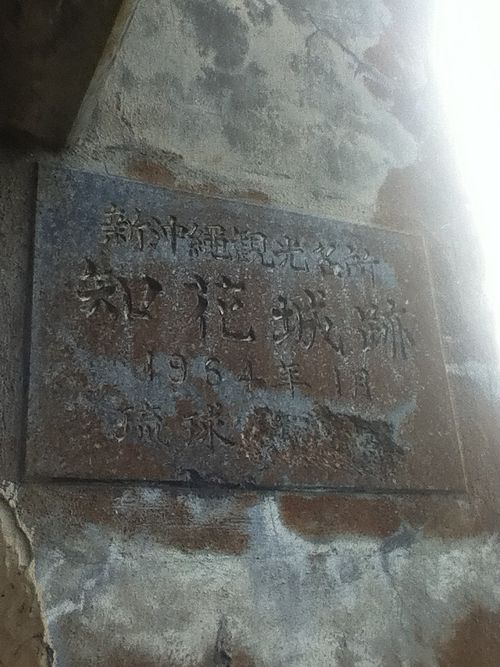
After the war, the site became Okinawa's first public park, opening in 1950 with a zoo and amusement rides. The Ryukyu government designated it a cultural property in 1955, and its walls were repaired from 1961 to 1968. It became a National Historic Site when Okinawa returned to Japan in 1972, was inscribed in 2000 as part of the World Heritage "Gusuku Sites and Related Properties of the Kingdom of Ryukyu," and was named one of Japan's 100 Fine Castles in 2006. Today the villages of Nakagusuku and Kitanakagusuku manage it jointly.[1][2]
Perry's exploring party surveys the castle and leaves drawings and plans[1][2]
The village hall inside the castle burns in the Battle of Okinawa[2]
Designated a National Historic Site on Okinawa's return to Japan[1][2]
Inscribed as part of the World Heritage "Gusuku Sites" property[1][16]
Buildings and remains
The keep today
No keep was built
Gusuku had no keep (tenshu). The main hall stood in the first enclosure.
The site today
The whole site is open as a paid historic site, run jointly by the villages of Nakagusuku and Kitanakagusuku. The walls and gates of its six enclosures, wells and places of worship survive; there are no wooden buildings.
Main buildings
Original
Walls of the six enclosures
Walls of Ryukyu limestone, little damaged in the war and repaired from 1961 to 1968.[1][2]
Original
Main gate
Faces southwest, flanked by projecting walls. A nearby gap in the wall is said to be where the Japanese army started digging an air-raid shelter during the war and gave up because the stonework was too solid.[9]
The main hall stood here; later the district office and village hall, which burned in 1945.[5][2]
Key facts
Type
Gusukustone-walled strongholds of the Ryukyu Islands, often also sacred places
Setting
Mountain castle (yamajiro)built on a mountain; expect a climbEditorial article
Period
Medieval (c.1185–1570s)Editorial article
Keep (tenshu)
No keep was builtthe castle never had a keepEditorial article
Built by
GosamaruJapan Castle Foundation
Main lords
GosamaruJapan Castle Foundation
Abandoned
1458Wikipedia (ja)
Remains to see
Gates, Stone walls, Baileys / enclosures (kuruwa)Editorial article
Designation
National Historic Site (Nakagusuku Castle Site) (1972); Component of the World Heritage property "Gusuku Sites and Related Properties of the Kingdom of Ryukyu" (2000)Editorial article
Selection
Japan's 100 Fine Castles No. 99Japan Castle Foundation
Visiting
Access
Open to visitors
Admission required. A free electric cart runs from the ticket office to the area near the main gate at the far end of the site, so you can follow the route from the main gate. Pets are allowed if carried or in a cage. Keep out of restricted areas.
Entry 8:30–17:00 (until 18:00 May–September); the gates close 30 minutes after entry ends.
Closed
Open every day (viewing may be restricted without notice for weather, maintenance or events)
Admission
Adults 500 yen, junior and senior high school students 300 yen, elementary school children 200 yen. Groups of 20+: 400 / 200 / 100 yen. Free for preschoolers accompanied by a guardian.[11][10]
Checked: 2026-10-03
By car / parking
From Kitanakagusuku IC on the Okinawa Expressway, go via the Daiichi-Ajiya and Ajiya intersections and follow the road to the parking lot. Parking is free (about 50 cars and 7 buses; the bus lot is separate). By public transport, the official site suggests an expressway bus to Kishaba or a local bus to AEON Mall Okinawa Rycom, then the on-demand shuttle service mobi.[12]
Checked: 2026-10-03
Grounds opening hours
Same as the site's opening hours above[11]Checked: 2026-10-03
Time neededEditors' estimate
Allow about an hour to walk through all six enclosures.
The site cannot be toured by wheelchair or stroller, and none are lent out. There is an accessible toilet. Guide, hearing and service dogs are welcome. Visitors with a disability certificate, plus one helper, are admitted free.[10]Checked: 2026-10-03
Toilets and rest
An accessible toilet is available (exact location not stated officially).[10]
English signs / audio guide
There is an English version of the official website. Points of interest have signs that let you read explanations on a smartphone (languages not confirmed).[19][20]
Seasons
No seasonal highlights are listed officially; events such as guided night walks are held.[11]
Photography
Commercial or fee-charging photography and filming need prior permission from the joint management council. Bringing in or flying drones and radio-controlled aircraft is prohibited.[14]
Works, closures and restrictions
The site closes temporarily when typhoons approach. A World Heritage Night Walk (30 people, booking required, fee charged) is scheduled for Saturday, October 10, 2026, 19:30–21:00.[11][21]Checked: 2026-10-03
Editors' guide
An editorial guide based on sources and confirmed information — not a first-hand visit report.
Who will enjoy it
For anyone who wants to compare stonework styles with their own eyes, to walk the stage of one of Ryukyu's most famous dramas, the Gosamaru–Amawari incident, or simply to enjoy views over sea and hills. Easy to reach by car from Naha.
What makes it interesting
Watch the stonework change from enclosure to enclosure: rough stone in the south enclosure, coursed blocks in the first and second, interlocking polygons in the third and north. Add the arched rear gate, the great well in the north enclosure and the places of worship in the south enclosure, and you see both the castle's history and its sacred side.
Before you go
The site has slopes and steps and cannot be visited by wheelchair or stroller. The main gate is at the far end from the entrance, so take the free electric cart there and follow the route back. A gusuku has no keep or turrets; the walls and enclosures are the attraction.
Ways to enjoy it
Use the smartphone spot guides as you walk to learn each enclosure's name and role. Guided tours by the local volunteer group Gusuku-no-Kai are available by reservation, at least seven days ahead. The site looks east over Nakagusuku Bay to the Pacific and west toward the East China Sea, so enjoy the changing views as you move between enclosures.
Photos
Visitor reviews
Be the first to review
Have you visited this castle? We'd love to hear from you.
Write a review
Open questions
When the castle was first built and by whom is uncertain; that the Saki-Nakagusuku lords built it is a tradition.
Gosamaru's move to Nakagusuku is dated 1440 in the official chronology and "around 1440" in the World Heritage description.
The story of the Gosamaru–Amawari incident (false accusation, loyal suicide) reflects the royal court's point of view; other interpretations treat Amawari as a hero.
The claim that Nakagusuku keeps its original form better than any other gusuku in Okinawa comes from the official site.
Walking time from the nearest bus stop, toilet locations and seasonal highlights could not be confirmed.
 663highlandCC BY 2.5Wikimedia Commons