Learn読む
How tuna is gradedまぐろの等級
There is no public star system. There are cuts, species, and a wholesaler's eye.公開された星の制度はない。あるのは部位と種類と、仲卸の目。
Species you will see
Hon-maguro (Pacific bluefin) is the most prized. Minami-maguro (southern bluefin) is close behind. Mebachi (bigeye) and kihada (yellowfin) are lighter, cheaper, and very common in bowls.
Cuts
Akami is the lean red meat from the back. Chutoro is medium-fatty, from the belly edges. Otoro is the fattiest belly cut. Price rises in that order.
How professionals judge
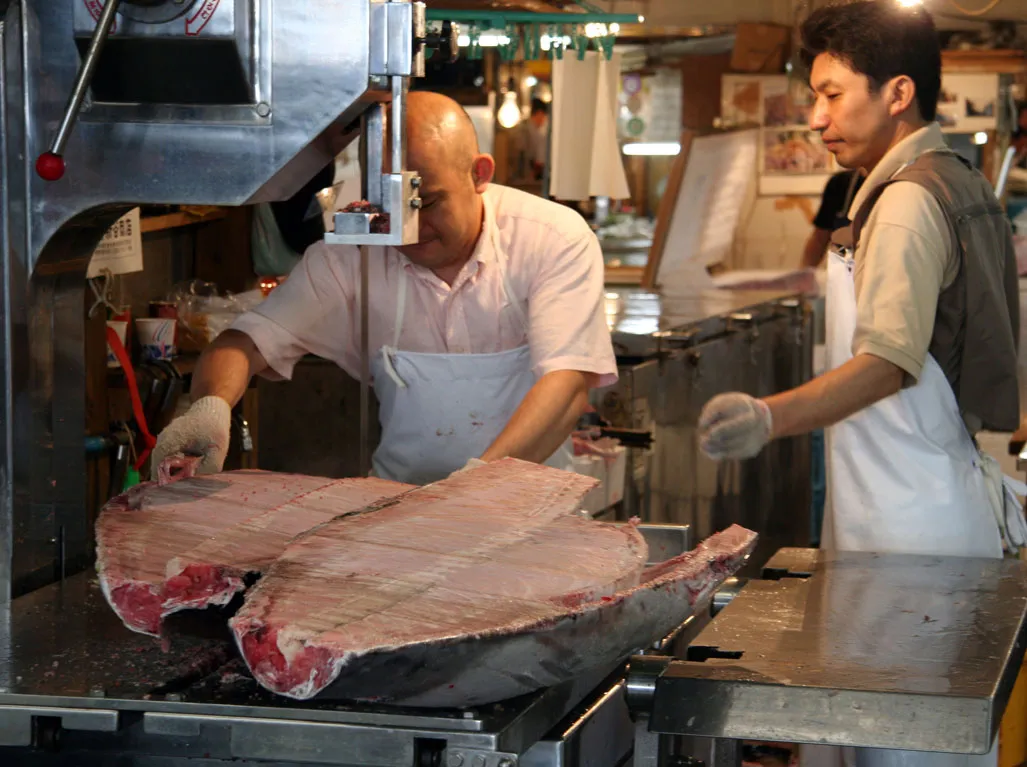
Buyers look at colour, fat distribution, firmness, and how the flesh looks in a cut sample. Freshness and how the fish was handled after catch matter as much as species. None of this is printed on a menu.
What to do with this
When a shop lists a species and a cut, you can compare. When a sign just says 'tuna', ask which. Tsukiji has 17 shops in the official directory whose main category is tuna.
見かける種類
本まぐろ(太平洋クロマグロ)がいちばん珍重されます。ミナミマグロがそれに続きます。メバチとキハダは淡白で安く、丼によく使われます。
部位
赤身は背側の脂の少ない身。中トロは腹の縁の中脂。大トロは腹のいちばん脂の多い部位。値段はこの順に上がります。
プロの見方
買い手は色、脂の入り方、締まり、切った断面の見え方を見ます。鮮度と、獲れてからの扱いは種類と同じくらい大事です。どれもメニューには書いてありません。
どう使うか
店が種類と部位を書いていれば比べられます。「まぐろ」としか書いていなければ、どれか聞いてください。公式一覧で主な取扱がまぐろの店は 17 店あります。