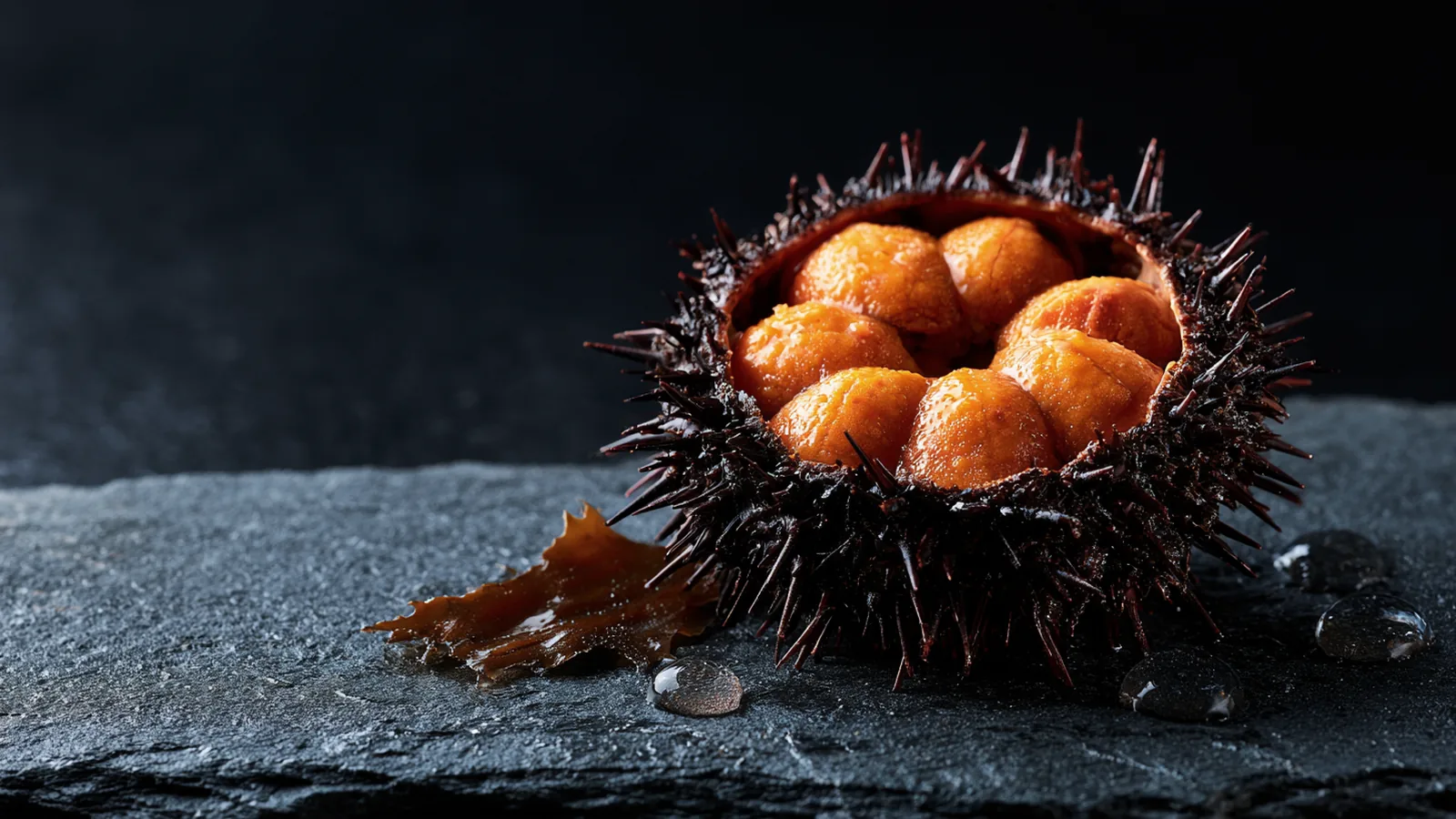
Why Japanese uni
なぜ日本のうにはWhy Japanese uniここまでおいしいのか。tastes the way it does
先に結論を書きます。日本のウニが世界一おいしい、という言い方はしません。チリにもカリフォルニアにも地中海にも、素晴らしいウニがあります。日本で特別なのは、味そのものより「味を見分ける細かさ」です。赤か白か、どの島か、何を食べたか、何日目か。そこまで分けて値段が変わる市場が、日本にはあります。同じ細かさの取引を、この調査の範囲では他の国で確認できませんでした(無いと言い切れるほど世界中を調べたわけではありません)。分ける目が細かいから、分けるに値する品質が育ちました。The conclusion first: we are not going to say Japanese uni is the best in the world. Chile, California and the Mediterranean all produce superb sea urchin. What is unusual about Japan is not the flavour itself but the resolution at which flavour is read. Red or white, which island, what it grazed, how many days ago — Japan has a market that prices all of those separately. Within the scope of this survey we did not find trading at the same resolution elsewhere, though we cannot claim to have searched the whole world. Because the distinctions are made, quality worth distinguishing has been built.
- 種が多いThe country has many species北のキタムラサキウニとエゾバフンウニ、南のバフンウニ・ムラサキウニ・アカウニ・シラヒゲウニ。商業的に獲れる種が6つあると米国NOAAの報告書は記しています。1つの国の中で、これだけ味の違うウニが同時に流通している例は多くありません。Two species in the north — Mesocentrotus nudus and Strongylocentrotus intermedius — and four in the south. A NOAA report counts six commercially harvested species in Japan. Few countries have several genuinely different-tasting urchins in circulation at the same time.
- 海が細かく分かれているThe seas are divided finely同じ北海道でも、日本海側と太平洋側とオホーツク側では水温も昆布も違います。統計にもそれが出ていて、宗谷は1,000トンを超え、十勝は「-(皆無)」です。「北海道産」という言い方は、実は何も言っていないに等しい。Even inside Hokkaido, the Japan Sea side, the Pacific side and the Okhotsk side differ in temperature and in kelp. The statistics show it: Sōya lands over a thousand tonnes while Tokachi is recorded as a dash — none at all. 'From Hokkaido' is, in practice, barely a statement at all.
- 餌が昆布であるThe feed is kombu利尻昆布、羅臼昆布、日高昆布。日本料理でだしを取るために使われる昆布が、そのままウニの餌になっています。羅臼のウニが「日本一ぜいたく」と呼ばれるのは、人間が高い金を払う昆布を、ウニが毎日食べているからです。Rishiri, Rausu and Hidaka kombu. The very kelp that Japanese cooking uses to make dashi is what the urchins eat. Rausu urchin is called the most extravagantly fed in Japan for a simple reason: it eats, daily, the kelp that people pay a great deal of money for.
- 餌が味に直結するFeed goes straight into flavourこれは感覚の話ではありません。キタムラサキウニに、グルタミン酸とアラニンを多く含む餌を与えると、生殖巣のアラニン(甘味に効くアミノ酸)が増えることが実験で示されています。何を食べさせるかは、味を設計することとほぼ同じ意味を持ちます。This is not a matter of impression. Feeding Mesocentrotus nudus a diet high in glutamic acid and alanine has been shown to raise the alanine content of its gonads — alanine being one of the amino acids that reads as sweetness. Choosing the feed is close to designing the flavour.
- 旬が生殖のサイクルで決まるThe season is set by the reproductive cycle食べているのは生殖巣です。だから産卵が近づくと味が変わります。バフンウニでは、成熟した卵巣に苦味成分プルケリミンがたまることが分かっています。「旬を外すと苦い」は言い伝えではなく、測定できる現象です。What you are eating is the gonad. So the flavour changes as spawning approaches. In Hemicentrotus pulcherrimus, a bitter compound called pulcherrimine accumulates in mature ovaries. 'Out of season it turns bitter' is not folklore; it is measurable.
- 獲る日を選ぶThe day of harvest is chosen多くの産地で漁期は数か月しかありません。積丹は6月から8月末、羅臼は1月中旬から6月末。一年中獲らないことが、結果として品質の下限を守っています。In most grounds the season is only a few months long — Shakotan from June to the end of August, Rausu from mid-January to the end of June. Not fishing all year is, in effect, what keeps the floor under quality.
- 獲り方が手作業であるThe harvest is done by hand箱メガネで海底をのぞき、タモで一つずつ取る。あるいは素潜りで拾う。網で底を引かないので、身が傷まず、獲る個体を選べます。手間がかかることが、そのまま選別になっています。A viewing box over the side, a long-handled net, one urchin at a time. Or a free-diver picking them up. Nothing is dragged along the bottom, so nothing is crushed, and the diver chooses which animal to take. The labour is itself the grading.
- むく人がいるSomeone opens them殻を割り、内臓を外し、生殖巣を5つ取り出して形を崩さずに並べる。これを一日中やる人が産地にいます。ウニの値段のうち、かなりの部分がこの工程です。Crack the shell, clear the viscera, lift out the five lobes of gonad and lay them down without breaking them. There are people in the producing towns who do this all day. A large share of what uni costs is this step.
- 形を保つ薬を使うかどうかで、味が変わるWhether you use alum changes the taste日本では長く、ミョウバンで身を締めて形を保ってきました。たんぱく質を縮める作用で崩れにくくなりますが、その風味が「ウニは苦い」と感じられる原因にもなります。近年は海水と同じ濃さの塩水に浸す「塩水うに」が広まりました。形は2日ほどしか保ちませんが、苦味や臭みが出ません。日持ちと味の、どちらを取るかという選択です。For a long time Japan has used alum — potassium aluminium sulphate — to firm the gonads so they hold their shape. It works by contracting the protein, and it is also the reason many people think uni is bitter. In recent years 'shiomizu-uni', packed in salt water at seawater strength, has spread instead. It holds its shape for only about two days, but it carries no bitterness or off-smell. The trade is shelf life against taste.
- 運ぶ速さがあるThe distance is short産地から東京の市場まで、一日で届きます。生のまま食べる前提が成り立つのは、国土が狭く、流通が速いからです。地中海のウニが現地でしか食べられていないのと、条件が逆です。From the landing site to the Tokyo market in a day. The assumption that it will be eaten raw holds because the country is small and the logistics are quick. It is the mirror image of the Mediterranean, where urchin is essentially eaten where it is caught.
- 評価する場所があるThere is a place where it is judged寿司屋と和食店が、毎日ウニを買って客に出し、良し悪しを言葉にします。産地・種類・処理の違いが値段に反映される市場があるので、生産側が細かくやる意味が生まれます。評価の解像度が、品質の解像度を作りました。Sushi counters and Japanese restaurants buy uni every day, serve it, and put words to what is good and what is not. Because origin, species and handling all show up in the price, it is worth a producer's while to work at that level of detail. The resolution of the judging created the resolution of the product.
- それでも量は減っているAnd still the volume is falling日本の漁獲量は1969年の27,528トンが最大で、2024年は6,262トンです。品質の話と資源の話は別で、後者は良くありません。この地図が磯焼けや藻場再生のページを持っているのは、そのためです。Japan's landings peaked at 27,528 t in 1969. In 2024 they were 6,262 t. Quality and stock are two different conversations, and the second one is not going well. That is why this atlas has a page about barrens and kelp restoration.
だから、この地図は日本だけを大きく描いていません。世界の産地を同じ形式で並べたうえで、日本の欄だけが漁場・島・港・溝の作りまで埋まっている。その差が、そのまま答えです。This is why the atlas does not simply draw Japan larger than everyone else. Every producing region is laid out in the same format — and only the Japanese entries fill in down to the ground, the island, the port and the shape of a groove cut in the rock. That difference is the answer.
出典:Sources: Sea Urchin Supply, Demand, and Market of Japan(Sunee C. Sonu・2017年12月)Sea Urchin Supply, Demand, and Market of Japan (Sunee C. Sonu, Dec 2017)、令和5年 漁業・養殖業生産統計 海面漁業の部 2-(2) 大海区都道府県振興局別 魚種別漁獲量Statistics on Fishery and Aquaculture Production 2023 — marine capture, catch by species and prefecture、海面漁業生産統計調査 海面漁業魚種別漁獲量累年統計(全国・1956〜2024年)MAFF long-term series — marine capture by species, national, 1956–2024、北海道ぎょれん「北海道産ウニの旬カレンダー&産地別の味わい」Hokkaido Gyoren — season calendar and regional character of Hokkaido sea urchin、飼料中のグルタミン酸とアラニンがキタムラサキウニ生殖巣のアラニン含量を高めるThe Amino Acids Glutamic Acid and Alanine in Feed Increase the Alanine Content in Gonads of the Sea Urchin Mesocentrotus nudus、ウニ卵巣における苦味アミノ酸プルケリミンの蓄積と年周生殖サイクルとの関係Accumulation of a bitter amino acid, pulcherrimine, in sea urchin ovaries and its relevance to the annual reproductive cycle、魚食普及推進センター「ウニの種類や違い」Japan Fisheries Association, Fish Food Promotion Centre — kinds of sea urchin