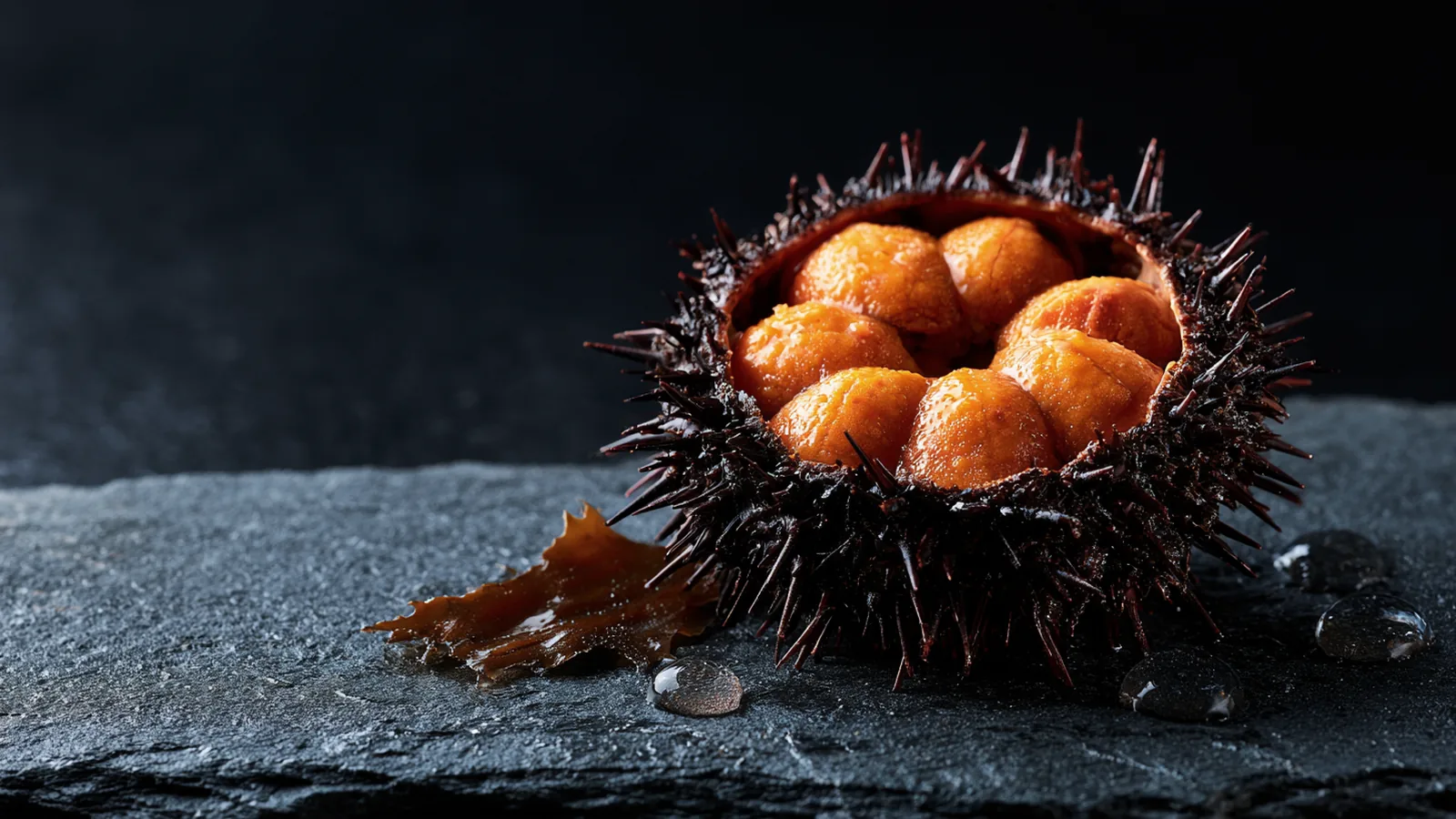
The Global Sea Urchin Atlas
世界うにアトラスUNI ATLAS世界の海から、最高のうにを。Discover the world's finest sea urchin.
SPECIES · ORIGIN · SEASON · KELP · CULTURE
ウニは、寿司の上に乗っている黄色いもの、ではありません。どの海の、どの種が、どの海藻を食べて、いつ獲られ、どう扱われたか。その全部が味になって出てきます。ワインに産地と品種と造り手があるように、ウニにもあります。この地図は、それを世界ぶんまとめて見られるようにしたものです。Sea urchin is not simply the yellow thing on top of the sushi. Which sea, which species, which seaweed it grazed, when it was taken and how it was handled — all of that arrives as flavour. Wine has origin, variety and grower. So does uni. This atlas is an attempt to put the whole of it, worldwide, on one map.
世界の海と、うにの居場所Where in the world sea urchin comes from
点の大きさは、公表されている漁獲量(日本の産地のみ・殻付き重量)に対応します。統計の単位が国ごとに違うため、日本以外の点は大きさを揃えてあります。Dot size follows published landings, and only for the Japanese grounds, where a single consistent statistic exists. Because the units differ from country to country, the rest are drawn at a uniform size.
地図は産地の位置を示すための概略図です。境界線を主張するものではありません。陸地の形は Natural Earth(1:110m・パブリックドメイン)を使っています。The map is a schematic for showing where the grounds are; it makes no claim about boundaries. Coastlines are from Natural Earth 1:110m, public domain.
今食べるなら、このうにWhat is in season now
「いま、どこのウニが旬なのか」を月で引けるようにしました。ただし、月まで出典で確かめられた産地は限られています。確かめられていない産地を、それらしい月で埋めることはしていません。空いているのは、まだ調べていないからです。A calendar you can read by month: where is uni in season right now. Be warned that only some grounds have a season we could verify to the month. We have not filled the rest in with plausible-looking guesses. The gaps are gaps.
日本Japan
宗谷(利尻・礼文)Sōya — Rishiri and Rebun
北海道の振興局別で最も水揚げが多い海域。冷たく厳しい海流の中で育った上質な昆布を食べたウニは「身がぎゅっと締まり、雑味のないクリアで濃厚な甘み」と評される。The single largest landing area among Hokkaido's subprefectures. Fed on kelp grown in cold, hard currents, the urchin here is described as firm-fleshed, clean and concentrated in its sweetness.
北海道ぎょれんは礼文島・利尻島の旬を6月〜8月としている。Hokkaido Gyoren gives June to August as the season for Rebun and Rishiri.
日本Japan
渡島(函館・南茅部・松前)Oshima — Hakodate, Minamikayabe, Matsumae
一年のうち二度、旬が来る海。冬から春にかけて生のウニが手に入る数少ない産地で、日本の「うにの端境期」を埋めている。A sea with two seasons a year. One of the few Japanese grounds that supplies fresh uni through winter and spring, filling the gap in the national calendar.
北海道ぎょれんは函館の漁期を「6月〜8月、12月〜5月」とし、夏と冬から春の二度、旬を迎えると書いている。日本のウニ産地としては珍しく漁期が長い。Hokkaido Gyoren gives Hakodate two seasons — June to August, and December to May. An unusually long window for a Japanese uni ground.
日本Japan
留萌(天売・焼尻)Rumoi — Teuri and Yagishiri
日本海に浮かぶ天売・焼尻の二島を抱える海域。振興局別では宗谷・渡島に次ぐ水揚げがある。The waters around the twin Japan Sea islands of Teuri and Yagishiri. Third among Hokkaido's subprefectures by landings.
北海道ぎょれんは「日本海側で5月〜8月」としている。天売・焼尻を含む留萌はこの範囲。Hokkaido Gyoren gives May to August for the Japan Sea side, which covers Rumoi including Teuri and Yagishiri.
日本Japan
後志(積丹・小樽・岩内)Shiribeshi — Shakotan, Otaru, Iwanai
「積丹ブルー」と呼ばれる透明度の高い海。太陽の光をたっぷり浴びて育った昆布を食べるウニは、甘みが強く風味が豊かとされる。札幌から日帰りできる距離にあり、夏の解禁が観光の季節そのものになっている。The clear water known as Shakotan Blue. Urchin here feeds on kelp grown in strong sunlight and is described as sweet and full-flavoured. Close enough to Sapporo for a day trip, so the summer opening is itself the tourist season.
北海道ぎょれんは積丹半島の旬を6月〜8月としている。Hokkaido Gyoren gives June to August for the Shakotan Peninsula.
日本Japan
根室(羅臼)Nemuro — Rausu
最高級の羅臼昆布を食べて育つため「日本一ぜいたくなウニ」と呼ばれる。世界自然遺産・知床の海。冬に旬が来るという点でも日本のウニの常識から外れている。Fed on Rausu kombu, the most expensive kelp in Japan, this urchin is called the most extravagantly fed in the country. The sea of Shiretoko, a World Natural Heritage site — and a winter season, which breaks the usual Japanese rule.
北海道ぎょれんは羅臼の漁期を1月中旬から6月末まで、旬を2月〜5月としている。Hokkaido Gyoren gives the Rausu fishing season as mid-January to the end of June, with the peak from February to May.
日本Japan
檜山(奥尻)Hiyama — Okushiri
日本海に浮かぶ奥尻島を抱える海域。透明度の高い岩礁が続く。The waters around Okushiri Island in the Japan Sea, a long stretch of clear-water reef.
北海道ぎょれんは「日本海側で5月〜8月」としている。奥尻を含む檜山はこの範囲。Hokkaido Gyoren gives May to August for the Japan Sea side, which covers Hiyama including Okushiri.
日本Japan
オホーツク(雄武・枝幸・網走)Okhotsk — Oumu, Esashi, Abashiri
冬に流氷が接岸する海。流氷が運ぶ植物プランクトンが春の海を豊かにする。A sea that drift ice reaches in winter; the ice carries the plankton that enriches the spring water.
北海道ぎょれんは雄武・枝幸を4月〜6月としている。Hokkaido Gyoren gives April to June for Oumu and Esashi.
日本Japan
石狩Ishikari
札幌に最も近いウニの海。水揚げは小さい。The uni coast nearest Sapporo. Landings are small.
北海道ぎょれんは「日本海側で5月〜8月」としている。Hokkaido Gyoren gives May to August for the Japan Sea side.
日本Japan
日高Hidaka
日高昆布の産地。ウニの水揚げそのものは小さいが、餌になる昆布の質でよく名前が挙がる海。The home of Hidaka kombu. Urchin landings are small, but the coast is often named for the quality of the kelp that feeds them.
北海道ぎょれんは襟裳を1月〜3月としている。北海道の中でいちばん早く旬が来る海のひとつ。Hokkaido Gyoren gives January to March for Erimo — among the earliest seasons anywhere in Hokkaido.
日本Japan
岩手(洋野・久慈・宮古・大船渡)Iwate — Hirono, Kuji, Miyako, Ōfunato
都道府県別では北海道に次ぐ日本第2位の産地。洋野町では1976年ごろから岩盤に人工の溝を掘り、干潮でも海藻が枯れない場を作ってきた。ウニを「獲る」だけでなく「仕上げる」産地。Second only to Hokkaido among prefectures. At Hirono, artificial grooves have been cut into the bedrock since about 1976 so that seaweed survives even at low tide — a coast that does not merely catch urchin but finishes it.
北三陸ファクトリーは「洋野うに牧場の四年うに」の販売期を4月下旬ごろから8月中旬としている。県内の他の産地は漁協ごとに定めがあり、ここでは確認できた範囲だけを書いている。Kitasanriku Factory gives late April to mid-August for its Hirono four-year uni. Other grounds in the prefecture are set by individual co-operatives; only what we could verify is shown.
アメリカUnited States
アメリカ|メイン州United States — Maine
米国大西洋岸で唯一の商業ウニ漁。2015年の水揚げは805トン。日米の漁期がずれている(日本は春〜夏、米国は秋〜春)ことが、そのまま輸出の理由になっている。The only commercial urchin fishery on the U.S. Atlantic coast; 805 t in 2015. Japanese and American peak seasons are opposite — spring–summer against autumn–spring — which is precisely why the trade works.
メイン州海洋資源局が毎年ゾーン別に解禁日を定める。2025-2026年漁期は、ゾーン2の早期が10月から、ゾーン1が11月から、遅い枠が3月までで、日単位で開閉が決まっている。ゾーン1の漁業者は開いている日のうち15日、ゾーン2は40日のうち30日しか漁に出られない。The Maine Department of Marine Resources sets open days zone by zone each year. For 2025-26 the Zone 2 early season starts in October, Zone 1 opens in November and the late seasons run to March, with the calendar decided day by day. A Zone 1 harvester may fish 15 of the open days; a Zone 2 harvester 30 of 40.
フランスFrance
フランス|地中海岸(マルセイユ・カリー=ル=ルエ)France — Mediterranean coast (Marseille, Carry-le-Rouet)
ウニを食べるための祭りが、自治体の行事として続いている。カリー=ル=ルエでは1952年にカップ・ルセの入り江で最初の試食会が開かれ、1960年から市長が「ウニの日」を正式な行事にした。2026年は2月1日・8日・15日に予定され、8日が荒天で中止になったため22日が追加された。ウニが季節の公共行事になっている数少ない国のひとつ。Here a festival for eating sea urchin is a municipal event. At Carry-le-Rouet the first tasting was held in the calanque of Cap Rousset in 1952, and from 1960 the mayor made the day of the sea urchin official. In 2026 it was set for 1, 8 and 15 February, with 22 February added after bad weather cancelled the 8th. One of the few countries where sea urchin has become a seasonal public occasion.
カリー=ル=ルエ市の「ウルシナード」は毎年2月の日曜日に開かれる。身が入るのがこの時期だから2月に置かれている。漁期そのものは別に定めがある。The Oursinades at Carry-le-Rouet are held on Sundays in February — the month is chosen because that is when the urchins are full. The fishing season itself is set separately.
この月に旬と確認できた産地はまだありません。空欄を推測で埋めていないためです。No ground has a season verified for this month yet — because we do not fill blanks with guesses.
旬の月を出典で確認できたのは、掲載65産地のうち12産地です。Of the 65 grounds listed, 12 have a season we could verify to the month.
日本のうには、県では終わらないIn Japan, the prefecture is not the unit
北海道は振興局まで、岩手は町と漁場の作りまで降ります。下の数字は農林水産省の令和5年統計から機械的に入れたもので、手で書いていません。Hokkaido is broken down to the subprefecture; Iwate goes down to the town and to the shape of the ground. The figures below are pulled mechanically from Japan's official 2023 statistics. None of them is typed in.
- 7,204t/全国のうに漁獲量(2023年・殻付き)t — national landings, 2023, whole weight
- 27,528t/最大だった1969年t — the peak year, 1969
- 6,262t/2024年t — 2024
- 23%最大の年に対する比of the peak year
- 011,289t・2023年・殻付きt · 2023 · whole weight
岩手(洋野・久慈・宮古・大船渡)Iwate — Hirono, Kuji, Miyako, Ōfunato
増殖溝に繁茂する昆布・ワカメKelp and wakame growing inside the propagation grooves
都道府県別では北海道に次ぐ日本第2位の産地。洋野町では1976年ごろから岩盤に人工の溝を掘り、干潮でも海藻が枯れない場を作ってきた。ウニを「獲る」だけでなく「仕上げる」産地。Second only to Hokkaido among prefectures. At Hirono, artificial grooves have been cut into the bedrock since about 1976 so that seaweed survives even at low tide — a coast that does not merely catch urchin but finishes it.
- 021,109t・2023年・殻付きt · 2023 · whole weight
宗谷(利尻・礼文)Sōya — Rishiri and Rebun
利尻昆布Rishiri kombu (Saccharina japonica var. ochotensis)
北海道の振興局別で最も水揚げが多い海域。冷たく厳しい海流の中で育った上質な昆布を食べたウニは「身がぎゅっと締まり、雑味のないクリアで濃厚な甘み」と評される。The single largest landing area among Hokkaido's subprefectures. Fed on kelp grown in cold, hard currents, the urchin here is described as firm-fleshed, clean and concentrated in its sweetness.
- 03953t・2023年・殻付きt · 2023 · whole weight
渡島(函館・南茅部・松前)Oshima — Hakodate, Minamikayabe, Matsumae
真昆布(がごめ昆布の産地でもある)Ma-kombu; this is also the home of gagome kombu
一年のうち二度、旬が来る海。冬から春にかけて生のウニが手に入る数少ない産地で、日本の「うにの端境期」を埋めている。A sea with two seasons a year. One of the few Japanese grounds that supplies fresh uni through winter and spring, filling the gap in the national calendar.
- 04655t・2023年・殻付きt · 2023 · whole weight
宮城(唐桑・女川・南三陸)Miyagi — Karakuwa, Onagawa, Minamisanriku
三陸のワカメ・コンブSanriku wakame and kelp
リアス式の入り江が続く三陸南部。都道府県別では第3位。ワカメ・カキ・ホタテの養殖と同じ海でウニが獲れる。The southern Sanriku ria coast, third among prefectures. The same inlets that grow wakame, oysters and scallops also produce urchin.
- 05595t・2023年・殻付きt · 2023 · whole weight
留萌(天売・焼尻)Rumoi — Teuri and Yagishiri
日本海側の昆布・ホンダワラ類Kelp and Sargassum of the Japan Sea coast
日本海に浮かぶ天売・焼尻の二島を抱える海域。振興局別では宗谷・渡島に次ぐ水揚げがある。The waters around the twin Japan Sea islands of Teuri and Yagishiri. Third among Hokkaido's subprefectures by landings.
- 06362t・2023年・殻付きt · 2023 · whole weight
後志(積丹・小樽・岩内)Shiribeshi — Shakotan, Otaru, Iwanai
日照の多い浅場で育つ昆布Kelp grown in sunlit shallows
「積丹ブルー」と呼ばれる透明度の高い海。太陽の光をたっぷり浴びて育った昆布を食べるウニは、甘みが強く風味が豊かとされる。札幌から日帰りできる距離にあり、夏の解禁が観光の季節そのものになっている。The clear water known as Shakotan Blue. Urchin here feeds on kelp grown in strong sunlight and is described as sweet and full-flavoured. Close enough to Sapporo for a day trip, so the summer opening is itself the tourist season.
- 07330t・2023年・殻付きt · 2023 · whole weight
青森(下北・八戸・深浦)Aomori — Shimokita, Hachinohe, Fukaura
昆布・ワカメKelp and wakame
太平洋側と日本海側の両方にウニの海を持つ県。統計でも太平洋北区314トン・日本海北区16トンと分かれて記録され、同じ県でも海が違うことが数字に出る。A prefecture with urchin on both coasts. The statistics record 314 t on the North Pacific side and 16 t on the Japan Sea side — the difference between two seas inside one prefecture, in numbers.
- 08323t・2023年・殻付きt · 2023 · whole weight
根室(羅臼)Nemuro — Rausu
羅臼昆布Rausu kombu — the most expensive kelp in Japan
最高級の羅臼昆布を食べて育つため「日本一ぜいたくなウニ」と呼ばれる。世界自然遺産・知床の海。冬に旬が来るという点でも日本のウニの常識から外れている。Fed on Rausu kombu, the most expensive kelp in Japan, this urchin is called the most extravagantly fed in the country. The sea of Shiretoko, a World Natural Heritage site — and a winter season, which breaks the usual Japanese rule.
日本の全産地を見るSee every Japanese ground
出典:Sources: 令和5年 漁業・養殖業生産統計 海面漁業の部 2-(2) 大海区都道府県振興局別 魚種別漁獲量Statistics on Fishery and Aquaculture Production 2023 — marine capture, catch by species and prefecture、海面漁業生産統計調査 海面漁業魚種別漁獲量累年統計(全国・1956〜2024年)MAFF long-term series — marine capture by species, national, 1956–2024
読むところThe long reads
Why Japanese uni
なぜ日本のうにはWhy Japanese uni、 ここまでおいしいのか。tastes the way it does
「日本が世界一」では終わらせません。世界の良いウニを並べたうえで、日本の何が違うのかを12段で説明します。Not a lap of honour. The world's good urchin first, then twelve steps on what is actually different about Japan.
Science
甘いのはなぜか。苦いのはなぜか。Why it is sweet, and why it turns bitter
答えはアミノ酸と生殖のサイクルにあります。苦味成分には名前までついています。The answer is amino acids and the reproductive cycle. The bitterness even has a name.
Regenerative
食べることが、海を戻すことになる場合When eating it does help the sea
洋野の溝、タスマニアの補助金、サルデーニャの禁漁。そして「言い過ぎてはいけない線」も書きます。The grooves at Hirono, the subsidy in Tasmania, the ban in Sardinia — and where the claim stops being true.

REGENERATIVE UNI / 海を豊かにするうにRegenerative uni — the case of Hirono
岩手県洋野町。この町の海岸に、岩盤を掘った溝が約17.5km分あります。そこで4年かけてウニを育て、素潜りで揚げ、添加物を使わずに詰める。「海・餌・育て方・加工・流通」が一本につながっている例を、この調査の範囲では他にほとんど見つけられませんでした。だからこの地図は、北三陸ファクトリーの仕事に一章を割いています。そして、応援しています。Hirono, in Iwate. Along its shore run roughly 17.5 kilometres of grooves cut into bedrock. Urchins are grown there over four years, taken by free-divers and packed with no additives. Within the scope of this survey we found almost no other case where the chain runs unbroken from sea, feed and grow-out through processing to distribution. That is why this atlas gives Kitasanriku Factory a chapter of its own — and yes, we are rooting for them.