Ibaraki Oarai, Higashiibaraki District Oarai
About the Japanese on this page
Some Japanese is left here on purpose. **Source titles** are given as published, so you can find the original. **Addresses are shown in Japanese as well as romanised**, because Japanese is what works in a taxi or a map app. Shop names keep the Japanese alongside for the same reason. Everything else — hours, closing days, prices, seating, how to get there, and the articles — is in English, translated from the Japanese edition rather than machine-translated on the fly.
TARASHI-YAKI
Tarashiyaki, Oarai
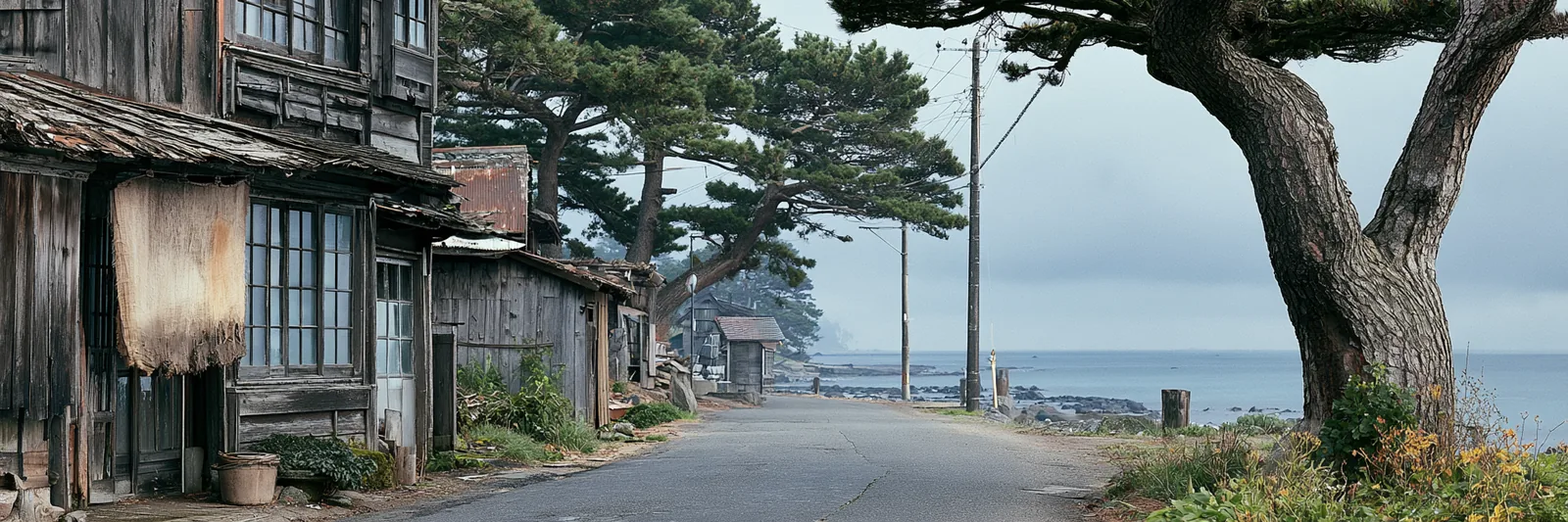
Tarashiyaki, from Oarai in Ibaraki. It is usually filed away as a variant of monja, but it is a different dish. It is the same as far as dribbling batter onto an iron plate, and different after that. It has run since the Taisho period, and only a few shops can still make it.
What tarashiyaki is
Wheat flour is loosened with dashi, cabbage, red pickled ginger, cut squid, egg and spring onion are added, and it is cooked on an iron plate. The name comes from dribbling — tarasu — that loosened batter onto the plate.
The decisive difference from monja is that no ring is built. The batter is poured and cooked until it sets into a single piece, and eaten that way. The physical act of eating is nothing like monja, which is stirred on the plate throughout.
It sits between monja and okonomiyaki. There is more liquid than okonomiyaki and less than monja. Locally it is shortened to "tarashi".
Where it came from, and the name
It has been eaten since the Taisho period. It was originally served at penny sweet shops and was popular as a snack for children on the way home from school. The same structure as monjiyaki in Tokyo plays out here. There was a sweet shop with an iron plate, there was something cheap you could make from flour and water, and children bought it.
The name is the cooking action itself: you dribble, so it is tarashiyaki. Where Tsukishima's monja is named after a game of writing letters, this one is named after how it is cooked.
What it shares with monja, and what it does not
What they share is two things: a loose batter dribbled onto iron, and a past as a penny sweet shop snack. The differences start at the ring and reach as far as the act of eating. Better read as two dishes born separately out of the same conditions than as dialects of one dish.
| Tarashiyaki (Oarai) | Monjayaki (Tsukishima) | |
|---|---|---|
| Batter | Flour loosened with dashi | Flour loosened with water, seasoned first with sauce, soy and dashi |
| Ring | Not built | Built (batter walled in and cooked in the centre first) |
| Finish | Cooked until it sets into one piece | Kept loose, spread thin and browned |
| Eating | Served out and eaten | Scraped off the iron with a small spatula |
| Origin | Penny sweet shops of the Taisho period | Monjiyaki of the Edo and Meiji periods, then post-war sweet shops |
| Who makes it now | A few independent shops | 48 cooperative members plus many chain shops |
Where you can eat it now
Ibaraki's official tourism site lists two shops under "tarashi" in its Oarai food guide (as updated on 10 March 2026). Both are recorded in this database.
Wikipedia states that as of 2021 only four or five shops still served it. In other words there are more shops that can make it than appear in official tourist information. Not having picked up the sweet shops and small independents that serve it is this database's weakness as it stands. We will go to primary sources on the ground at the next update.
Making it at home
Loosen wheat flour with dashi — not as thin as monja. Mix in cabbage, red pickled ginger, cut squid, egg and spring onion, pour onto a hotplate and cook until set. No ring.
Note: this is written from the composition of the dish, not taken from an official recipe published by a local authority or a shop. The Ministry of Agriculture, Forestry and Fisheries' Uchi no Kyodo Ryori has no entry for tarashiyaki under Ibaraki. We will replace this if an official recipe can be confirmed.
Whether it is being passed on
It used to be served all over Oarai. The number of shops has fallen.
One turning point was its appearance in the anime Girls und Panzer das Finale. According to an interview with the deputy manager of Okonomiyaki Michi carried on V-STORAGE, the official site of Bandai Namco Filmworks, the shop considered closing when road widening forced a rebuild. Fans saying strongly that they wanted it kept led to the decision to rebuild and carry on.
An instance of voices from outside working on the side of keeping a local food culture alive. Equally, an indication of how thin the thread is.
Whether it can carry tourism
Oarai has an aquarium, the Oarai Isosaki Shrine, a beach, and visitors who come because of the anime. Against that number of visitors, there are too few shops serving tarashiyaki.
Isesaki answered the same situation with an official site, a mascot and a home-use set, put together by the junior chamber of commerce. Oarai has nothing of that shape yet.
From here on is the editors' reading, not fact. But a regional dish only a handful of people can still make can disappear before it becomes a draw. Tarashiyaki is the single highest priority for the monthly checks this database carries out.
WHERE
たらし焼を出す店(2店)
茨城県公式の観光情報に「たらし」の項目で掲載されている店。
Ibaraki Oarai, Higashiibaraki District Oarai
SOURCES
Sources for this section
- Wikipedia「たらし焼き (大洗)」
https://ja.wikipedia.org/wiki/%E3%81%9F%E3%82%89%E3%81%97%E7%84%BC%E3%81%8D_(%E5%A4%A7%E6%B4%97) - 観光いばらき(茨城県)大洗町のグルメガイド
https://www.ibarakiguide.jp/gourmet/seaside_gourmet/page001886.html - V-STORAGE「ファンが支えてくれた伝統の味」お好み焼き 道 副店長インタビュー
https://v-storage.jp/talk/interview/154246/