Official material
Statements made in documents issued by JA Hiroshima, the national government, Hiroshima Prefecture and similar bodies.
Sources & Evidence
The small reference marks throughout the site link to the list on this page.
We sort what is written on this site into four kinds.
Statements made in documents issued by JA Hiroshima, the national government, Hiroshima Prefecture and similar bodies.
Figures from statistical surveys and research, shown with year, unit and surveying body.
Facts reported or confirmed by J-Catalyst, with the date of confirmation.
The views and suggestions of J-Catalyst and our editors, including culinary ideas.
Materials received by J-Catalyst during the visit of 5 October 2026. Contact details printed in them belong to JA Hiroshima as publisher; trade enquiries arising from this site are handled by J-Catalyst.
JA Hiroshima, Setoda Citrus Office
15487.jpg · 15488.jpg · 15489.jpg · 15490.jpg · 15491.jpg · 15492.jpg · 15493.jpg · 15494.jpg
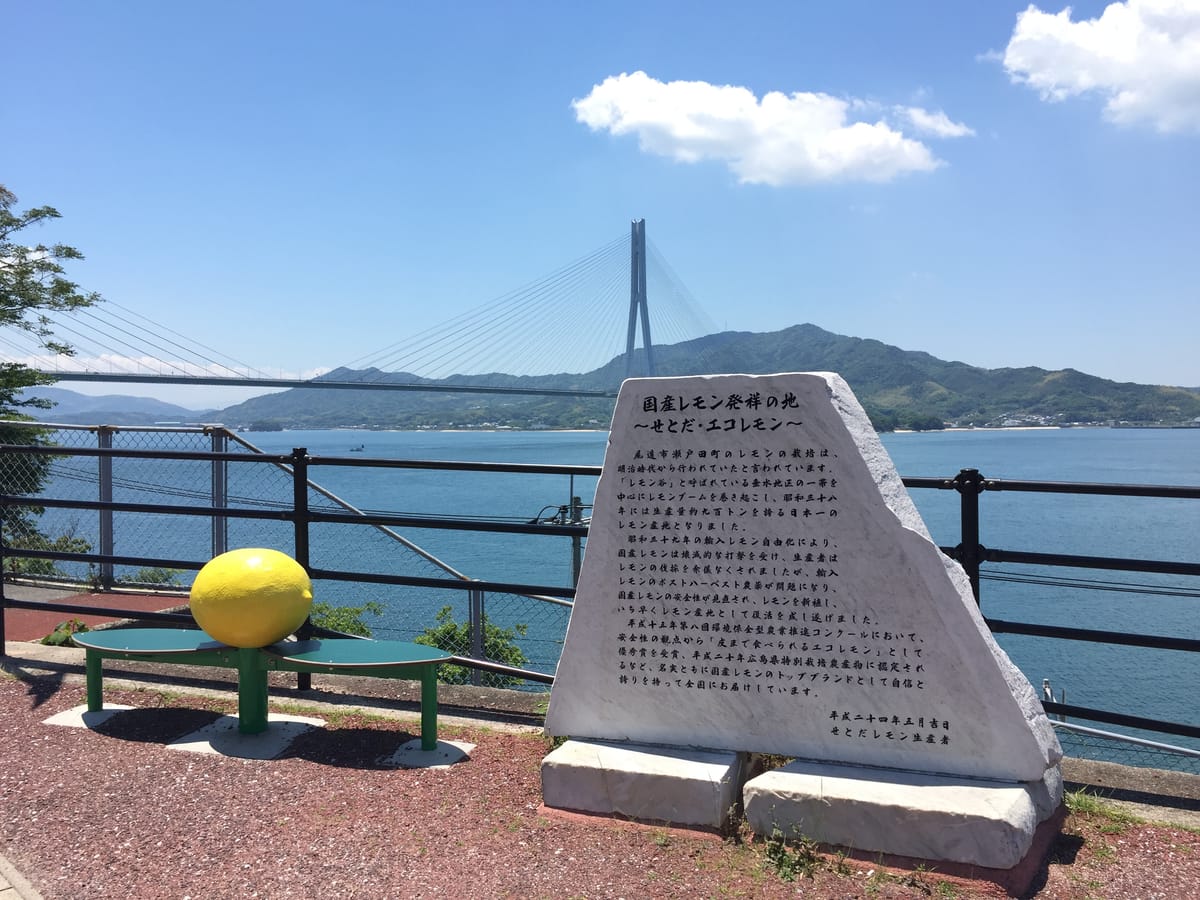
Overview of the growing area, history of cultivation, the origin of Setoda Eco Lemon®, special cultivation and GAP practices, harvest volumes, sales seasons, greenhouse and stored lemons, and a growers' message dated May 2012.
JA Hiroshima, Setoda Direct Sales Centre
15495.jpg · 15496.jpg
The Emperor's Cup at the 62nd Agriculture, Forestry and Fisheries Festival, special cultivation certification, no fungicide or wax treatment, processed products and registered trademarks.
JA Hiroshima, Setoda packing house
15485.jpg
Sales periods and characteristics by variety, and the tree-ripened “Jinenjuku” range.
JA Hiroshima
15486.jpg
Year-round citrus sales chart, used for cross-checking.
JA Hiroshima
Special cultivation labelling, seasonal sales guide, cultivation and storage.
Source ↗Ministry of Agriculture, Forestry and Fisheries (e-Stat)
Source ↗Hiroshima Prefectural Government
Source ↗Ministry of Agriculture, Forestry and Fisheries (MAFF)
Source ↗Hiroshima Prefectural Government
Source ↗Hiroshima Prefectural Government
Source ↗J-Catalyst LLC
Current status of partner restaurants; the 5 October 2026 visit to Setoda.
J-Catalyst LLC
Fair dates, press releases and flyers.
Numbers match the reference marks in the text.
Checked 2026-10-05
Setoda Eco Lemon® is certified by Hiroshima Prefecture as a specially cultivated agricultural product and is not treated with fungicide or wax.
As stated in JA Hiroshima's leaflet. This does not describe every lemon grown in Setoda.Setoda Eco Lemon®
Official material“Specially cultivated” produce is grown with chemically synthesised pesticides and chemical fertiliser cut to half or less of the usual local practice. Setoda Eco Lemon® has held Hiroshima Prefecture's certification since 2008.
This is a separate scheme from organic certification, and it does not mean pesticide-free.Setoda Eco Lemon®
Official materialIn fiscal 2026, 120 farming households are growing Setoda Eco Lemon®.
Figure for fiscal 2026 as given in the JA booklet.Setoda Eco Lemon®
Official materialFor the 2025 crop, 374 households shipped lemons through the Setoda packing house (Setoda Eco Lemon® 122, standard Hiroshima Lemon 288, greenhouse lemons 6).
Households may appear in more than one category, so the breakdown does not add up to 374.Setoda packing house
Official materialThe growers work to GAP (Good Agricultural Practice) principles.
The booklet describes this as a practice; it does not indicate third-party GAP certification.Setoda growers
Official materialJapan harvested 9,668 tonnes of lemons in the 2023 crop: Hiroshima 4,659 t (48%), Ehime 1,977 t (20%), Wakayama 969 t (10%), Miyazaki 446 t (5%), Kumamoto 338 t (3%) and Mie 305 t (3%).
MAFF survey of specialty fruit production, 2023 crop. Volume shows the scale of production, not eating quality.Japan, by prefecture (2023 crop)
Research & statisticsSetoda town harvested 1,864 tonnes in the 2023 crop: 19% of Japan's total and 40% of Hiroshima's.
Town figure from the JA Hiroshima fruit federation; the national figure comes from a different survey (MAFF).Setoda town (2023 crop)
Research & statisticsHarvest volumes from 2015 to 2024.
National figures from MAFF; Hiroshima and Setoda figures from the JA Hiroshima fruit federation. No national figure is given for 2024.Japan, Hiroshima and Setoda, 2015–2024
Research & statisticsAs a guide, open-field green lemons are sold from October to December and yellow lemons from January to May.
Timing shifts with each year's weather; please check actual availability with us.Setoda lemons (sales guide)
Official materialOpen-field lemons flower in mid-May and are harvested from October to the following April. Picked early they are green lemons; left on the tree they turn yellow. Green lemons offer aroma and a clean acidity; as they yellow, the juice increases and the acidity mellows.
The colour reflects ripeness, not a different variety.Setoda lemons
Official materialHarvest of specially cultivated Eco Lemons ends on 30 April.
This is the end of harvest, not the end of sales.Specially cultivated Eco Lemon
Official materialGreenhouse cultivation makes it possible to ship green lemons in summer, when Japanese lemons are otherwise scarce.
Depending on the document, shipping is described as mid-June to September or late June to September.Greenhouse lemons
Official materialLemons picked in January and February are individually wrapped in freshness-preserving film (P-Plus), held in cold storage and shipped in summer. Specially cultivated Eco Lemons are used for storage.
Chilled, not frozen. Depending on the document, shipping is described as mid-May to July or June to early August.Stored lemons
Official materialSetoda's citrus is grown on Ikuchijima and Kōnejima, two islands in the Setonaikai National Park. Ikuchijima is 28 km around and Kōnejima 12 km; together they cover 32.45 km². Half the land is steep slope, and most of the soil is well-drained granite.
Ikuchijima and Kōnejima
Official materialThe climate is mild and relatively dry, with an annual mean temperature of 15.5°C and annual rainfall of 1,058.8 mm.
Figures as given in the JA booklet; the observation point and period are not stated.Ikuchijima and Kōnejima
Official materialSetoda began expanding lemon growing in 1927, with the Tarumi district, known as “Lemon Valley”, at its centre. By 1963 production had reached about 900 tonnes.
Years and volume as given in JA Hiroshima's material.Setoda
Official materialWhen lemon imports were liberalised in 1964, Japanese lemons were hit hard and many orchards were lost. As interest in domestic lemons returned, a campaign asking every household to plant one are (100 m²) of lemons helped the growing area recover.
Documents differ on the year the planting campaign began, so no year is given here.Setoda
Official materialJA Hiroshima describes Setoda as “the birthplace of Japanese-grown lemons”.
This is JA Hiroshima's own description. Accounts of where lemon growing first began in Japan vary.Setoda
Official materialThe growers' group Setoda Eco Lemon Group received the Emperor's Cup in the horticulture category at the 62nd Agriculture, Forestry and Fisheries Festival (fiscal 2023; presented on 23 November 2023).
The award went to the growers' group, not to J-Catalyst or to any individual product. The Emperor's Cup is the top prize of a national agricultural awards programme; it is not an endorsement by the Imperial Household.Setoda Eco Lemon Group
Official materialIn 2003 the growers received an Award of Excellence at the 8th Environmentally Friendly Agriculture Promotion Contest. An optical-sensor grading line was installed at the packing house in 2000 and renewed in 2010.
Setoda Eco Lemon®
Official materialLemons grown inside moulds so that each slice comes out as a heart or a star. Both names are registered trademarks of JA Hiroshima.
The shape comes from how the fruit is grown, not from a separate variety.Heart Lemon® and Star Lemon®
Official materialA wide range of processed products is made with Setoda Eco Lemon®.
Shown as an example of what the growers are doing; J-Catalyst does not necessarily supply these products.Setoda Eco Lemon®
Official materialGuide sales periods for mikan, Hassaku, navel orange, Shiranuhi, Harumi, Kiyomi, Anseikan, Setoka, Harehime, Haruka, Reikō, Natsumi and more.
Guide periods from JA material; they are not a guarantee of supply in any given year.Main citrus at the Setoda packing house
Official materialThe 13 restaurants and hotels listed were using Setoda lemons as of 5 October 2026.
Confirmed by J-Catalyst. Dishes and availability vary by venue and season.Partner restaurants
ReportingOn 5 October 2026, Masami Oginuma of J-Catalyst accompanied a group from Ginza's restaurant association to a lemon orchard in Setoda, where they picked lemons, and to JA Hiroshima.
Visit of 5 October 2026
ReportingDates of fairs and limited-time menus in 2024–2025.
Fairs and announcements
ReportingHiroshima Prefecture harvests more lemons than any other prefecture in Japan: 48% of the national total in the 2023 crop.
A ranking by harvest volume.Hiroshima Prefecture
Research & statisticsThe culinary ideas on this site are suggestions from our editors.
They do not describe dishes actually served by the restaurants listed.Culinary uses
J-Catalyst's viewSources for each entry in World Lemons and Lemons in Japan are shown with that entry.
If you spot an error, please let us know through the same contact as for trade enquiries. We will check and correct it.
SETODA LEMON
Cooking, drinks, pastry or processing: tell us what you have in mind and when, and we will connect you with the growers' cooperative.
Hiroyoshi Numazaki
J-Catalyst / Higashi Nippon Broadcasting (khb)
Weekdays 10:00–17:00, Japan Standard Time