The lemon arose from a cross between older citrus of Asian origin, came of age around the Mediterranean and travelled the world by sea. Today each region favours its own varieties, picks in its own season and gives the fruit its own role in the kitchen.
This page keeps growing regions, varieties and geographical indications (schemes that protect a place name) distinct. It is not a ranking: it is a map for appreciating what each region does well.
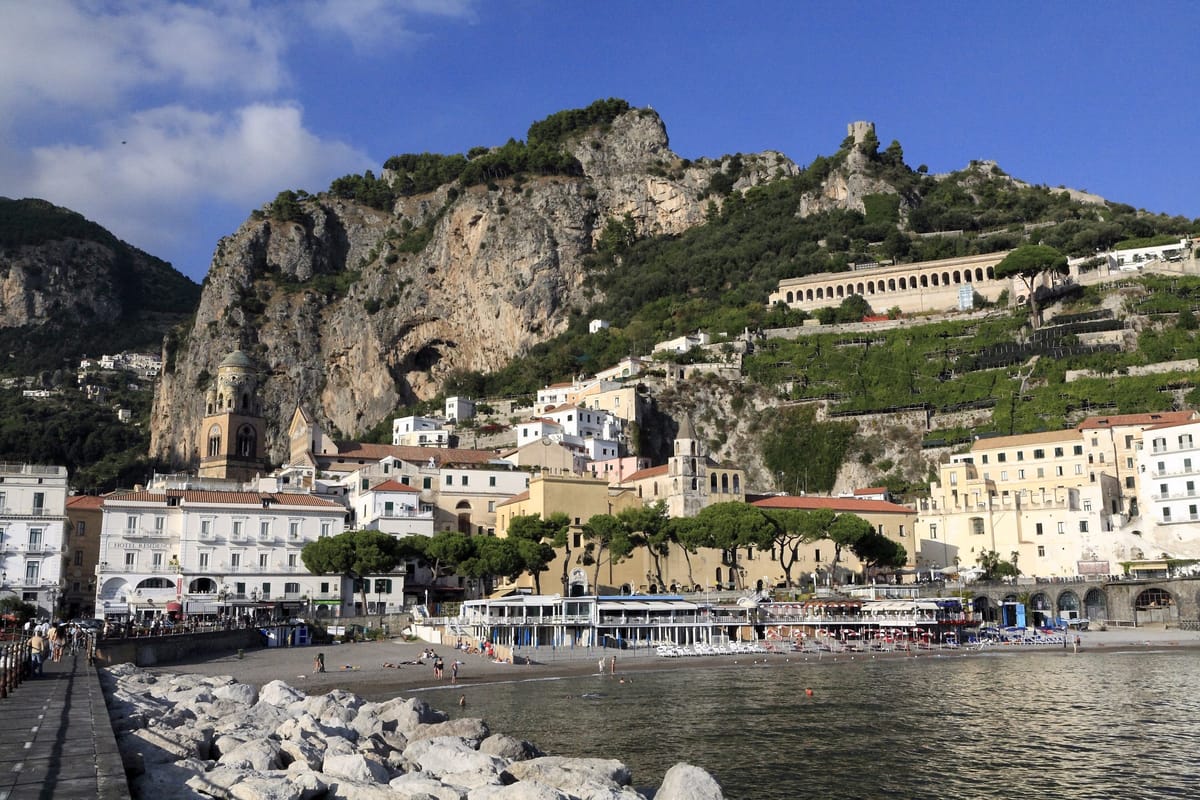
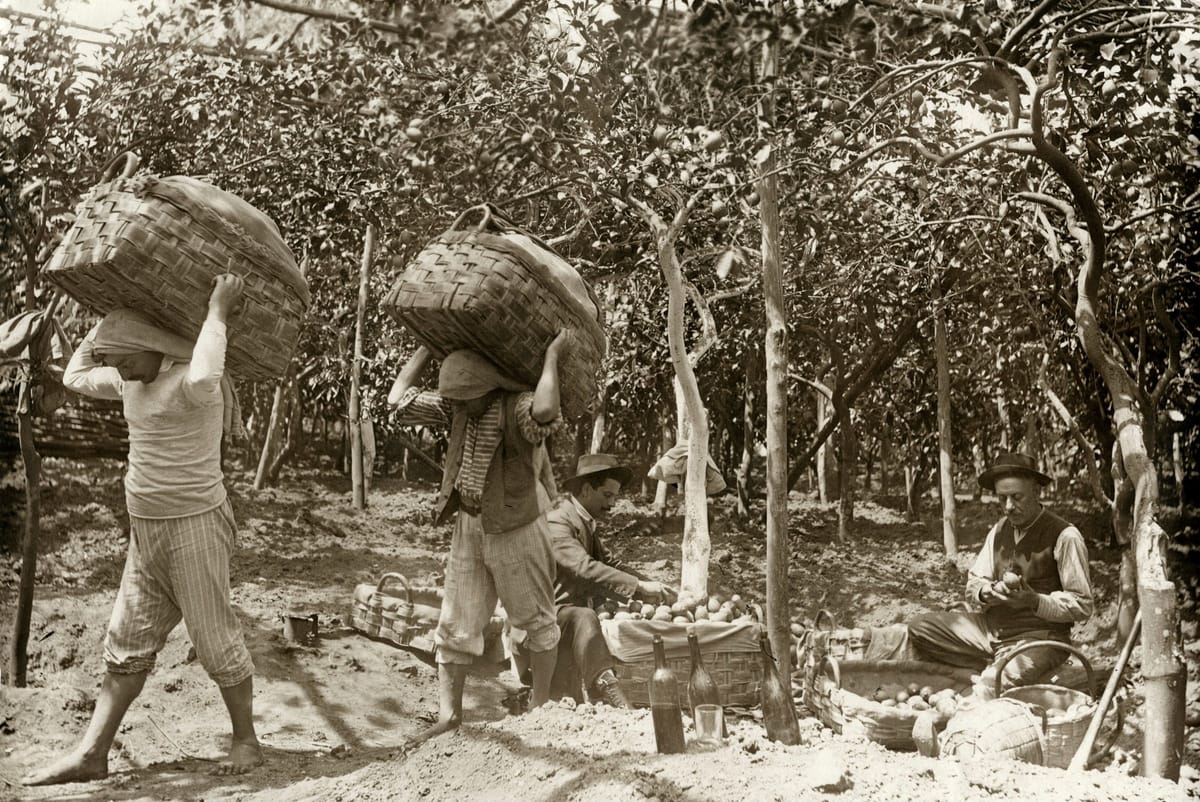
A long, tapered lemon with a pronounced point and a medium-thick peel. The EU registration describes a flavedo rich in essential oils, a strong aroma, plenty of juice and few pips. Trees are trained over chestnut-pole pergolas on steep sea-facing terraces and covered against frost and hail so the fruit ripens slowly.
At the table
Best known for lemon liqueur made from the peel; “Liquore di limone della Costa d'Amalfi” is itself a registered EU spirit GI. The local consortium describes a thick, pale-yellow peel over tender, sweet, juicy flesh.
The trees flower several times a year, giving a long picking season.
Character
Grown from Vico Equense to Massa Lubrense and on Capri: a symmetrical, elliptical lemon of medium to medium-large size. The EU document describes a medium-thick peel rich in essential oils with a strong perfume. Grown in free-draining volcanic soils and sea breezes, under covered pergolas or in the shade of taller trees — a way of farming that shapes the peninsula's landscape.
At the table
The EU document names this lemon, for the aroma of its peel, as the main ingredient of the traditional liqueur limoncello, and says the juice is balanced enough to be taken without added sugar. “Liquore di limone di Sorrento” is also a registered spirit GI.
Picked all year. The crop changes name with the season: Primofiore from 1 October, Bianchetto (Maiolino) from 15 April and Verdello from 1 July.
Character
The name is reserved for the Femminello cultivar and its clones. The EU document highlights high juice content, medium-to-large fruit and year-round picking, and limits the area to a coastal strip within 10 km of the Ionian Sea. Groundwater from the Hyblaean plateau is credited for juicy fruit with a finer peel.
At the table
The consortium presents the lemon as essential to Mediterranean cooking and shares chefs' recipes, including the dessert delizia al limone. The product specification forbids post-harvest waxes and synthetic fungicides, and lets fruit sold only for processing carry the name.
Femminello: winter Primofiore from 15 September, spring fruit from 1 April, summer Verdello from 15 May. Monachello Primofiore from 15 October.
Character
Grown in volcanic soils between Mount Etna and the Ionian Sea. The EU document describes a peel dense with oil glands and essential oils of high aromatic quality, citing older studies on citral, the compound behind the characteristic lemon scent. The sea keeps the climate mild across the 16 municipalities of the area, Acireale among them.
At the table
The specification allows fruit outside the fresh-market grades to carry the name for processing if it meets the juice and essential-oil criteria.
1 September to 15 April — early enough to reach the market before yellow lemons from other Mediterranean areas.
Character
Interdonato is a natural hybrid of citron and lemon. The EU document stresses early ripening, flesh that tastes mild because citric acid is low, and a thin, smooth peel. Selected in 1875 by Colonel Interdonato, it grows on the steep slopes between Messina and Taormina.
A lemon festival is held in the first half of August.
Character
A GI covering a single municipality. Hills to the west, north and south block northerly winds while the sea to the south-east tempers the climate. The EU document cites a peel rich in essential oil, an intense, lasting aroma and almost seedless flesh; the growing districts are known as the “lemon gardens of Rocca Imperiale”.
At the table
The registration notes that the oil-rich peel and the juice are used in traditional cooking to lift or define the aroma and flavour of dishes. Festivals held since the 1980s feature dishes made with the lemon; the best known is the Sagra dei Limoni in the first half of August.
Hand-picked all year round (product specification).
Character
Grown on the north coast of the promontory around Vico del Gargano, Ischitella and Rodi Garganico. There are two types — the round, soft-rinded “lustrino” and the elongated “fusillo” — both described in the EU summary as rich in essential oils with a very intense aroma. Slopes are terraced with dry-stone walls and sheltered by holm-oak windbreaks.
At the table
According to the Slow Food Presidium, producers turn Gargano citrus into marmalades, candied peel and limoncello. The fruit was once shipped abroad wrapped in coloured tissue paper, and the town of Rodi is still known for its lemons.
Hand-picked through the year as fruit ripens; the colour is at its brightest during the cold nights of midwinter.
Character
Grown on man-made terraces (restanques) between sea and mountains. The EU document describes a luminous yellow acquired on the tree, a finely grained rind, an intense fresh-citronella scent when squeezed, and juice that is acidic but not bitter. No post-harvest treatment or wax is applied, and by local custom the fruit is picked with a few leaves.
At the table
The specification provides separate packs for fruit destined for processing, and the Côte d'Azur tourism site lists growers selling both fruit and lemon products. In winter the town holds the Fête du Citron, known for its citrus-covered floats and displays.
Fino in autumn and winter, Verna in spring and summer (most of the volume between April and July) — the two varieties hand over to give a long season.
Character
The EU's largest lemon origin. USDA reports that Spain accounts for about 65% of EU lemon output, concentrated in Murcia, the Valencia region and the Andalusian provinces of Málaga and Almería. Fino makes up roughly 70% and Verna 30%. The trade body describes Verna as somewhat thicker-skinned, deep yellow, with only three or four seeds.
At the table
The trade body suggests using lemon to lift flavour with less salt, grating the zest, rum-and-mint lemonade and lemon granizado with honey. Fino is also widely used for processed products.
Mainly a winter fruit, with at least one late type bearing in summer.
Character
USDA lists the main areas as the prefectures of Achaia, Korinthos and Laconia in the Peloponnese and the island of Crete, with Maglini the major variety alongside early Interdonato and Eureka. Across from Poros lies a stretch of coast known as the Lemonodasos, the “lemon forest”. We found no Greek lemon in the EU GI register.
At the table
Two classics define it: avgolemono, the egg-and-lemon sauce and soup, and ladolemono, an emulsion of olive oil, lemon juice, salt and oregano for grilled fish. Wedges are squeezed daily over grilled meat, fava purée and salads, and lemon is a natural partner to thyme, oregano and the other herbs of the Greek countryside.
Lamas from early November to February. Nationally the season opens in September with early Meyer, followed by Lamas and Kütdiken.
Character
USDA reports that half of Türkiye's lemons come from Mersin Province. Erdemli faces the Mediterranean and is sheltered by the Taurus Mountains. The Turkish Patent and Trademark Office register describes Lamas as yellow, juicy and aromatic, with a smooth, medium-thick peel and a long shape ending in a distinct point, and notes that it stores well.
At the table
According to the register, harvested fruit is rested and then moved to natural stores so that it can be sold when fresh lemons are scarce. USDA also mentions lemons kept in natural caves at Ürgüp in Cappadocia.
Moroccan citrus is led by mandarins and oranges; USDA forecasts lemon and lime output of 48,000 tonnes for 2025/26. The volume is modest, but the country is known worldwide for its salt-preserved lemons.
At the table
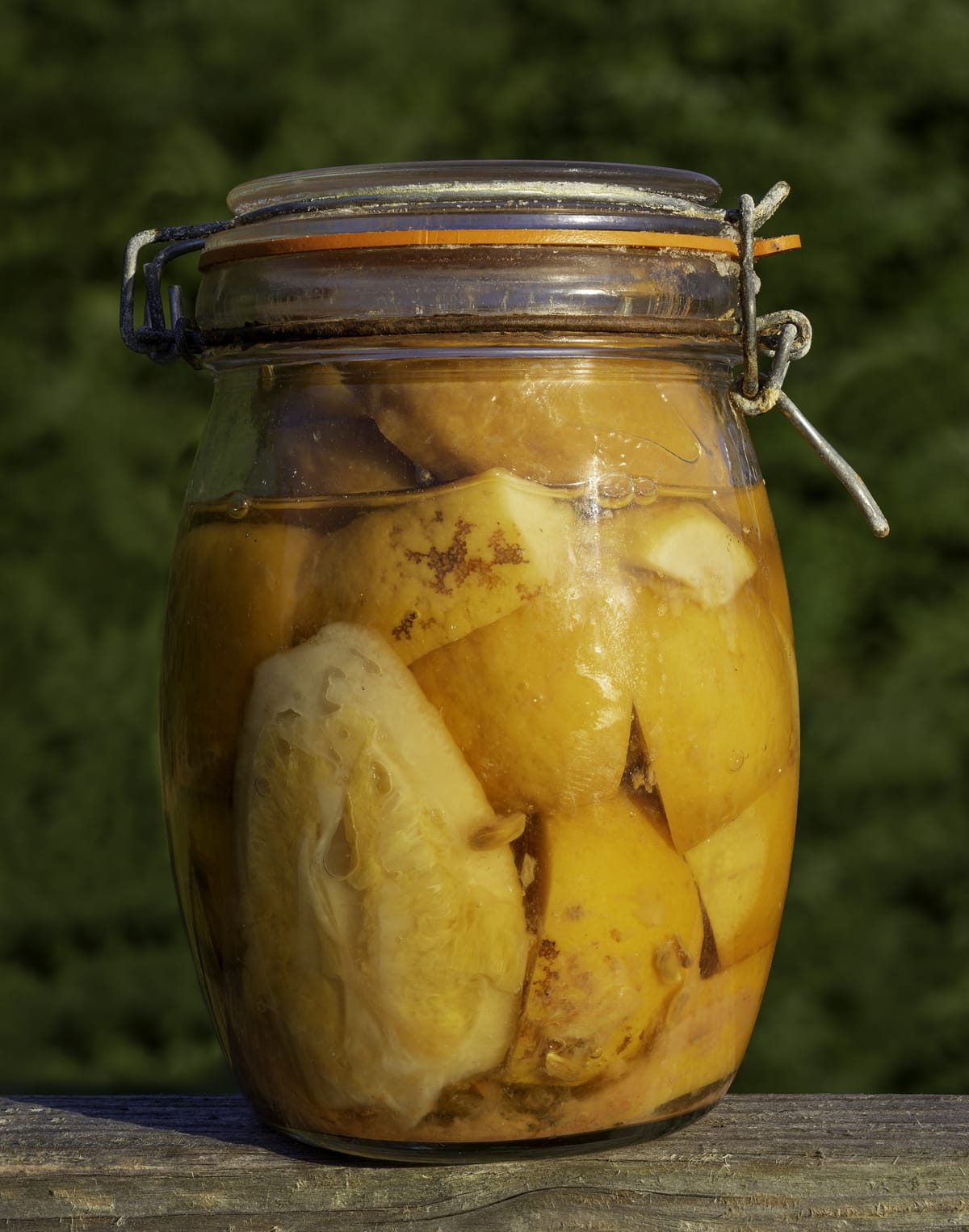
Whole or cut lemons are packed in salt, lemon juice and water and left at room temperature for weeks or months. The peel is the prized part: rinsed, chopped and cooked into tagines with olives, chicken or seafood. The pulp can go into stews and sauces.
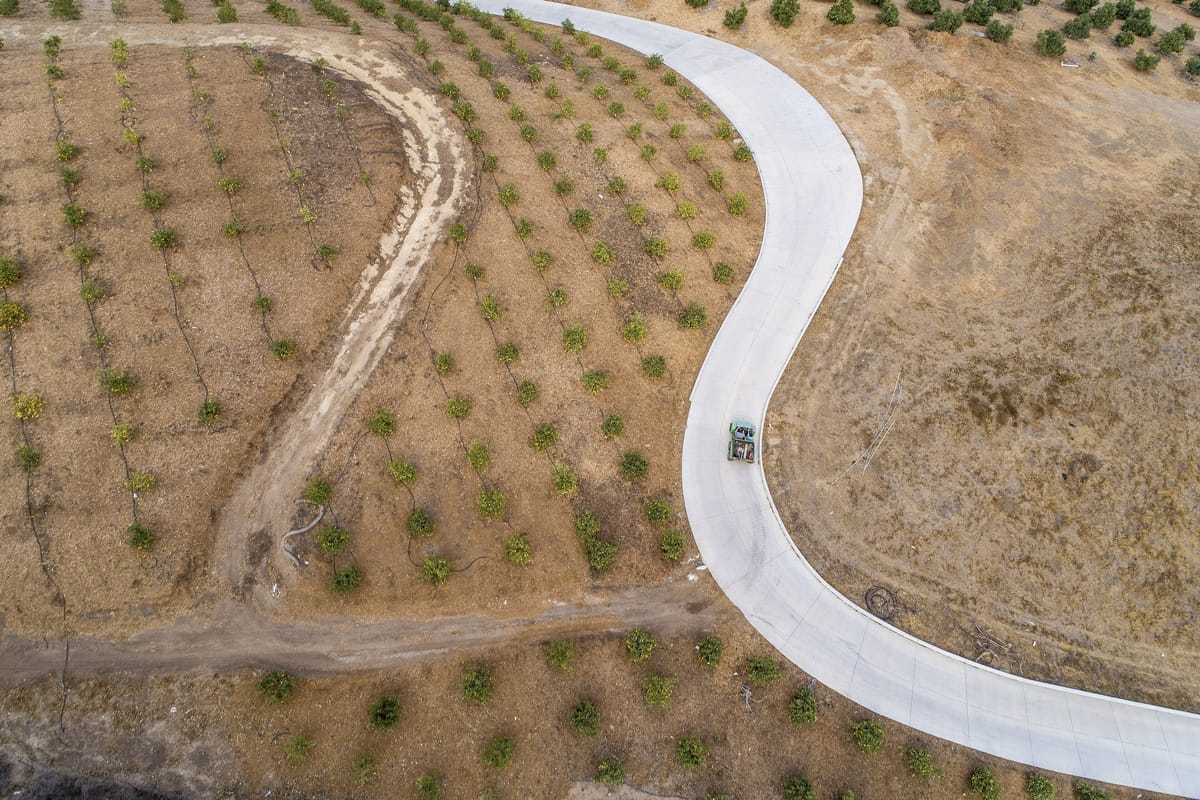
A young orchard of avocados and Meyer lemons at Somis, California, from the air.
United States · North America
California
United States: southern coast, San Joaquin Valley, desert valleys
Growing region
Main varieties
Eureka · Lisbon
Season
The state's marketing season runs from 1 August to 31 July, so fruit is available almost year-round. Eureka peaks from late winter to early summer, Lisbon in winter and early spring.
Character
USDA statistics put 54,000 of the 62,500 bearing acres of US lemons (2025-26) in California. Citrus is grown in the San Joaquin Valley, the coastal and interior districts of the south, and the desert valleys. Eureka, the mainstay, arose from seed planted in Los Angeles in 1858; Lisbon is believed to be of Portuguese origin. Both have pale greenish-yellow flesh and firm acidity.
At the table
The uses listed in the horticultural literature — lemonade and soft drinks, pies and tarts, slices served with fish, meat and drinks — spread alongside this origin's fruit. In 2025-26 roughly 80% of the state's utilized crop went to the fresh market and the rest to processing.
Italian lemon (Citrus limon) · Persian lime* · Mexican (Key) lime*
Character
A giant in “lemon and lime” statistics, but the lead role belongs to limes. USDA divides the crop into seedless Persian lime, the small Mexican (Key) lime that is central to the cuisine, and the “Italian” type known in the US as yellow lemon. In 2024 Tamaulipas grew over 70% of the Italian type, almost all of it exported.
At the table
USDA calls the sour Mexican lime (limón agrio) an important ingredient in Mexican cuisine. In everyday Spanish “limón” usually means this lime, while yellow lemons are grown largely for export.
Harvest runs from March to August (southern-hemisphere autumn and winter).
Character
The great processing origin. USDA reports that Tucumán grows roughly 80% of Argentina's lemons and that 70–75% of national output goes to the export processing industry — essential oil, frozen pulp and dehydrated peel. Warm days, mild nights, summer rain and fertile alluvial soils are credited for thick-rinded fruit.
At the table
Much of this crop reaches the world not as fruit but as essential oil, juice and dried peel for drinks, confectionery and flavourings. Fresh fruit is exported during the northern hemisphere's off-season. Planted area is estimated at about 45,000 hectares.
USDA reports that the Metropolitana region holds about 40% of the planted area, with Valparaíso and Coquimbo in the twenties each. Eureka dominates for its yields and post-harvest performance; early Fino 49 widens the harvest window; traditional Génova is mostly for the home market. Lemons are also chosen as an alternative to thirstier crops.
At the table
At home, demand for fresh lemons rises in summer for salads and drinks. More than half of exports go to the United States, and Japan is named among the other key destinations. Processing fruit becomes juice, essential oil and concentrates for confectionery.
Brazil ranks high in FAO's “lemons and limes” statistics, but the mainstay that the research agency Embrapa treats under “limão” is the seedless Tahiti lime (lima ácida Tahiti). Production is concentrated in the south-east, above all São Paulo state.
At the table
Embrapa lists its uses in sweets, savoury dishes, juices, as a seasoning for many dishes, and in drinks such as the caipirinha. Most of the crop is eaten at home, though exports are growing.
Harvest runs from January to August (Citrus Growers' Association data cited by USDA).
Character
USDA reports that the Eastern Cape holds 43% of the lemon area, Limpopo 34% and the Western Cape 14%. Eureka covers 75% of plantings, followed by Lisbon and 2PH Seedless. The cooler Eastern and Western Cape are described as well suited to lemons. The planted area more than doubled between 2015 and 2020.
At the table
An export-led origin. At home, USDA notes, lemons and limes are seen as luxury items used mainly as garnishes for drinks in restaurants; processing fruit becomes lemon juice, lemonade, smoothies and liqueurs. Domestic consumption is forecast at about 30,000 t a year.
The industry body says lemons and limes are available all year. The Far North Queensland summer crop starts with spot picks from October to December, with full harvest from January to March.
Character
According to Citrus Australia, new orchards in Far North, central and southern Queensland are filling the summer gap once covered by imports, moving the industry toward a year-round supply of home-grown lemons.
At the table
The industry body pictures the Australian summer habit: lemon squeezed over fresh seafood, home-made lemonade on a hot day, a slice in a cocktail or a beer. Summer supply once relied on imports from the United States and Egypt.
According to the county government, lemon growing began here in the 1920s and the “Anyue lemon” was developed from Eureka; hilly terrain and a warm, humid climate are said to suit it. The name is protected in the EU under the EU–China GI agreement. USDA notes that detailed, authoritative statistics for China's lemons and limes are lacking.
At the table
The county government presents the fruit as suited to both fresh use and processing.
Fruits all year round with two peak seasons (GI application).
Character
India tops “lemon and lime” statistics, but the everyday “nimbu” is mostly a lime (Kagzi lime). Assam's Kaji Nemu, by contrast, is registered as a GI under Citrus limon. The application describes fruit larger than a regular lemon, commonly seedless and borne in clusters, staying on the tree long after ripening, with a distinctive aroma.
At the table
The GI application says the sour fruit is widely used in cooking, beverages, industry and medicine. Nationally, the horticulture board lists Kagzi lime under Maharashtra, Andhra Pradesh and Karnataka, and lemons under West Bengal, Assam and Uttar Pradesh.
A region's name and a variety's name are different things: the same variety is grown in many countries.
* Limes, which are a different citrus from lemons.
Eureka
Los Angeles, California: arose from seed of Italian fruit planted in 1858 and was introduced by nurseryman Thomas A. Garey around 1877.
Medium-small, elliptical fruit with pale greenish-yellow, low-seeded, very acid flesh. Nearly thornless and repeat-bearing, peaking from late winter to early summer. A mainstay in California, South Africa, Chile, Argentina and beyond.
Lisbon
Believed to be of Portuguese origin (though not known there by this name); it reached Australia in 1824 and was introduced to California in the mid-19th century.
A large, vigorous, thorny tree noted for tolerating frost, heat and wind. Medium, oblong fruit with a prominent nipple and pale greenish-yellow, very acid flesh. Main crop in winter and early spring.
Meyer lemon
China: introduced to the United States in 1908 by USDA plant explorer Frank N. Meyer, who found it near Beijing.
Not a true lemon but a hybrid (genetic work points to citron crossed with a mandarin × pummelo hybrid). Smooth, thin, yellow-orange rind; light orange-yellow flesh with moderate acidity; mainly a winter crop. It is a variety, not a place of origin.
Femminello (group)
Italy: an old cultivar group with many local selections.
Flowers repeatedly, and the fruit changes name with each flush — winter Primofiore, spring Bianchetto, summer Verdello. The Siracusa, Etna, Rocca Imperiale and Gargano GIs are all built on it. Older references credit it with three-quarters of Italian production.
Sfusato Amalfitano
Amalfi Coast, Italy.
The cultivar behind the “Limone Costa d'Amalfi” PGI: an elongated, pointed lemon grown, the EU document says, almost exclusively in this area. It is a cultivar name, distinct from the GI name.
Interdonato
Messina, Sicily: selected around 1875 by Colonel Interdonato.
A natural citron × lemon hybrid: early, thin- and smooth-skinned, with very few seeds. Also grown as an early variety in Türkiye (Enterdonat) and Greece.
Monachello
Italy: thought to be a lemon × citron hybrid.
A slow-growing, almost thornless tree valued for resistance to mal secco disease and planted where the disease is a problem. Described as not sharply acid; one of the cultivars permitted under the Etna PGI.
Fino (Primofiori, Mesero)
Spain.
Spain's autumn–winter lemon, about 70% of national output, pale yellow and widely used for processing as well as fresh. The selection Fino 49 is also grown in Chile as an early variety.
Verna
Spain.
Spain's spring–summer lemon, about 30% of output: somewhat thicker-skinned, deep yellow, more oval, with three or four seeds. The trade body notes it is rarely found outside Spain.
Lamas
Erdemli, Mersin Province, Türkiye.
A long, pointed yellow lemon, juicy and aromatic, picked from early November to February and suited to storage. The subject of the Turkish GI “Erdemli Lamas Limonu”.
Villafranca
Believed to have originated in Sicily; introduced to Florida around 1875.
Closely resembles Eureka. Older references describe it as Florida's leading cultivar for many years and commercially grown in Israel.
Genoa (Génova)
Introduced to California from Genoa, Italy, in 1875.
Close to Eureka. It took root in South America: a selection is among Argentina's main varieties, and in Chile it is the traditional lemon of the home market.
Santa Teresa
Italy: from an old tree found disease-free in a Femminello orchard devastated by mal secco.
A Femminello selection widely planted in Italy in the 1960s where mal secco was prevalent; also one of the varieties permitted under the Citron de Menton PGI.
Kaji Nemu (Assam lemon)
Assam, India.
A lemon larger than the regular type, commonly seedless and borne in clusters all year. Registered as an Indian GI under Citrus limon — distinct from the lime known as nimbu.
Lemons and limes: what is the difference?
Lemons and limes are not the same fruit in different colours. Genetic studies show that the lemon (Citrus limon) arose from a cross between sour orange and citron. The small, aromatic Mexican or Key lime (Citrus aurantiifolia) comes from a wild papeda crossed with citron, while the seedless Tahiti or Persian lime (Citrus latifolia) is a triploid born of lemon and Mexican lime. Names shift from country to country: “limón” in Mexico and “nimbu” in India usually mean lime, and Brazil's “limão” is led by the Tahiti lime. That is why FAO and trade statistics group “lemons and limes” together — and why national totals cannot be read as lemon volumes. The Meyer lemon, despite its name, is a separate hybrid again.
A note on world production figures
Production of “lemons and limes”: top 12 countries, and Japan · 2024 · tonnes
This statistic combines lemons and limes. It is neither a lemon-only volume nor a lemon ranking: India, Mexico and Brazil, for example, are largely lime producers.