03 — Daily life
A day in the life
Morning is for lessons, afternoon for rest and preparation, evening for work. The hours below follow the official description; every house and every maiko differs.
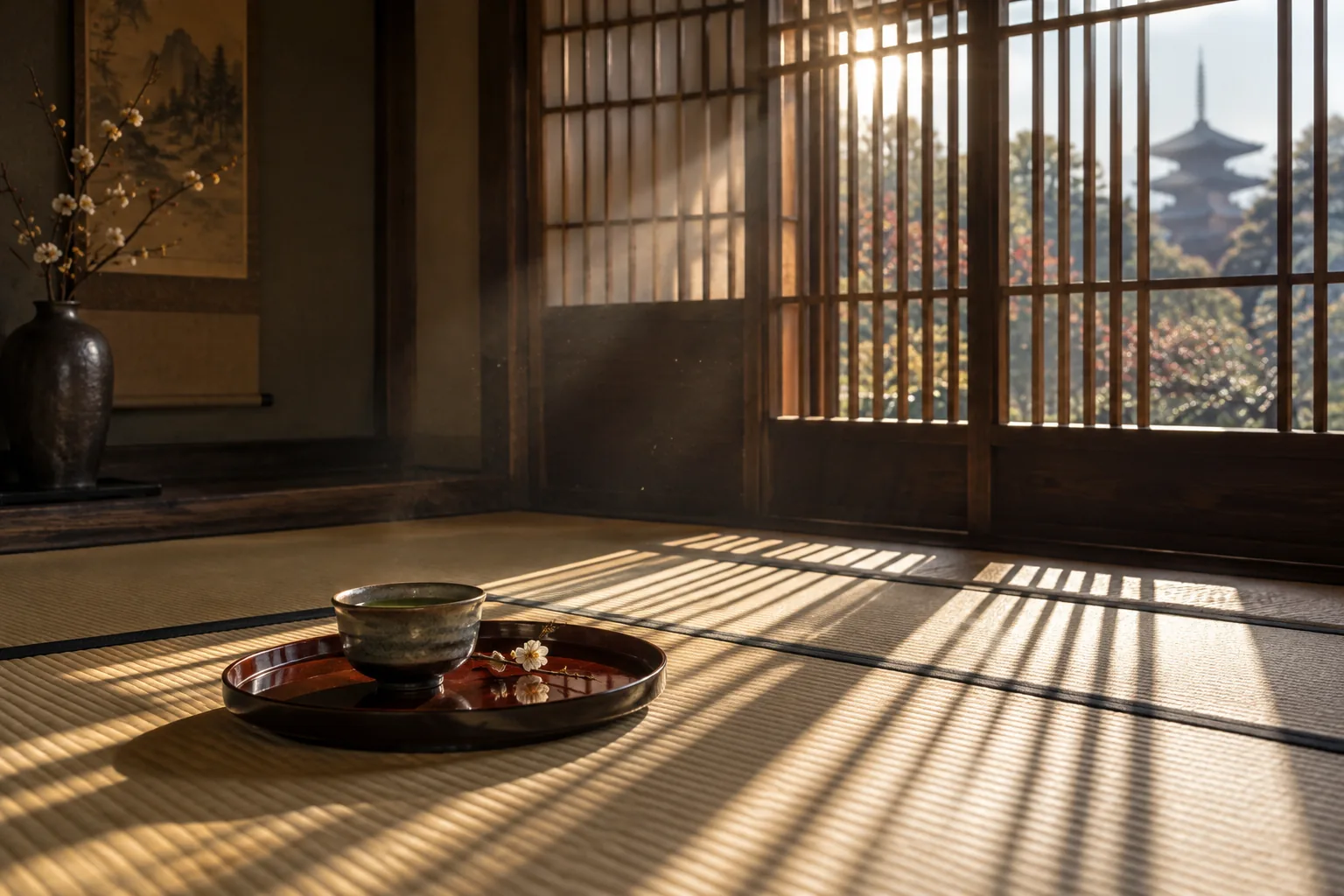
08:00-10:00
Waking in the okiya
Wake up and eat breakfast at the okiya. Newer maiko rise earlier because dressing, hair and makeup take longer.
Times vary by okiya and by how late the previous night ran. Source: ookinizaidan.com 'A maiko's day'.
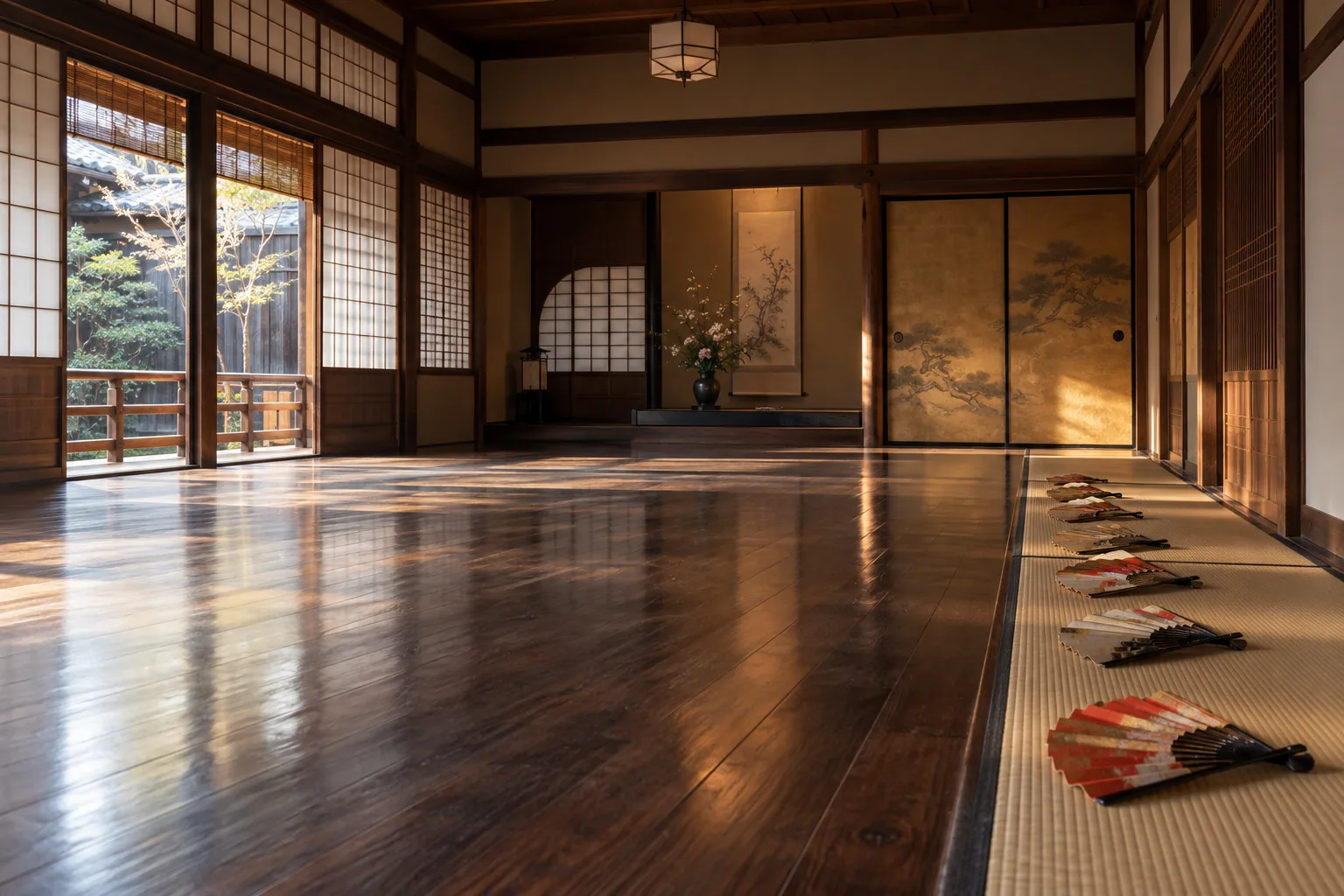
10:00-13:00
Lessons
Lessons at the kagai's school or kaburenjo. In Gion Kobu this is Yasaka Nyokoba Gakuen (formally Gion Joshi Gigei Gakko), an incorporated school where every Gion Kobu geiko and maiko is a student; required subjects include Inoue-ryu dance, percussion, tea ceremony and shamisen, with Noh chant, nagauta and others available. Miyagawa-cho has Higashiyama Joshi Gakuen; other kagai use their kaburenjo.
School names verified: Kyoto City (kyo-tsunagu) names both incorporated schools; the subject list is from Wikipedia/gion.or.jp (secondary).
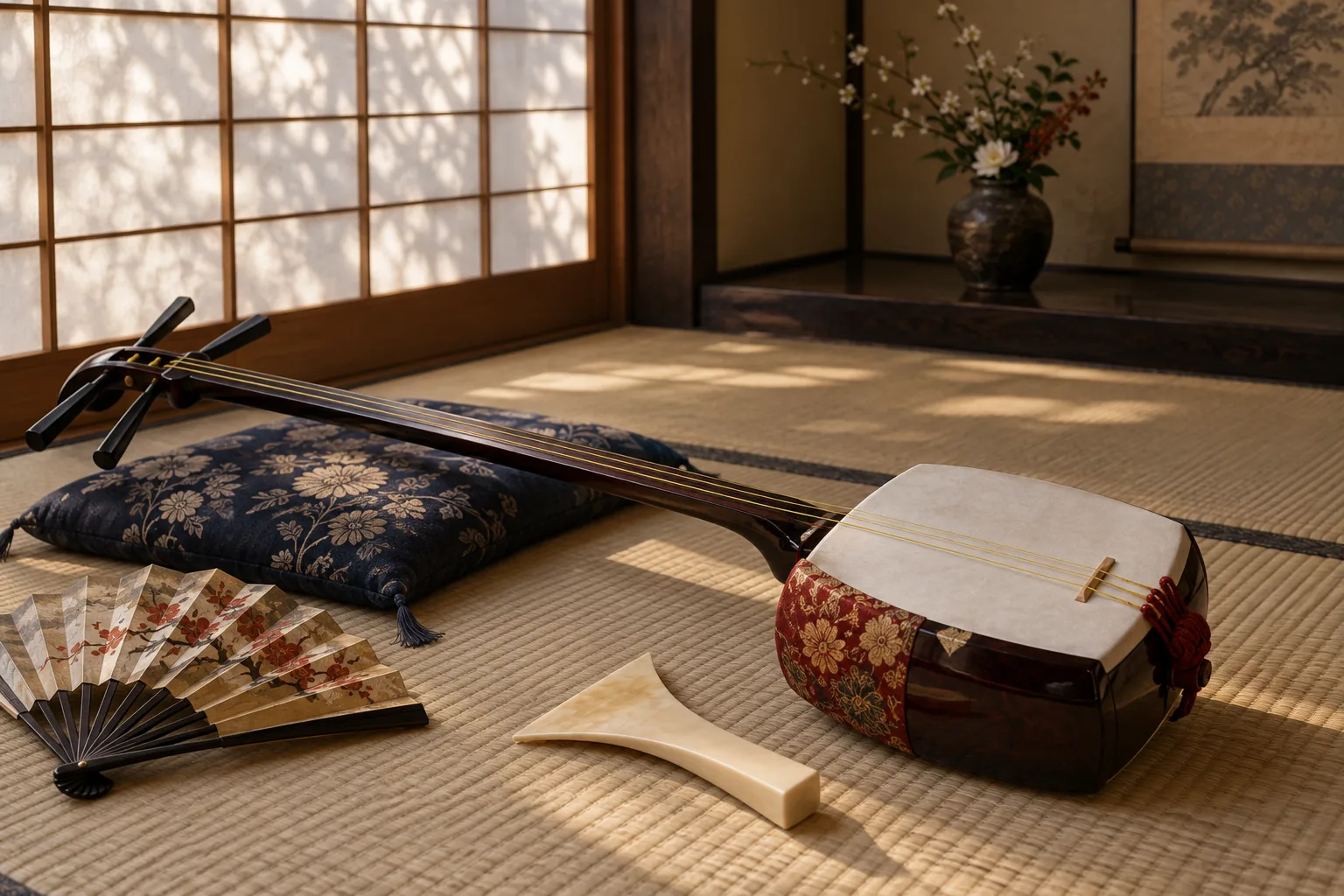
13:00-16:00
A late lunch, a short rest
Late lunch at the okiya or out with fellow maiko, then about two hours of free time: nap, read, go over the day's lesson, run errands such as greeting rounds.
Official page says 'about two hours free'. Varies.
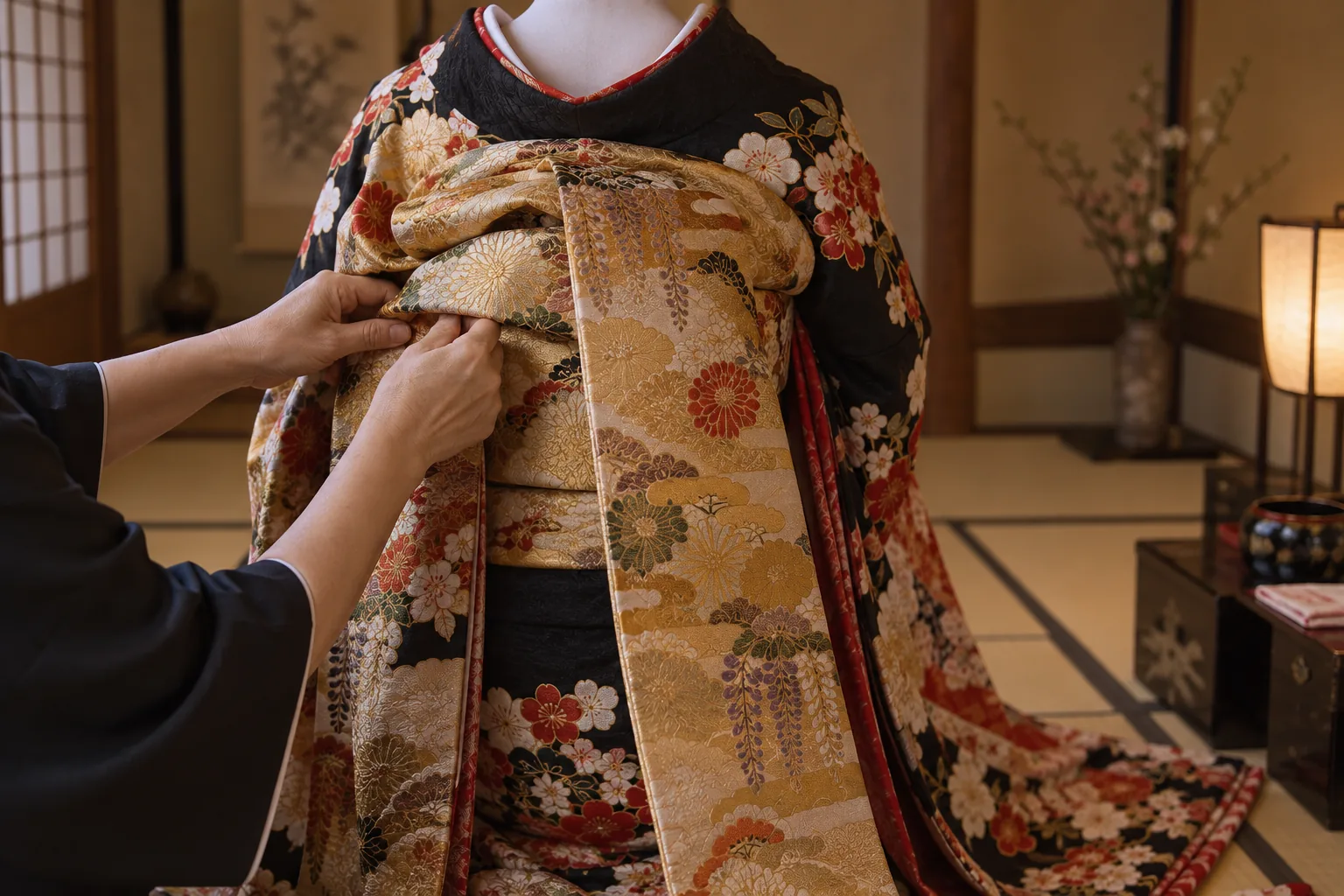
16:00-18:00
Preparation
Preparation: white makeup done by herself, kimono and darari obi tied by the otokoshi (male dresser). Hair is dressed by a hairdresser roughly once a week and kept between visits.
Otokoshi role: ookinizaidan.com says the obi needs help to tie; the term otokoshi is commonly reported. Weekly hair: secondary.
18:00-late
Ozashiki
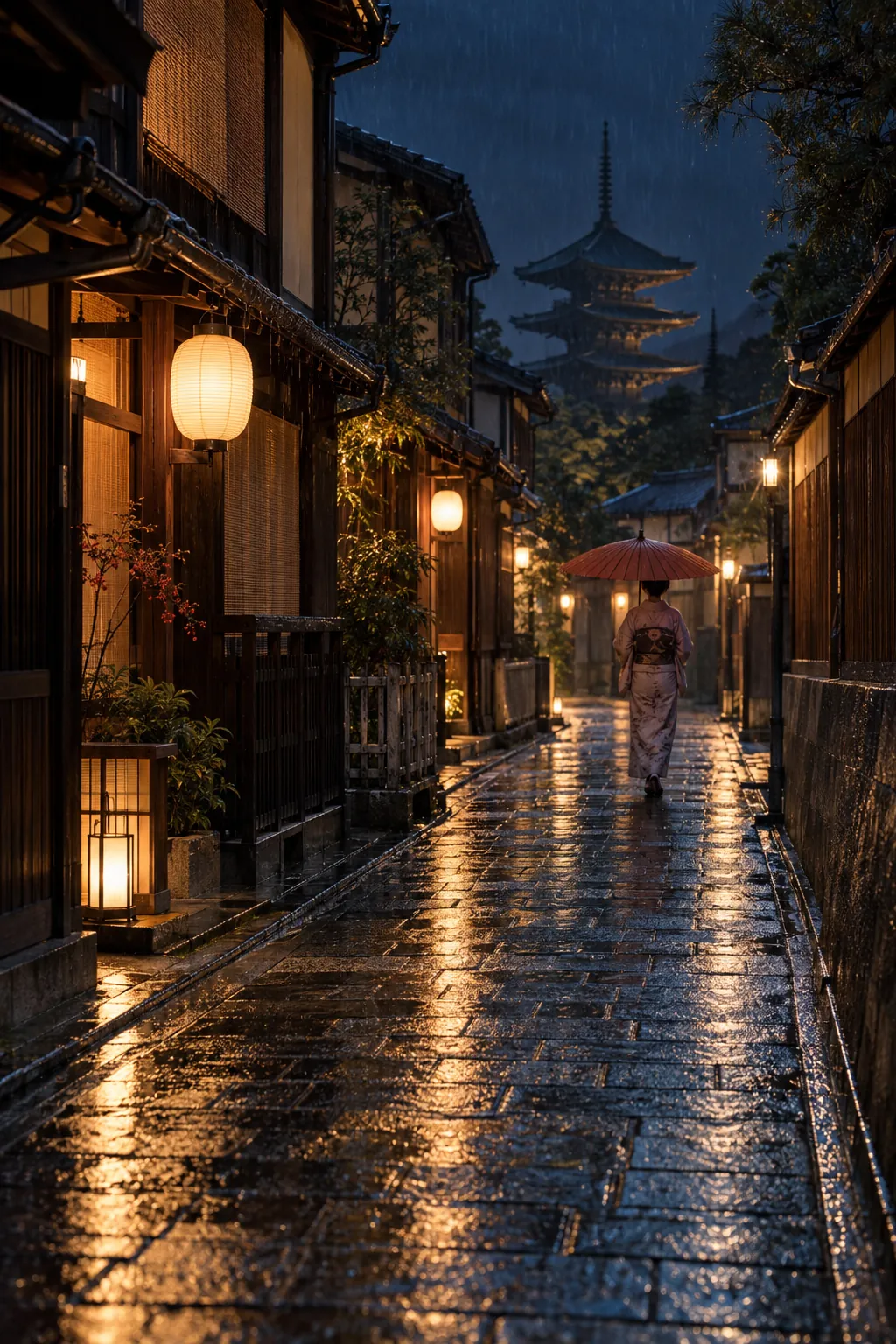
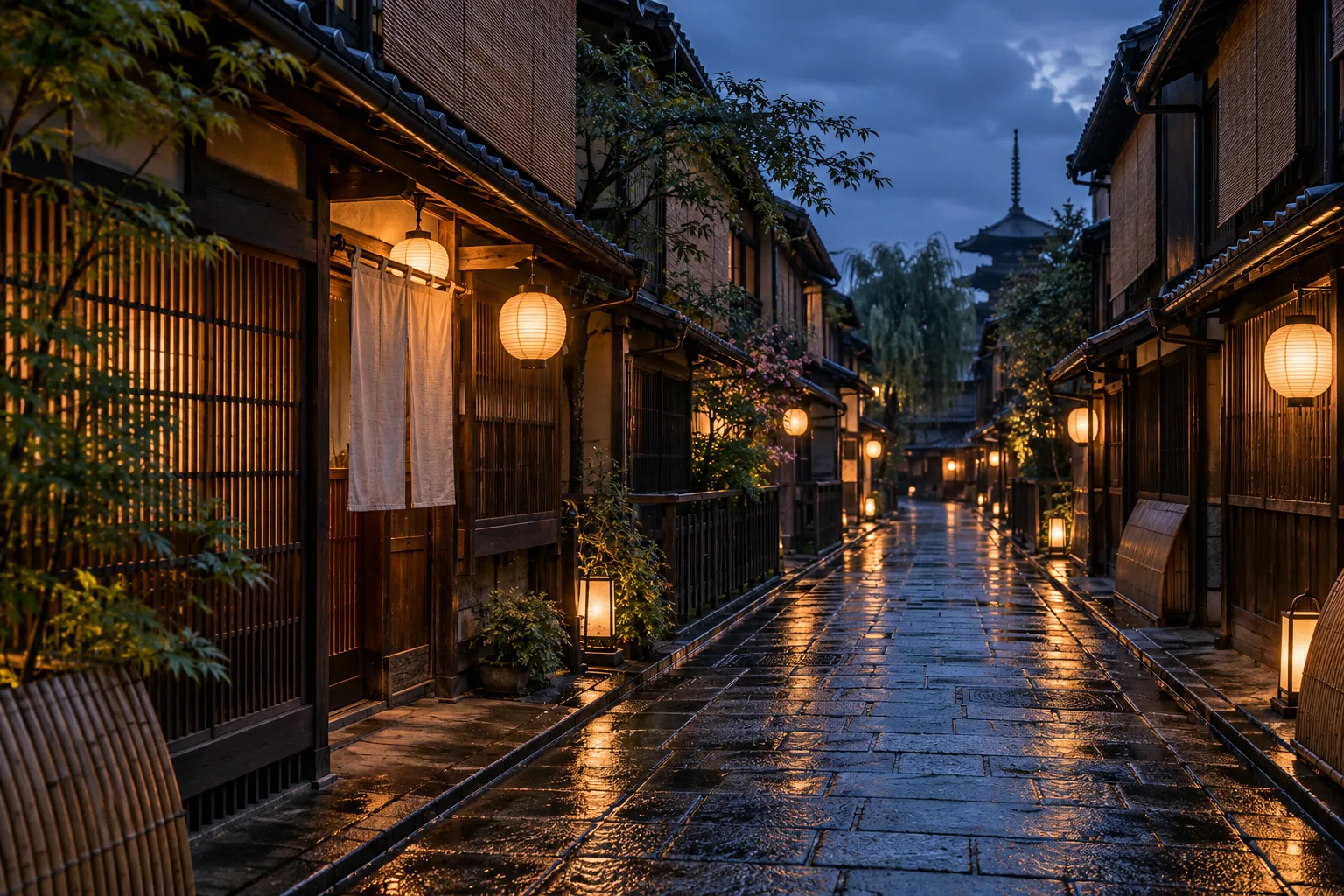
Ozashiki begin around 18:00, almost every night, sometimes several ochaya in one evening, and often run late. She walks between ochaya with her basket, hem lifted in the left hand.
Official page: 'almost every night, often late'.
after 24:00
Home after midnight
Return to the okiya, remove makeup and kimono, and go to bed, often after 1 a.m., sleeping on a raised pillow to protect the hairstyle.
Official page: 'often not in bed until after 1 a.m.'. Takamakura is commonly reported.
varies
Days off
Days off are few and depend on the kagai and okiya; commonly reported as a couple of days a month plus year-end. Not stated on the official page.
unverified