05 — The attire
The attire, read from head to foot
Press a number on the figure, or read the list. Where a detail is well known but not confirmed by the kagai themselves, we say so.
The items, one by one
- White makeup oshiroi / shironuri
Warm hair oil (bintsuke) is spread thinly over the back, nape, neck and face, then paste-type white powder (neri-oshiroi) dissolved in water is applied with a flat brush and evened out with a puff. Newcomers are helped by seniors at first. Red rouge is used around the eyes and brows to express youth. A commonly given reason for the white face is that it reads clearly in dim, candle-lit rooms.
With seniority: Maiko paint themselves; geiko generally use the same base but with less red around the eyes and a quieter look (commonly reported). Junior maiko are the most 'red'.
Commonly reported; not confirmed on an official page — verified (application) / commonly_reported (reason, geiko contrast)- Lipstick: lower lip only in the first year beni
A newly debuted maiko paints rouge only on her lower lip, making a small pursed mouth that reads as childlike. After about a year she paints both lips. Rouge is a stick (bo-beni) dissolved with water.
With seniority: Lower lip only = first year; both lips = second year onward. Verified on ookinizaidan.com ('newly debuted maiko apply rouge only to the lower lip'); the 'about one year' length is commonly reported.
Confirmed on an official kagai or city page- Unpainted 'legs' on the nape eri-ashi / nihon-ashi / sanbon-ashi
On the back of the neck the white is applied so that stripes of bare skin are left, called 'ashi' (legs). Two lines are the everyday form; three lines are used with black crested formal kimono (New Year, hassaku, misedashi, etc.). The lines are said to make the neck look longer and to draw attention to the nape.
With seniority: Changes by occasion (formal vs everyday) rather than by seniority.
Commonly reported; not confirmed on an official page- Hairstyles by stage and occasion wareshinobu / ofuku / yakko-shimada / katsuyama / sakko
Maiko style their own hair (geiko wear wigs). Wareshinobu: from minarai and debut for roughly the first two years; red silk (kanoko) shows front and back through the split bun. Ofuku: after about two years; fuller, squarer bun, the coloured cloth shows only from behind. Yakko-shimada: formal style worn with black crested kimono at New Year, hassaku and similar days, mostly by ofuku-stage maiko. Katsuyama: only during Gion Matsuri (around July 10-24), with a round decorated 'bonten' ornament. Sakko: the final two weeks before erikae. Hair is dressed by a specialist (kamiyui) about once a week and slept on a raised pillow (takamakura) so it keeps.
With seniority: wareshinobu (junior) -> ofuku (senior) -> sakko (last two weeks). yakko-shimada and katsuyama are occasion-based.
Commonly reported; not confirmed on an official page — verified (own hair, wareshinobu, ofuku after ~2 years, sakko: ookinizaidan.com) / commonly_reported (yakko-shimada, katsuyama timing, weekly hair dressing, takamakura)- Seasonal flower hairpins by month hana-kanzashi
Silk-petal hairpins that change monthly so the season can be read from a maiko's hair. Commonly reported list from Kyoto kanzashi makers and guides: Jan pine-bamboo-plum / crane / rice ears (rice ears are worn for shigyoshiki, official); Feb plum (also setsunbun motifs); Mar rape blossom, peony, narcissus; Apr cherry (with butterflies or lanterns); May wisteria, iris; Jun willow, hydrangea; Jul Gion Matsuri fans (uchiwa), tanabata, goldfish; Aug susuki grass, morning glory, fireworks; Sep balloon flower (kikyo), bush clover; Oct chrysanthemum; Nov maple, ginkgo; Dec 'maneki' (miniature kabuki sign-boards that maiko have actors autograph at the Kaomise), also mochibana. The Foundation and gion.or.jp confirm January rice-ear pins and December maneki/Kaomise; the full monthly list is from makers and guides and can vary by kagai and okiya.
With seniority: First-year maiko wear many small flowers with dangling strands (bura/shidare) beside the face; senior maiko (2-3 years) wear larger, fewer blooms without the dangling strands and in calmer colours. Example: small chrysanthemums for juniors, one large chrysanthemum for seniors in autumn.
Commonly reported; not confirmed on an official page — commonly_reported (monthly list, seniority rule) / verified (January rice ears, December maneki and Kaomise)- Trailing long-sleeved kimono susohiki / hikizuri / furisode
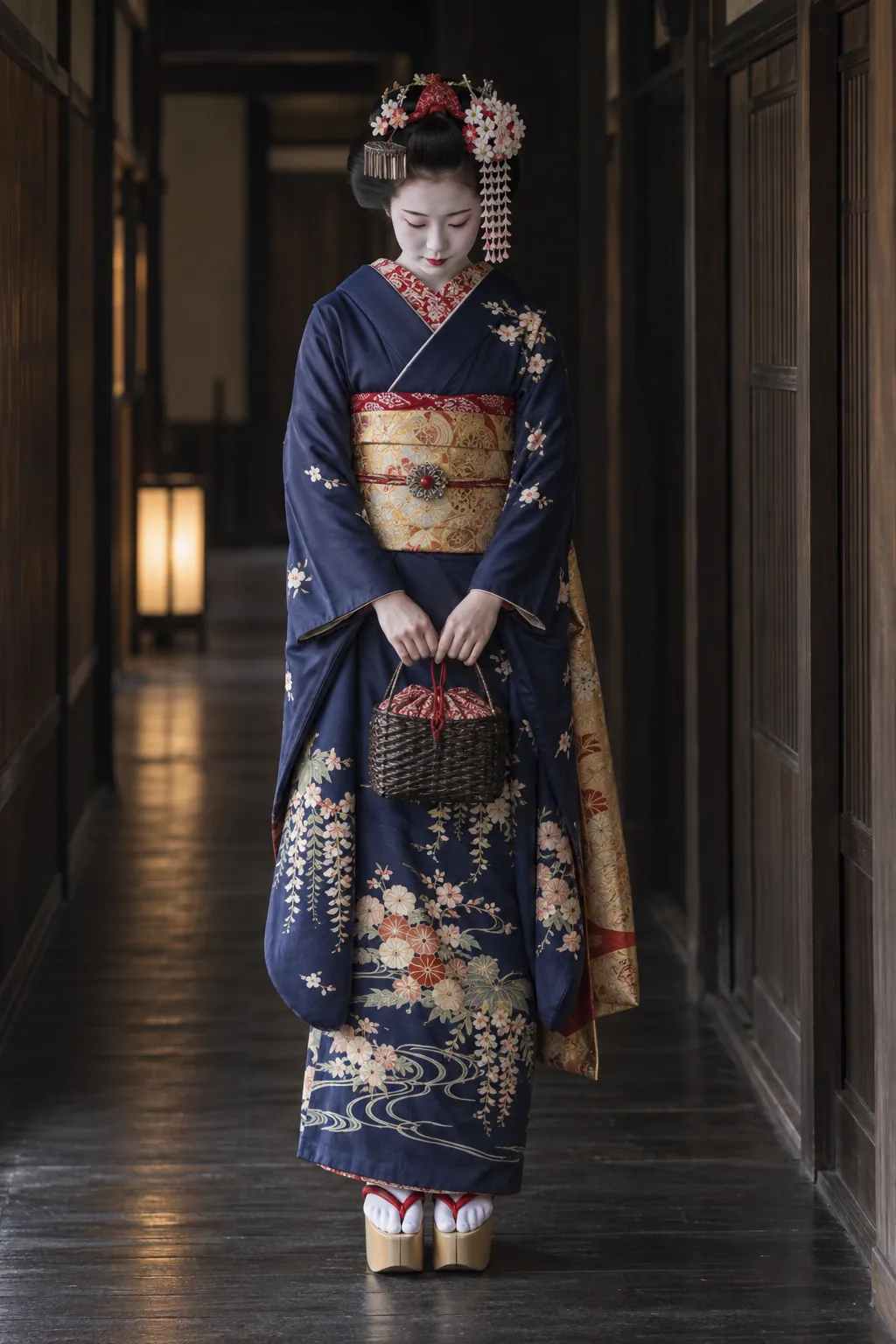
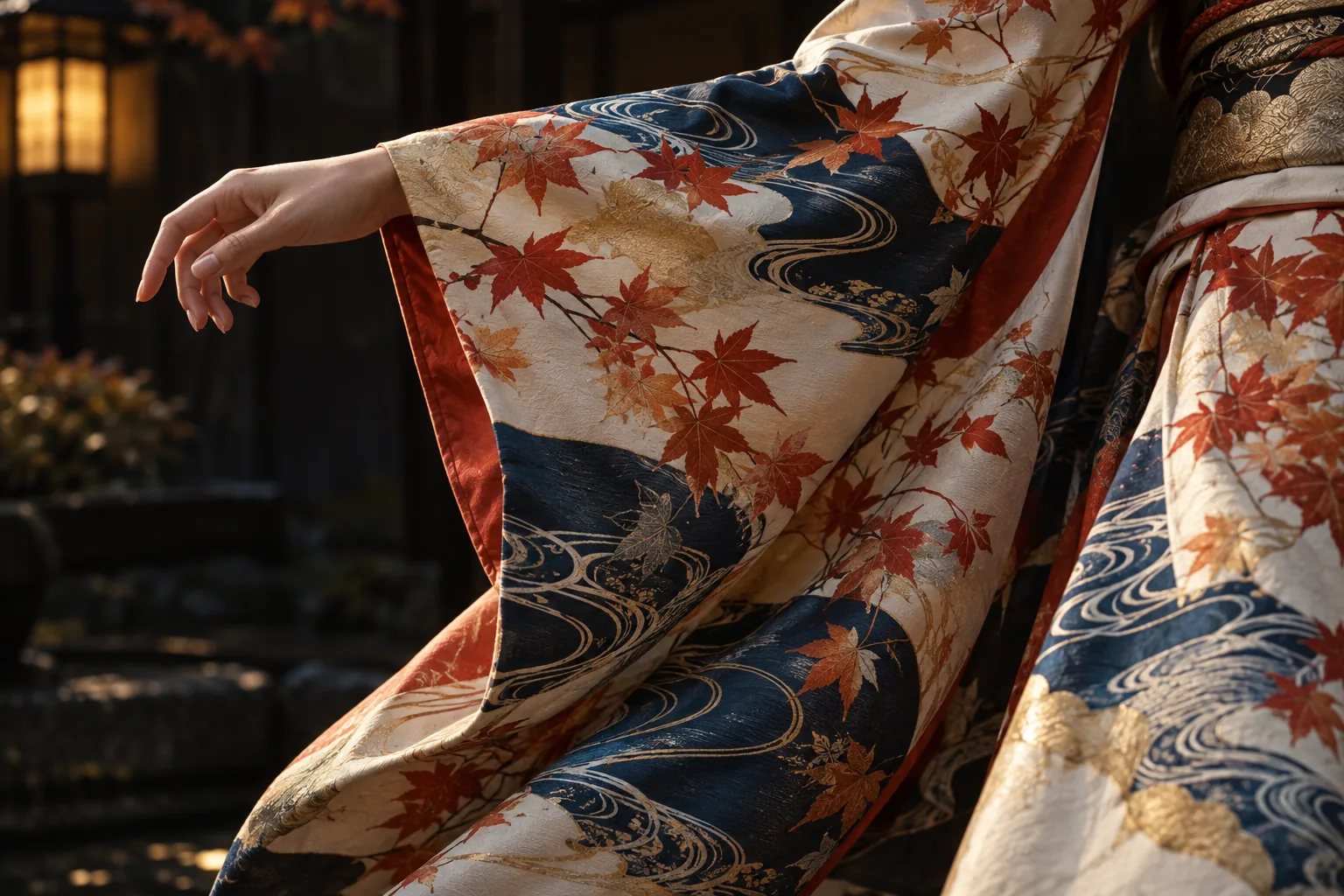
The maiko's kimono is a furisode with long swinging sleeves and a hem that trails on the floor (susohiki, also called hikizuri). Shoulders and sleeves have tucks (kata-age, sode-age) as on a child's kimono, a visual sign of youth. Outdoors she lifts the left hem by hand (hidari-zuma). The under-collar is red, embroidered increasingly white as she gains seniority (commonly reported); at erikae it becomes fully white.
With seniority: Red collar with more white embroidery as she grows senior; tucks are a maiko marker; geiko wear plainer kimono with normal sleeves and a white collar.
Commonly reported; not confirmed on an official page — verified (furisode/susohiki, tucks, hem lifted: ookinizaidan.com; red->white collar at erikae: official) / commonly_reported (embroidery gradient)- Trailing 'darari' obi darari no obi
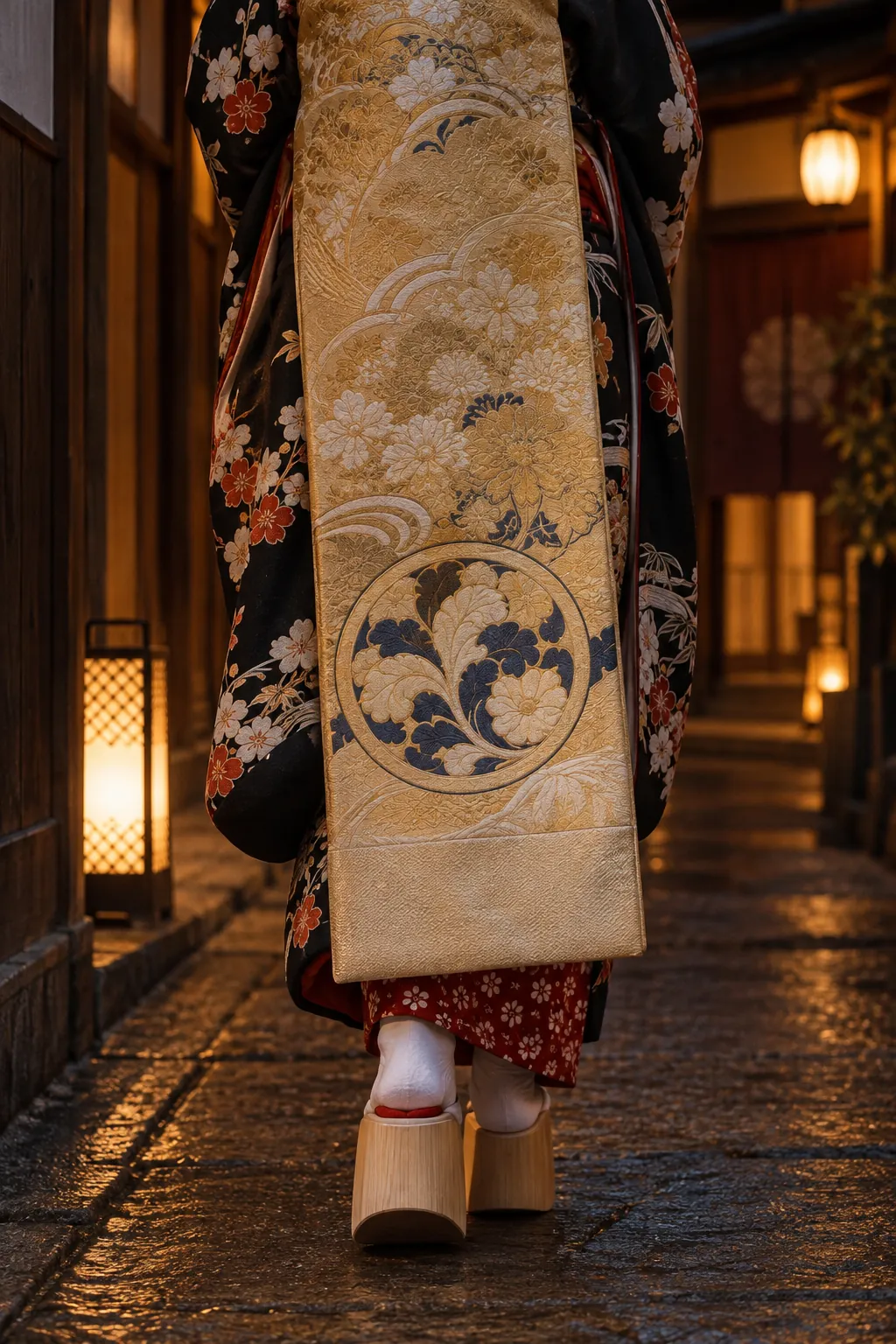
A maru-obi tied so the ends hang down almost to the ankles. The official site gives about 5 metres in length and says it is very heavy, so it is tied by a dresser (otokoshi). The crest of the maiko's okiya is woven or dyed at the hanging end, so anyone in the kagai can tell which house she belongs to. Minarai wear a half-length version.
With seniority: Half-length for minarai; full darari for maiko; geiko wear a normal obi with a compact knot (taiko).
Commonly reported; not confirmed on an official page — verified (length ~5 m, heavy, needs help, half-length for apprentices: ookinizaidan.com) / commonly_reported (okiya crest at the end, some sources say 5-6 m or 6-7 m)- Large ornamental obi clasp pocchiri / obidome
A large jewelled clasp threaded on the obi cord at the front, distinctive to maiko. Often described as the most valuable single item the maiko wears; usually the property of the okiya (commonly reported).
With seniority: Maiko only; geiko do not wear it.
Commonly reported; not confirmed on an official page — verified (existence and description) / commonly_reported (ownership, value)Sources
- Tall wooden platform sandals okobo
Thick-soled wooden sandals worn by maiko, roughly 10-12 cm high, with a small bell inside the toe in many cases. The Kyoto City tourism site gives 'about 12 cm'. The thong colour is commonly reported as red for juniors and changing as she becomes senior. Geiko wear ordinary zori.
With seniority: Thong colour changes with seniority (commonly reported); geiko switch to zori.
Commonly reported; not confirmed on an official page — verified (item, height) / commonly_reported (thong colour)- Split-toe socks tabi
White split-toe socks worn with okobo or zori. The maiko carries a spare tabi case in her basket.
With seniority: No change with seniority.
Confirmed on an official kagai or city pageSources
- Basket and hand items ozashiki-kago / mai-ogi / sensu / tenugui / senjafuda
The bamboo basket (ozashiki-kago) with a drawstring crepe cover, about 13 x 30 cm, carried under the arm. Summer covers use sheer ro or sha fabric in pale colours with motifs such as morning glory; winter covers are darker. Inside: dance fan (mai-ogi), folding fan (sensu), dance towel (tenugui), stick rouge for touch-ups, kaishi paper, tabi case, name slips (senjafuda / hana-meishi) and a kuromoji pick. In early summer maiko and geiko also distribute round fans (uchiwa) printed with their name and the okiya crest to ochaya and patrons (commonly reported; uchiwa made by Komaruya since 1872).
With seniority: No formal change; senior maiko and geiko carry similar items.
Commonly reported; not confirmed on an official page — verified (basket and contents: ookinizaidan.com) / commonly_reported (uchiwa custom)- How a geiko looks different geiko no yosooi
Geiko wear a wig (katsura) in a shimada style, a white collar, subdued kimono with normal sleeve length and a normal obi, zori sandals, and few hair ornaments. The official erikae page says a new wig is given at erikae; the Kyoto City tourism page says geiko wear wigs with fewer ornaments and regular sandals.
With seniority: This is the post-erikae look.
Confirmed on an official kagai or city page
Through the year
Spring
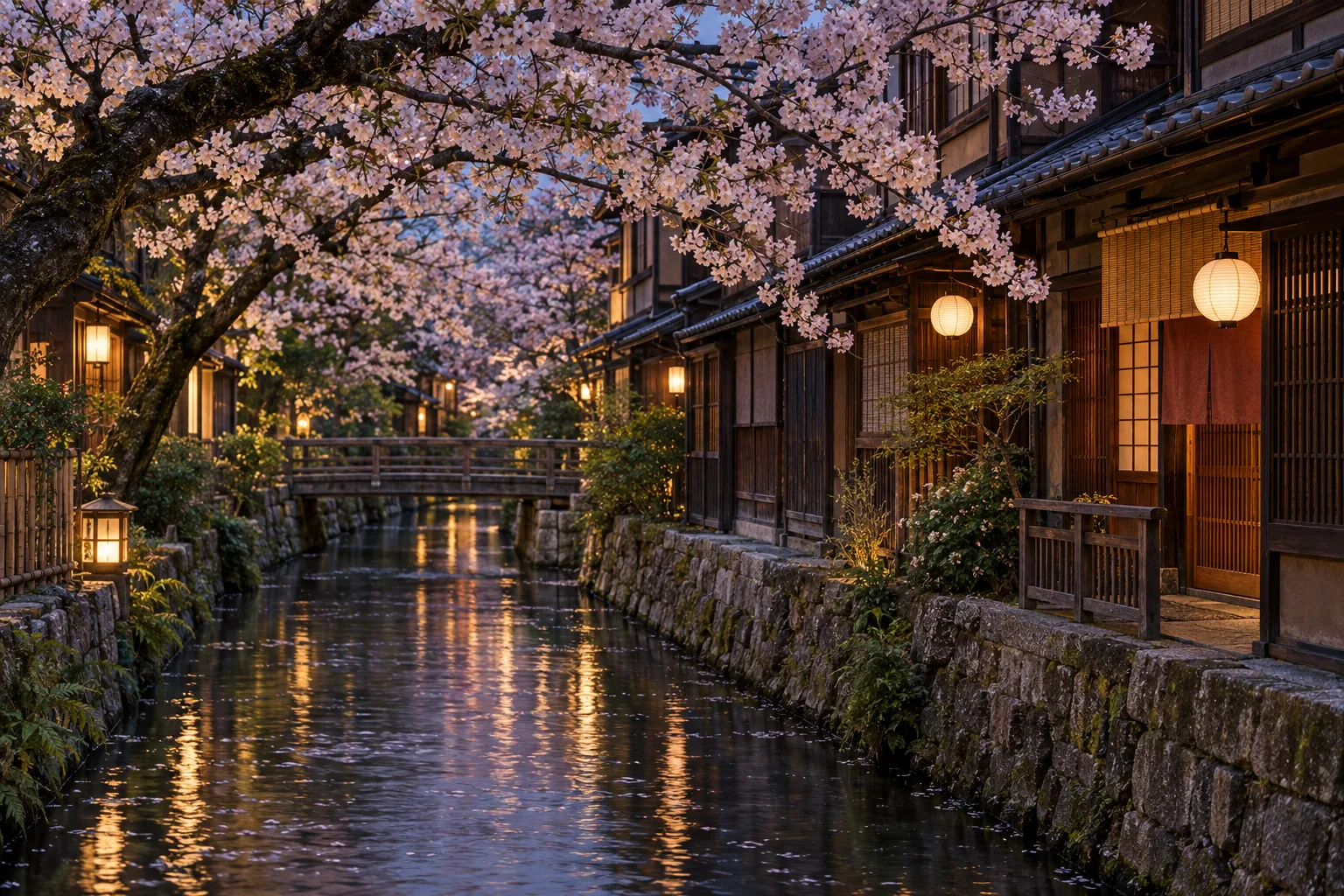
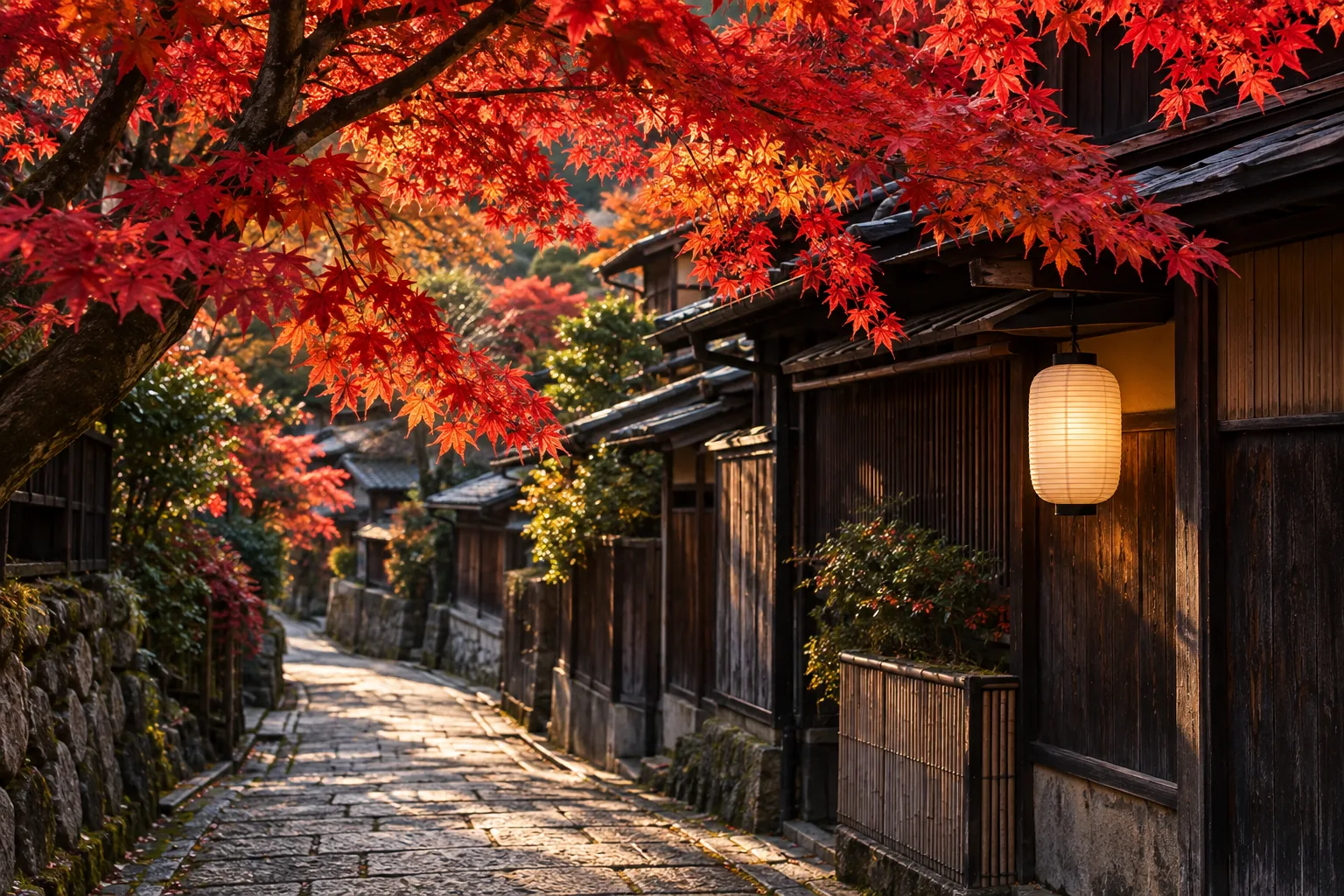
The odori season. Kitano Odori (Kamishichiken) opens in late March, Miyako Odori (Gion Kobu) runs all of April at Gion Kobu Kaburenjo, Kyo Odori (Miyagawa-cho) in April, Kamogawa Odori (Pontocho) in May. Kanzashi: rape blossom and narcissus (March), cherry with butterflies (April), wisteria and iris (May). Heian Shrine festival dance offerings on Apr 15-16. Setsubun 'obake' in early February sees geiko and maiko in fancy dress touring the ochaya.
Summer
June: the five-kagai joint show 'Miyako no Nigiwai' with a finale of twenty maiko. Early summer: maiko and geiko hand out name-printed uchiwa fans to ochaya and patrons; Gion Higashi holds a yukata recital. July: Gion Matsuri; maiko wear the Katsuyama hairstyle and festival-fan kanzashi, and ride in the Hanagasa procession on Jul 24; Gion Corner is closed Jul 16. August 1: Hassaku, everyone in black crested summer silk with yakko-shimada (maiko) or shimada (geiko) making morning rounds in Gion; Aug 16 Gion Corner closed for Gozan no Okuribi. Kanzashi: willow/hydrangea (June), fans/goldfish (July), susuki/morning glory/fireworks (August).
Autumn
September is intensive practice. October: Onshukai (Gion Kobu, Oct 1-6), Mizuekai (Miyagawa-cho), Suimeikai (Pontocho); Jidai Matsuri on Oct 22 with maiko in historical roles. November: Gion Odori (Gion Higashi, Nov 1-10, the only full autumn odori) and Kotobukikai (Kamishichiken). Gion Kouta festival at Maruyama Park. Kanzashi: balloon flower and bush clover (September), chrysanthemum (October), maple and ginkgo (November).
Winter
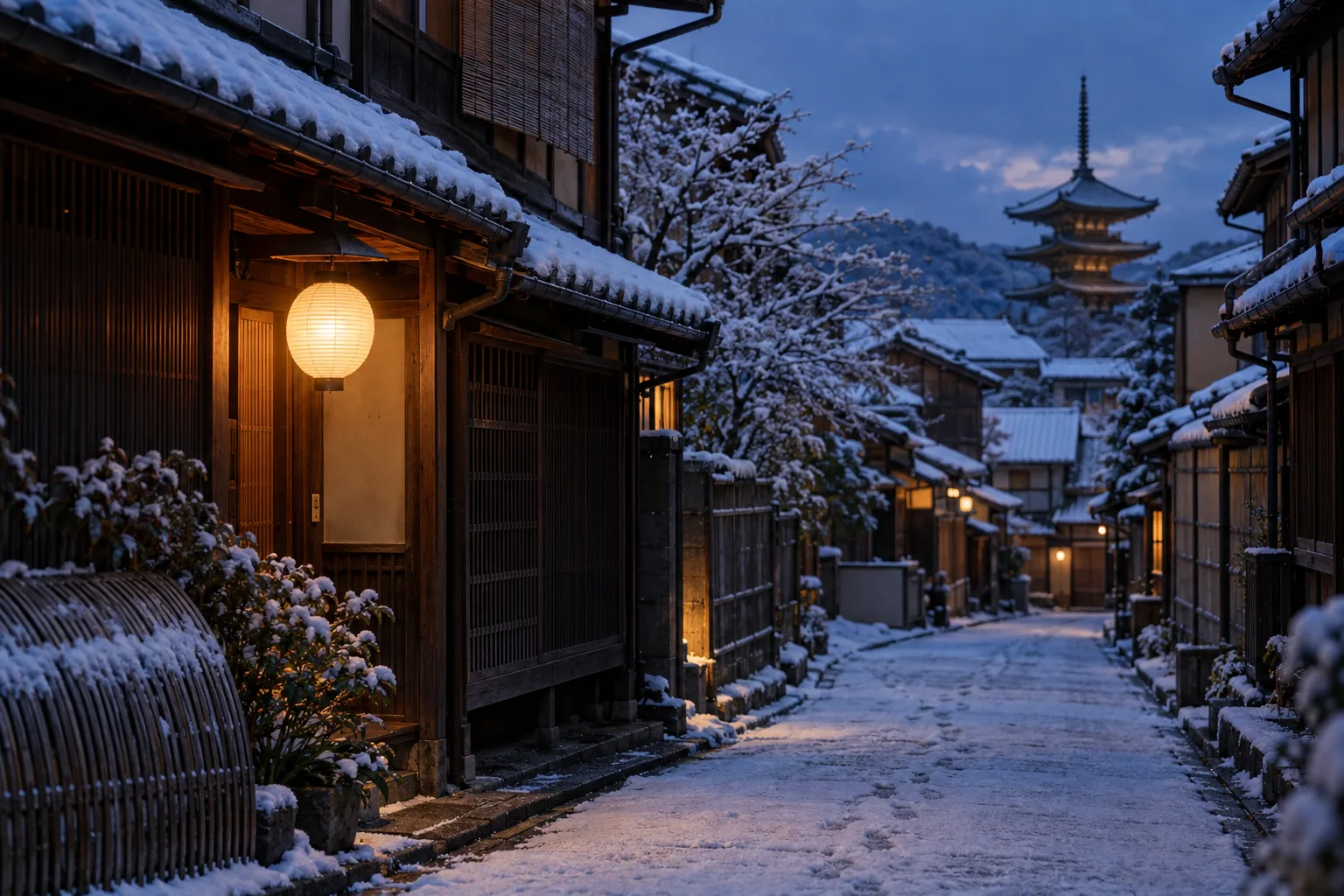
Early December: Kaomise kabuki viewing, when maiko wear 'maneki' kanzashi and have actors sign them; Dec 1 tea offering at Kitano Tenmangu (Kamishichiken). Dec 13: Kotohajime rounds with kagami-mochi. Dec 31 'okotosan' greetings. Jan 7 (Jan 9 in Kamishichiken): Shigyoshiki in black crested kimono with rice-ear kanzashi; Jan 13 first gathering. Gion Corner runs a reduced Tue-Fri winter schedule (Dec 1-Mar 11) and is closed Dec 26-Jan 4. Feb 25: Baika-sai plum-blossom tea at Kitano Tenmangu served by Kamishichiken geiko and maiko. Kanzashi: maneki and mochibana (December), pine-bamboo-plum and crane (January), plum (February).