06 — Five kagai
The five kagai
'Gion' and 'the five kagai' are not the same thing. Gion holds two of them. The other three lie along the Kamo River and beside Kitano Tenmangu.
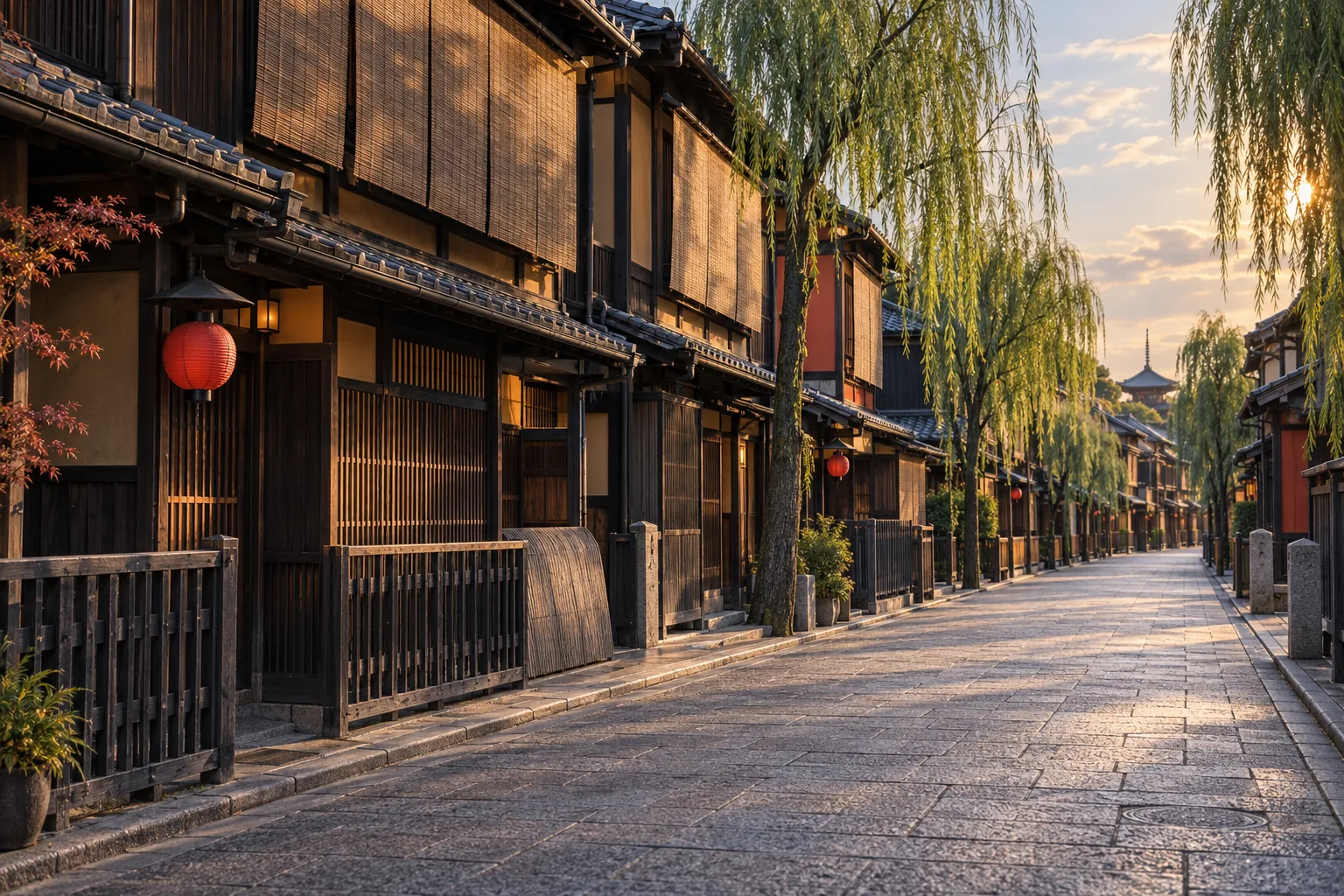
Schematic, not to scale. Rivers and main streets only.
- 01Gion Kobu 祇園甲部Miyako Odori (April) / Onshukai (October) · Kyomai, Inoue school (only in Gion Kobu)
- 02Miyagawacho 宮川町Kyo Odori (April) / Mizuekai (October) · Wakayagi school (Nihon buyo)
- 03Pontocho 先斗町Kamogawa Odori (May) / Suimeikai (October) · Onoe school (Nihon buyo)
- 04Kamishichiken 上七軒Kitano Odori (March–April) / Kotobukikai (November) / Beer Garden (summer) · Hanayagi school (Nihon buyo)
- 05Gion Higashi 祇園東Gion Odori (November) — the only main odori in autumn · Fujima school (Nihon buyo)
The busiest and most visited kagai. Hanamikoji-dori south of Shijo is lined with ochaya (teahouses) with lattice fronts and red lanterns; side lanes such as Shinbashi-dori by the Shirakawa stream are quieter and protected as a historic townscape. Expect crowds in the evening.
Go deeper: Gion Kobu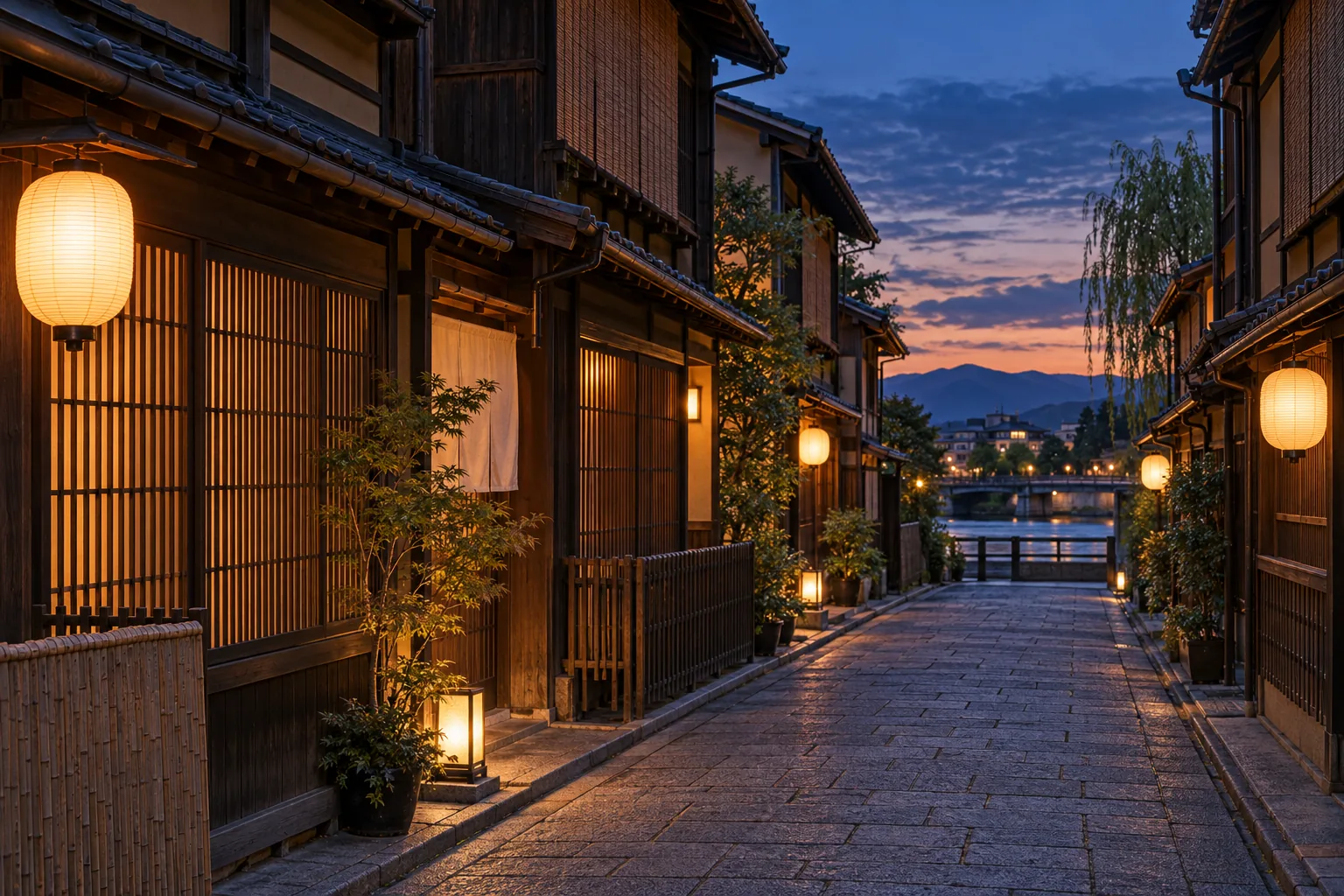
Quiet lanes of two-storey wooden houses with lattice fronts and name plates of okiya; more of a lived-in neighbourhood feel than Gion. The Kaburenjo (rebuilt, with a theatre called Mitsuwaza) sits in the middle of the district.
Go deeper: Miyagawacho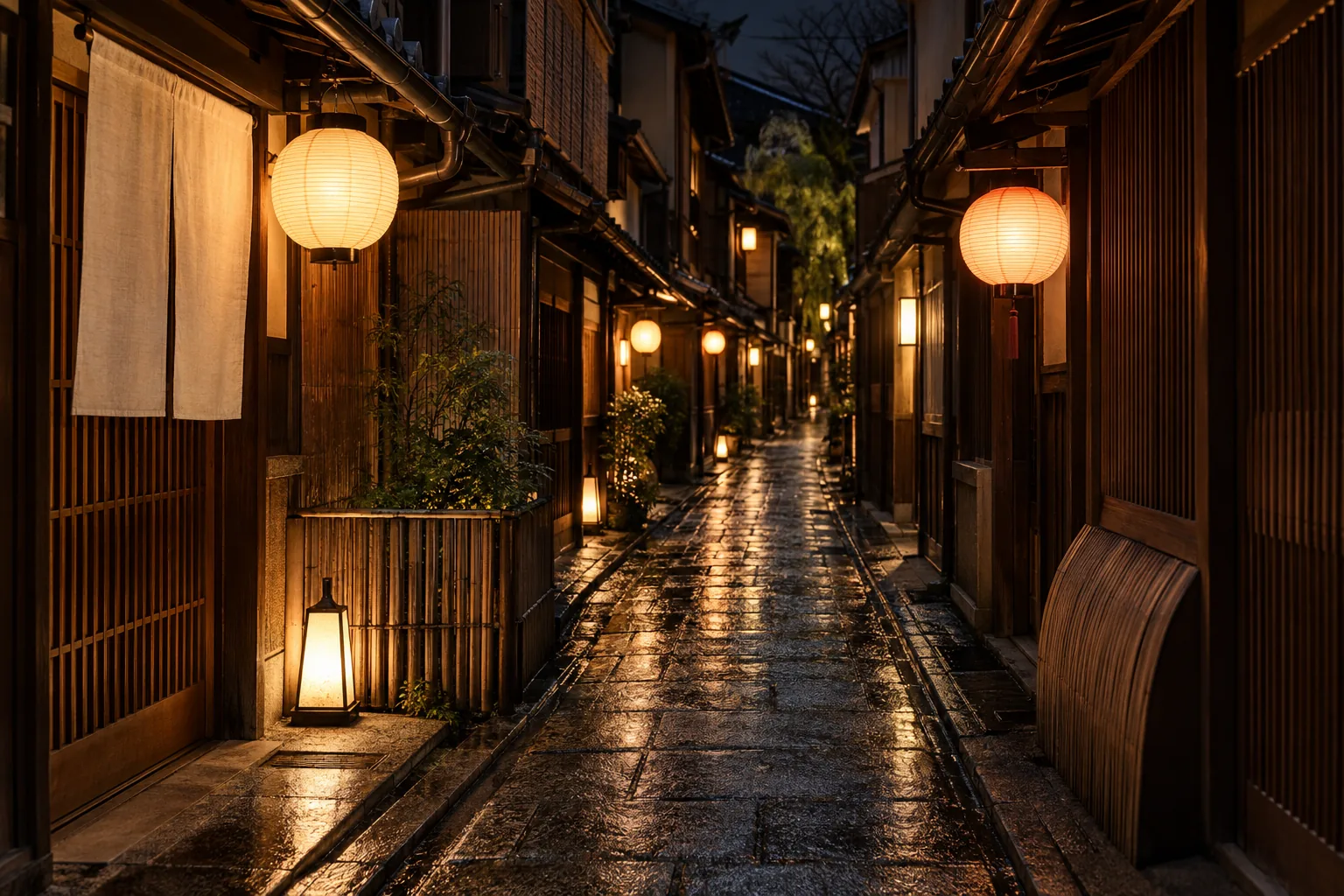
Atmospheric at dusk when lanterns bearing the district's plover crest are lit; the lane is very narrow and busy with diners, and many restaurants have summer riverside decks (kawayuka). The Kaburenjo is a distinctive tiled building at the north end by Sanjo Bridge.
Go deeper: Pontocho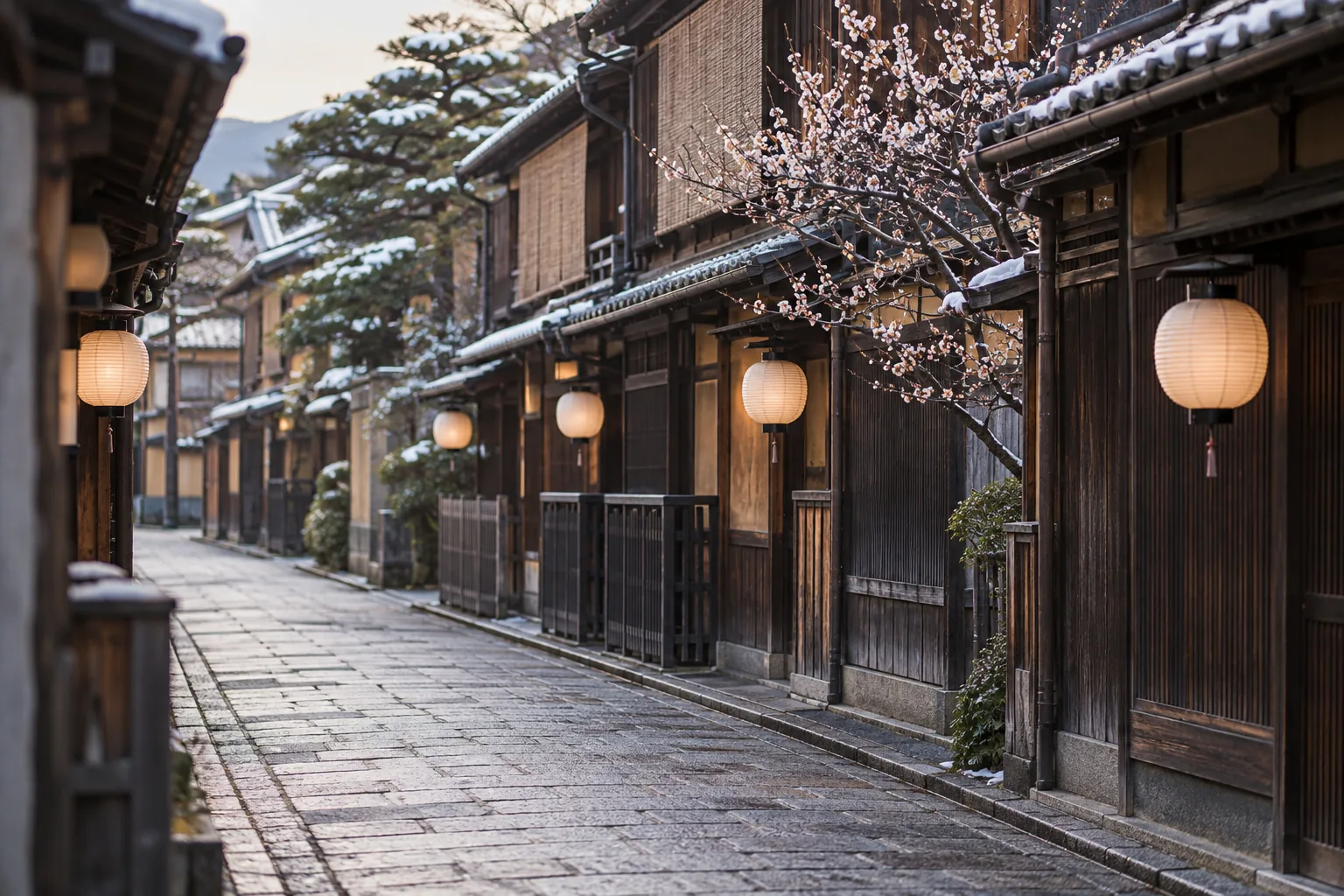
Calm and refined, with a single stone-paved street of teahouses under the shrine's shadow; far fewer tourists than Gion. The Kaburenjo has a garden and hosts an open-air beer garden in summer where geiko and maiko serve.
Go deeper: Kamishichiken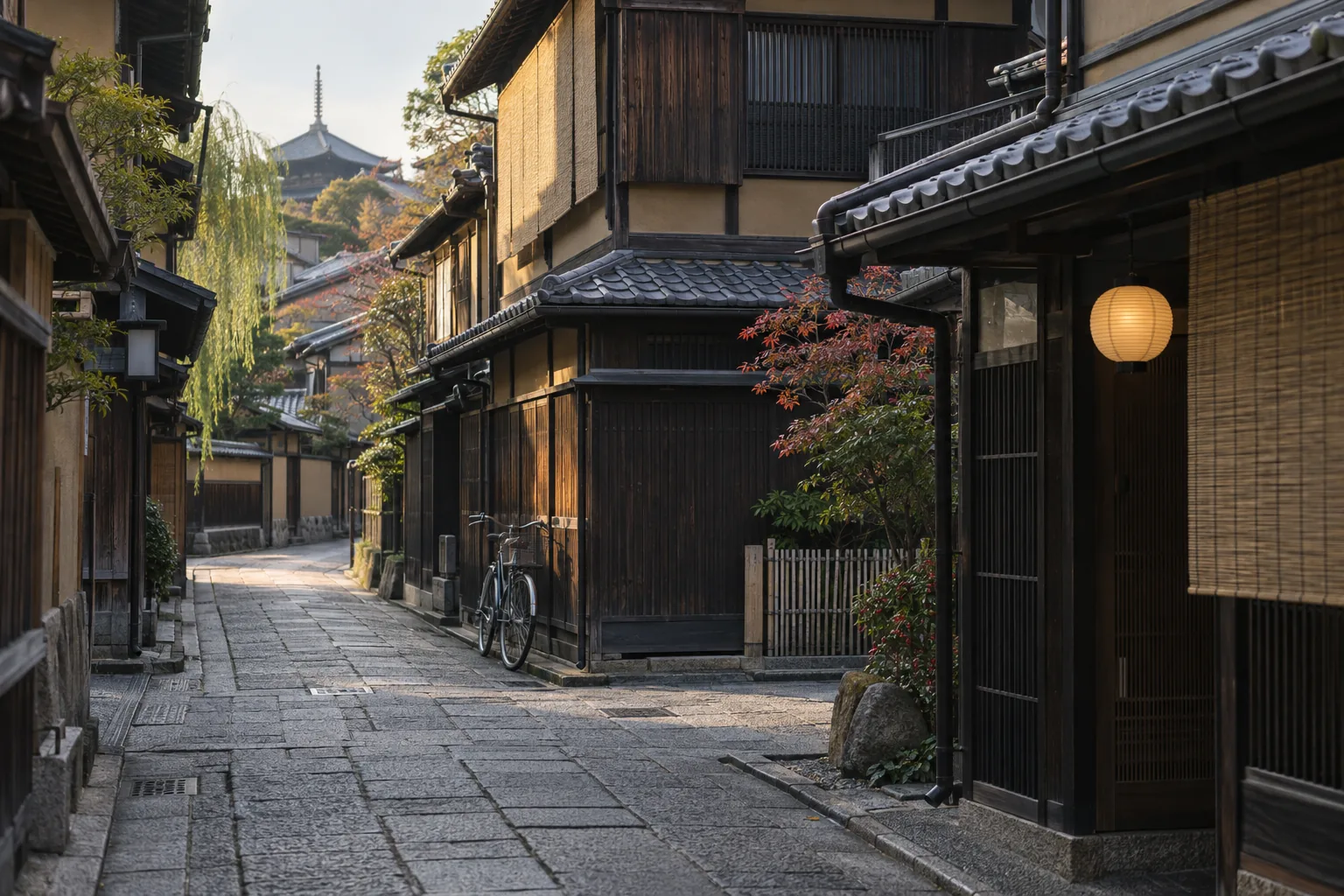
Tucked behind the busy Gion crossing, the lanes are short and quiet, with a handful of ochaya and okiya. Gion Odori is staged at Gion Kaikan, a theatre hall at the foot of the Yasaka Shrine steps (Gion Ishidan-shita).
Go deeper: Gion HigashiThe five compared
| Kagai | Location | Dance school | Theatre | Performances | Crest | Nearest stations |
|---|---|---|---|---|---|---|
| Gion Kobu | The largest of the five kagai, in Higashiyama Ward east of the Kamo River. Its streets lie on both sides of Shijo-dori, … | Kyomai, Inoue school (only in Gion Kobu) | Gion Kobu Kaburenjo (Hanamikoji-dori, next to Kennin-ji). Gion Corner is staged in its annex theatre (the foundation's English pages call it the Annex Theatre). | Miyako Odori (April) / Onshukai (October) | Eight linked dango (tsunagi-dango) | Gion-Shijo Station (Keihan Line), about 8 min on foot to the Kaburenjo; Kyoto-Kawaramachi Station (Hankyu Line), about 10 min on foot |
| Miyagawacho | On the east (left) bank of the Kamo River in Higashiyama Ward, south of Shijo-dori toward Gojo-dori, along Miyagawa-suji… | Wakayagi school (Nihon buyo) | Miyagawacho Kaburenjo, theatre 'Mitsuwaza' (306 Miyagawa-suji 4-chome, Higashiyama-ku) | Kyo Odori (April) / Mizuekai (October) | Three linked rings (mitsuwa) | Gion-Shijo Station (Keihan Line), about 7 min on foot; Kiyomizu-Gojo Station (Keihan Line), about 7 min on foot |
| Pontocho | A narrow north-south lane about 500 m long on the west (right) bank of the Kamo River in Nakagyo Ward, running from Shij… | Onoe school (Nihon buyo) | Pontocho Kaburenjo (Pontocho-dori Sanjo-sagaru, Nakagyo-ku) | Kamogawa Odori (May) / Suimeikai (October) | Plover (chidori) | Sanjo Station (Keihan Line), about 5 min on foot to the Kaburenjo; Kyoto-Kawaramachi Station (Hankyu Line), about 10 min on foot |
| Kamishichiken | In Kamigyo Ward in north-west Kyoto, on the short street running east from the Kitano Tenmangu shrine gate toward Imadeg… | Hanayagi school (Nihon buyo) | Kamishichiken Kaburenjo (Kitano Kamishichiken, Kamigyo-ku) | Kitano Odori (March–April) / Kotobukikai (November) / Beer Garden (summer) | Five linked dango | City bus stop 'Kitano Tenmangu-mae' (routes 50/51/55/203), about 3 min on foot; City bus stop 'Kamishichiken' |
| Gion Higashi | The smallest kagai: three short streets on the north side of Shijo-dori between Hanamikoji-dori and Higashioji-dori, in … | Fujima school (Nihon buyo) | Gion Odori is performed at Gion Kaikan (323 Gion-machi Kitagawa, Higashiyama-ku); the Gion Higashi Kabukai office is at 319 Gion-machi Kitagawa. | Gion Odori (November) — the only main odori in autumn | Eight linked dango with the character 東 (secondary source) | Gion-Shijo Station (Keihan Line), exit 7, about 5 min on foot toward Yasaka Shrine; Kyoto-Kawaramachi Station (Hankyu Line), about 10 min on foot |