02 — The path

Becoming a maiko

There is no school to enrol in from abroad and no single number that describes how long it takes. There is a sequence, though, and the kagai publish it.

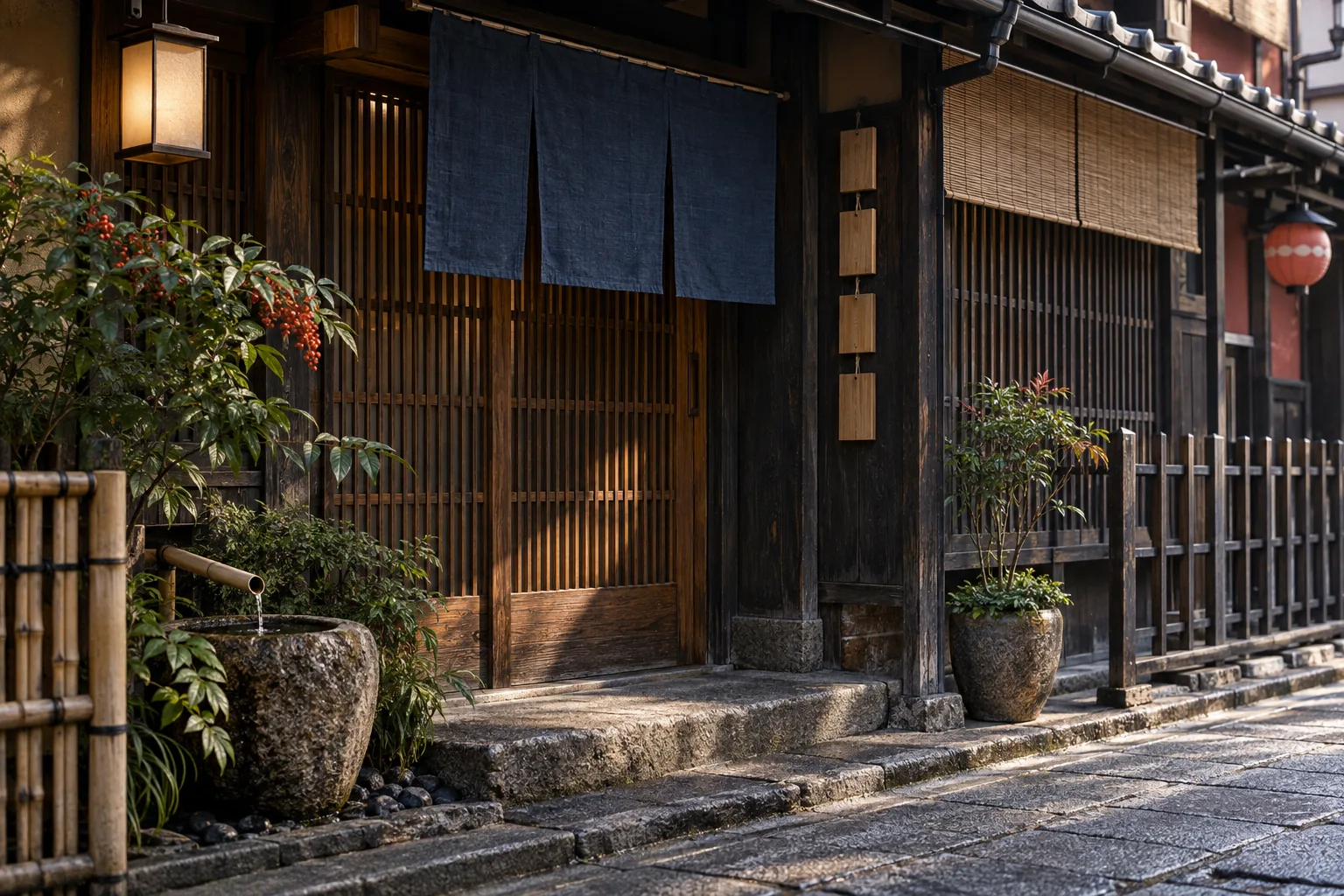
Entrance of a traditional Kyoto townhouse with a short noren curtain, lattice door and small blank wooden name plates, in morning light
AI concept visualAn okiya-style entrance. Concept visual, not a specific house.
Durations below are the ones published by the Kyoto Traditional Musical Art Foundation (ookinizaidan.com) and Kyoto City. They are typical, not rules: they differ by kagai, by house and by person.
01

仕込み · shikomi

Shikomi — living in, learning by doing

The live-in preparation stage. A girl moves into an okiya (lodging house) and, while helping with housework and attending to senior geiko and maiko, starts lessons in dance (described by the official kagai site as 'the life of a maiko'), Kyoto dialect, and kagai etiquette. She rises before her seniors and works until late. Around the tenth month, if the dance teacher and the okiya mother judge her ready, she advances.

Typical duration: About one year (official: ookinizaidan.com and Kyoto City both say 'roughly one year'). Some secondary sources give a range of 6 months to 2 years depending on the person. Entry age: after junior high school, typically 15; Kamishichiken's official recruitment page says 'about 15 to 18' (official for that district). Ages and lengths vary by kagai and by person.
02

見習い · minarai

Minarai — learning by watching

Learning by watching. After a sister-bond ceremony (shimai-sakazuki) with a senior geiko or maiko who becomes her oneesan, the trainee dresses almost like a maiko, wears the wareshinobu hairstyle and a half-length darari obi (han-darari), and accompanies her oneesan to ozashiki to observe how a banquet is run.

Typical duration: About one month (official: ookinizaidan.com). The half-length obi is reported by ookinizaidan.com ('apprentices wear a half-length version') and secondary sources.

04

舞妓 · maiko

The maiko years

The apprentice years proper. She lives in the okiya, takes daily lessons at the kagai school or kaburenjo (dance, shamisen, songs, drums, flute, tea ceremony, etc.), and attends ozashiki almost every evening. Her appearance changes with seniority: hairstyle moves from wareshinobu to ofuku after roughly two years, lipstick moves from lower lip only to both lips after about a year, kanzashi become larger and quieter.

Typical duration: Around five to six years, ending around age 20 (official: ookinizaidan.com erikae page). Some maiko leave the kagai before erikae; Kyoto City notes many aspire only to the maiko stage. Numbers: the Foundation reported 155 geiko and 56 maiko across the five kagai as of April 2024 (reported via plus.kyoto.travel / Japanese Wikipedia citing the Foundation; commonly_reported).

05

先笄・衿替え · sakko / erikae

Sakko and Erikae — turning the collar

Before becoming a geiko, the maiko wears the sakko hairstyle, a traditional married-woman's style, with blackened teeth (ohaguro), for about two weeks. Then at erikae ('turning the collar') the red collar of the maiko's under-kimono is replaced with a white one. She receives a brand-new wig, wears black crested formal dress, and makes courtesy rounds of the ochaya and patrons as a geiko.

Typical duration: Sakko about two weeks; erikae around age 20 after 5-6 years as maiko (official: ookinizaidan.com). At this point she decides whether to become a geiko or leave the kagai.

06

芸妓 · geiko

Geiko — the professional

The full professional. A geiko supports herself by her own art. She specialises as tachikata (dancer) or jikata (musician/singer with shamisen, drums). Kyoto City says there is no retirement age; geiko may work as long as they wish. Geiko wear subdued kimono, a regular-length obi, zori, a wig, and few ornaments. Many geiko become independent of the okiya ('jimae'), but Kyoto City notes financial anxiety about independence causes some to quit.

Typical duration: Open-ended; no retirement age (Kyoto City tourism site: 'can work indefinitely').

07

その後の道 · sono go no michi

Many paths afterwards

Commonly reported paths: continue as geiko (some become okiya or ochaya proprietresses, 'okaasan'); leave at erikae time (marriage, other jobs); ex-maiko/geiko sometimes host cultural experiences or teach. Only the first two are described on official pages; the rest are observed on commercial experience sites and are not counted here as verified.

Typical duration: varies

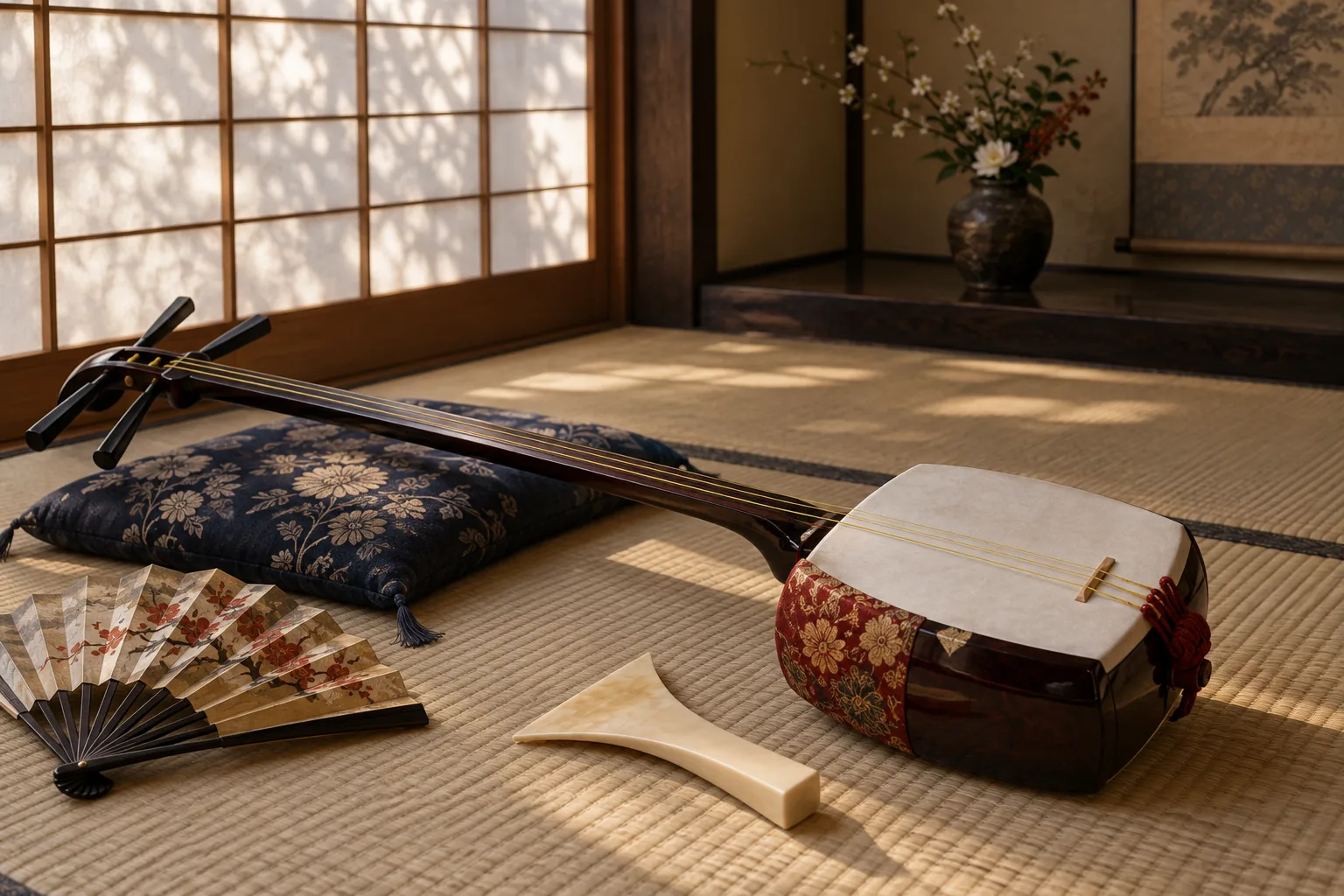
A shamisen resting on tatami with its plectrum, afternoon light from a shoji screen
AI concept visualLessons begin long before the first ozashiki.

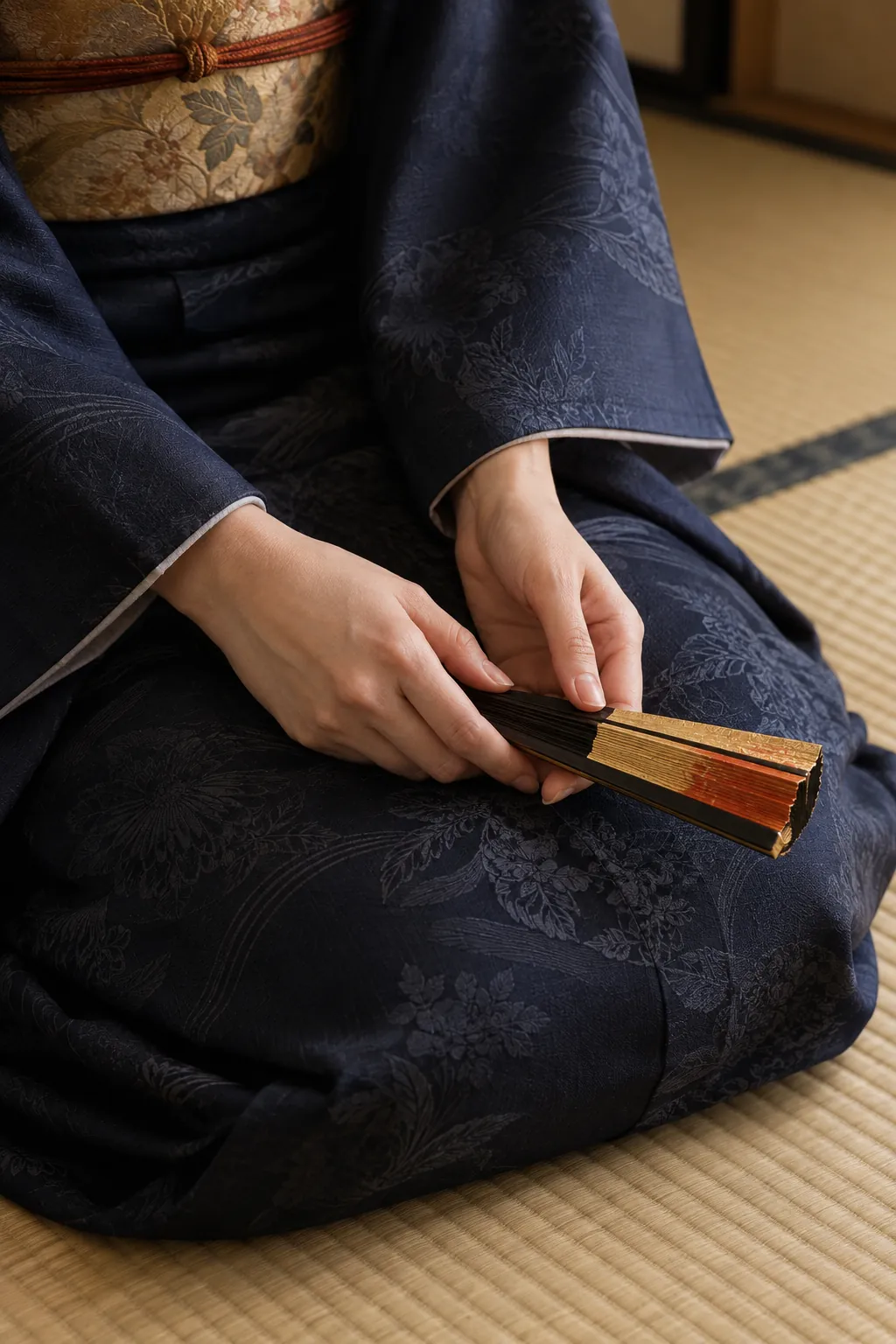
Hands in kimono sleeves holding a closed folding fan, resting on the lap
AI concept visualThe fan, closed, before the dance begins.

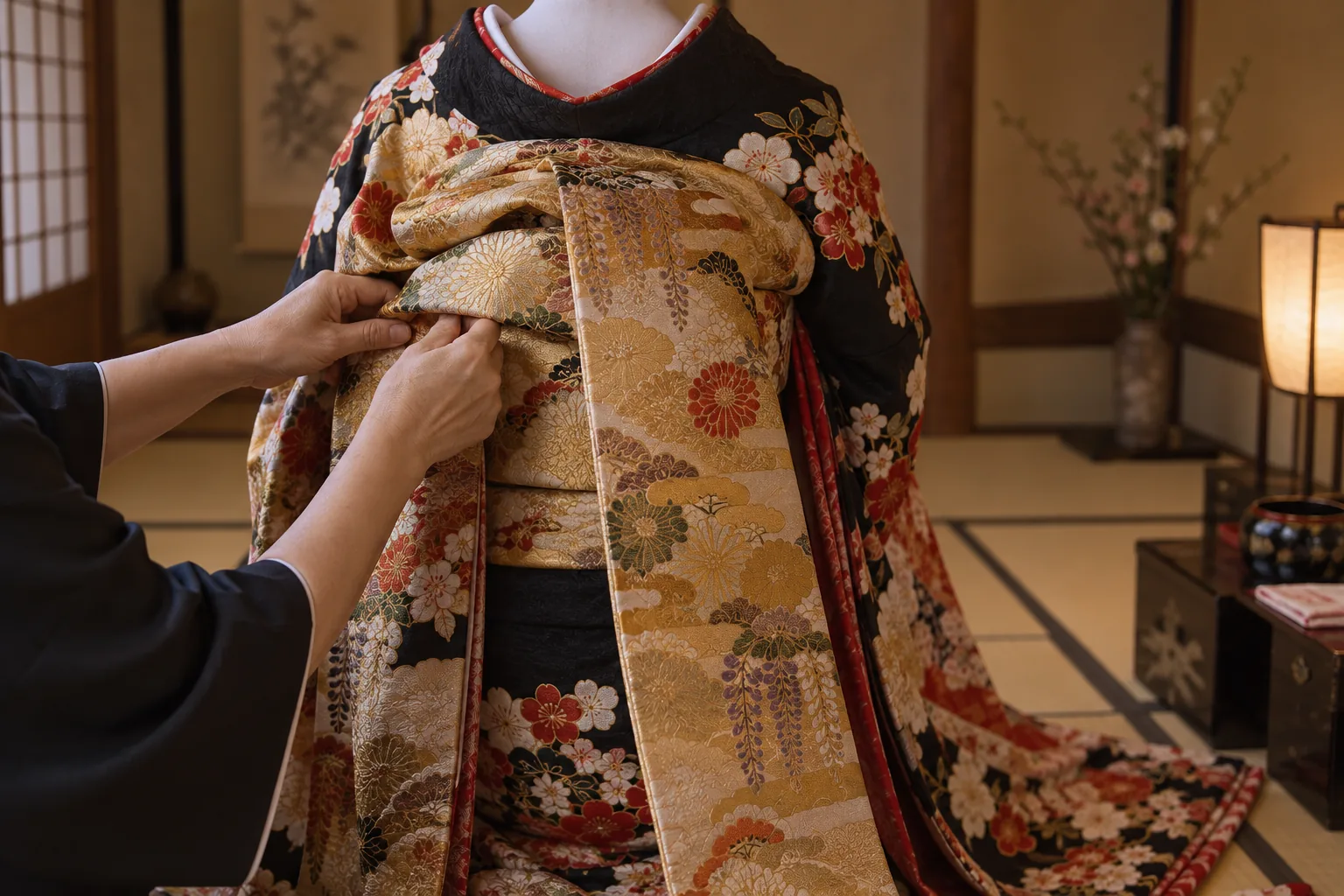
Hands of a dresser tightening a long brocade obi behind a maiko, seen from behind
AI concept visualDressing takes skilled hands.