Maiko 舞妓
Learning through practice.
A maiko is an apprentice geiko in a Kyoto kagai, developing dance, music, etiquette and the knowledge of the seasons through years of structured training, usually from about fifteen to about twenty.
01 — Definitions
A maiko is an apprentice geiko: a young woman, usually between about fifteen and twenty, who lives in a Kyoto kagai and trains every day in dance, song and music while appearing at ozashiki in the evening.
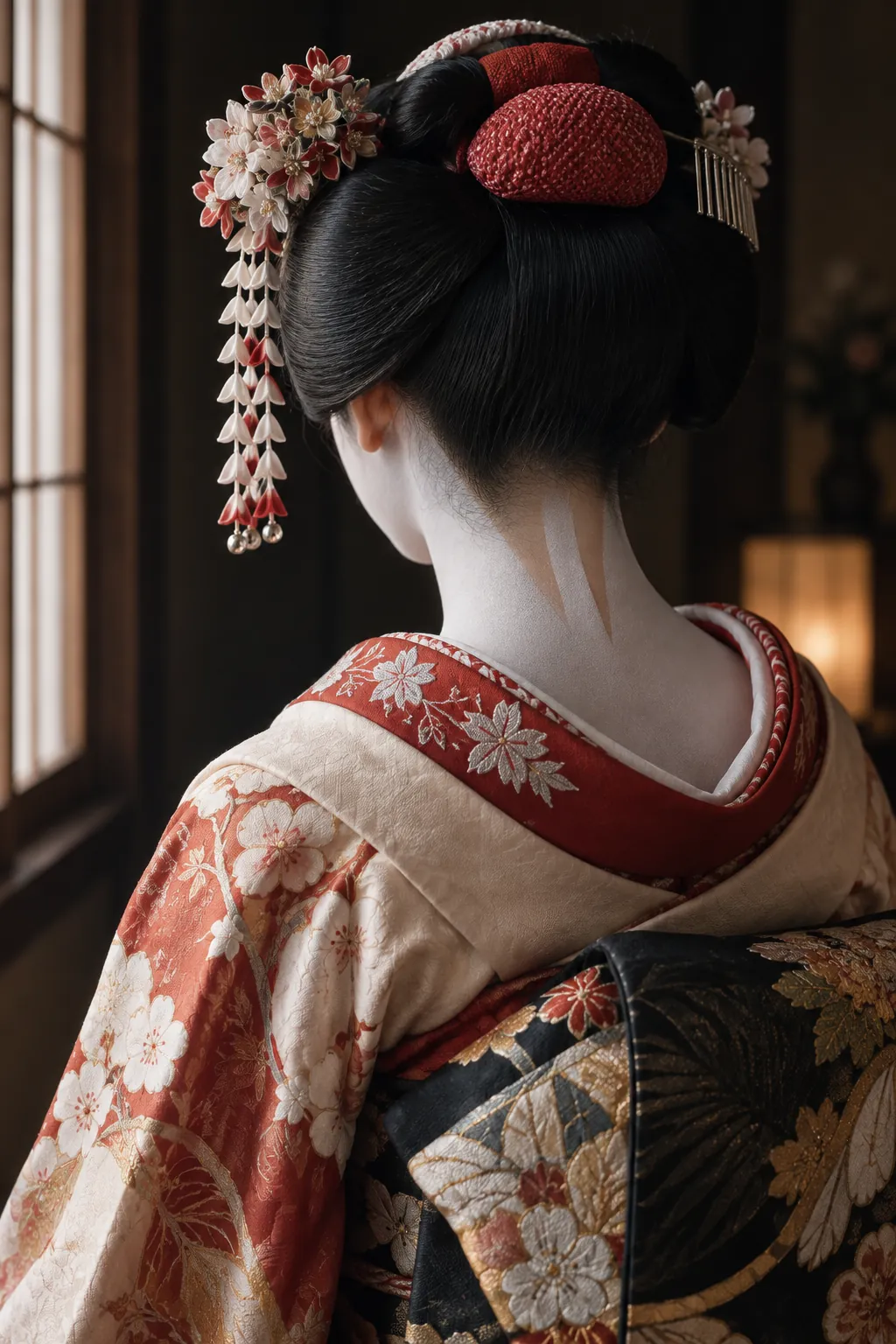
The word means 'dancing girl'. Kyoto City defines maiko and geiko together as bearers of traditional performing arts and hospitality. A maiko is recognised by her own hair dressed in a Japanese coiffure, seasonal flower kanzashi, a long-sleeved kimono whose hem trails, the darari obi hanging almost to her ankles, and tall okobo sandals. She usually stays a maiko for five or six years.
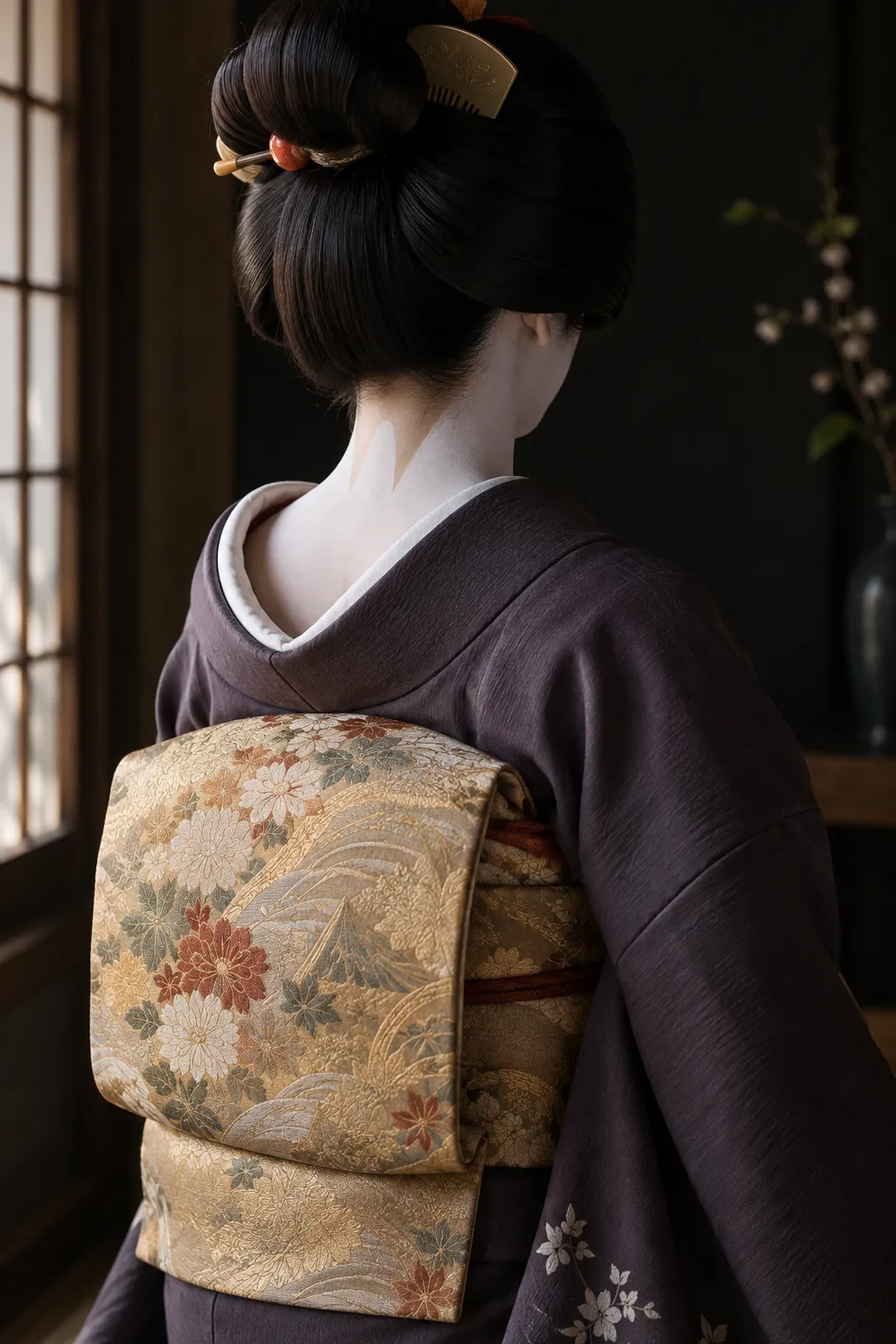
Geiko is Kyoto's word for the fully qualified professional. After erikae, the 'turning of the collar' around age twenty, she wears a wig, a white collar, a subdued kimono with ordinary sleeves and an ordinary obi, and supports herself by her art. Some specialise as dancers (tachikata), others as singers and shamisen players (jikata). There is no retirement age.
Geisha is the general Japanese word used in Tokyo and most of the country for the same profession. In Kyoto the local words are geiko and maiko, and the city's official guide asks visitors to use them. This site follows that usage and treats 'geisha' as the search term many readers arrive with, not as a Kyoto term.
Dance in the school of her kagai, nagauta and kouta songs, shamisen, drums and flute, tea ceremony, flower arrangement, calligraphy, Kyoto dialect and the manners of the banquet room. The goal is not to look a certain way; it is to be able to perform.
That maiko and geiko are the same; that they are courtesans; that the costumed figures strolling Gion at noon are maiko; that anyone can walk into an ochaya; that photographing a maiko on her way to work is harmless. Each of these is answered, with sources, on the misconceptions page.
Maiko 舞妓
A maiko is an apprentice geiko in a Kyoto kagai, developing dance, music, etiquette and the knowledge of the seasons through years of structured training, usually from about fifteen to about twenty.
Geiko 芸妓
A geiko is the professional: after erikae she supports herself by her art as a dancer or a musician, wears a wig, a white collar and a quieter kimono, and may continue for as long as she wishes.
No. A maiko is an apprentice; a geiko is the fully qualified professional (geiko is Kyoto's word for geisha). The maiko stage lasts about five to six years and usually ends around age 20 with erikae.
No. Geiko and maiko sell art (gei): dance, song, music, conversation and hospitality. Kyoto City describes them as bearers of traditional performing arts and hospitality. Historically, licensed courtesans (yujo, oiran) were a separate profession with separate rules; today's kagai are performing-arts communities.
Applicants are girls who have finished junior high school, roughly 15-18 (Kamishichiken's official page: 'about 15 to 18'), with parental consent, who pass an interview and then about a year of shikomi. The Foundation accepts inquiries year-round and introduces candidates to okiya. Some guides mention height limits or other preferences but these are not on official pages.
Yes, through public performances (the spring and autumn odori, Gion Corner), through hotel or experience operators that book a maiko for a dinner or tea, or through an ochaya if a regular patron introduces you. The Kyoto City guide lists these routes.
Not on her way to work. Kyoto asks visitors not to stop, chase, touch or block maiko and geiko and not to photograph them without permission; on the private lanes of Gion-machi Minamigawa, signs since October 2019 warn of a 10,000 yen charge for unpermitted photography, and since 2024 tourists are asked not to enter those lanes at all. Asking for permission means stopping someone who is commuting on a tight schedule, so the respectful answer is not to try. Photographs are welcome where they are part of the arrangement: after Gion Corner's winter shows, at booked experiences with a set photo time, and at public performances where the house allows it.