11 — Glossary
Glossary
Pronunciation hints are for English speakers and are approximate. The Kyoto reading of 花街 is kagai; hanamachi is the reading used elsewhere in Japan.
- darari obi だらりの帯darari no obi · dah-RAH-ree no O-bee
- The maiko's ~5 m obi tied to hang down the back, with the okiya crest at the end.
Sources
- erikae 衿替えerikae · eh-ree-KAH-eh
- 'Turning the collar': the change from red to white collar when a maiko becomes a geiko, around age 20.
Sources
- Fujima-ryu 藤間流Fujima-ryu · foo-JEE-mah ryoo
- The dance school of Gion Higashi.
Sources
- geiko 芸妓geiko · GAY-ko
- Kyoto's word for a fully-fledged geisha: a professional performer of dance, song and music who entertains at ozashiki.
Sources
- geisha 芸者geisha · GAY-sha
- The general Japanese word (used in Tokyo and most of Japan) for the same profession. In Kyoto the local terms geiko and maiko are preferred; the Kyoto City guide explicitly says 'geiko' and 'maiko' are the correct terms there.
- Gion Corner ギオンコーナーGion Kona · GEE-on corner
- Annex theatre of Gion Kobu Kaburenjo showing seven traditional arts in about 50 minutes, including kyomai danced by Gion Kobu maiko.
Sources
- gokagai 五花街gokagai · go-kah-GUY
- The five kagai: Gion Kobu, Miyagawa-cho, Pontocho, Kamishichiken, Gion Higashi. (Shimabara, historic sixth, is not counted.)
Sources
- hanadai / ohana 花代 / お花hanadai / ohana · hah-nah-DIE
- 'Flower fee': the charge for a geiko or maiko's time at an ozashiki, historically measured by incense sticks (commonly reported).
- hanamachi 花街hanamachi · hah-nah-MAH-chee
- Same characters as kagai, the more general reading used nationwide.
- hassaku 八朔hassaku · hahs-SAH-koo
- August 1 courtesy rounds in black crested summer kimono.
Sources
- henshin 変身(舞妓体験)henshin · HEN-shin
- 'Transformation': commercial makeover studios where visitors are dressed as maiko for photos. These are not maiko.
- hikizuri / susohiki お引きずり / 裾引きhikizuri / susohiki · hee-kee-ZOO-ree
- Kimono cut long so the hem trails on the floor.
Sources
- ichigen-san okotowari 一見さんお断りichigen-san okotowari · ee-chee-GEN-san o-ko-to-WAH-ree
- 'No first-time guests without introduction': ochaya custom of accepting only guests introduced by an existing patron.
- Inoue-ryu 井上流Inoue-ryu · ee-NO-oo-eh ryoo
- The kyomai school of Gion Kobu, headed by the hereditary name Inoue Yachiyo (now the fifth).
Sources
- jikata / tachikata 地方 / 立方jikata / tachikata · JEE-kah-tah / tah-CHEE-kah-tah
- Jikata: geiko who sing and play shamisen and drums; tachikata: geiko and maiko who dance.
Sources
- kabukai 歌舞会kabukai · kah-boo-KAI
- The association that runs each kagai's performances and school (e.g. Gion Kobu Kabukai, Kamishichiken Kabukai).
Sources
- kaburenjo 歌舞練場kaburenjo · kah-boo-REN-jo
- Each kagai's own theatre and rehearsal hall where the odori are staged.
Sources
- kagai 花街kagai · kah-GUY
- 'Flower town'; the Kyoto reading of the districts where geiko and maiko live, train and work. Kyoto has five (gokagai).
Sources
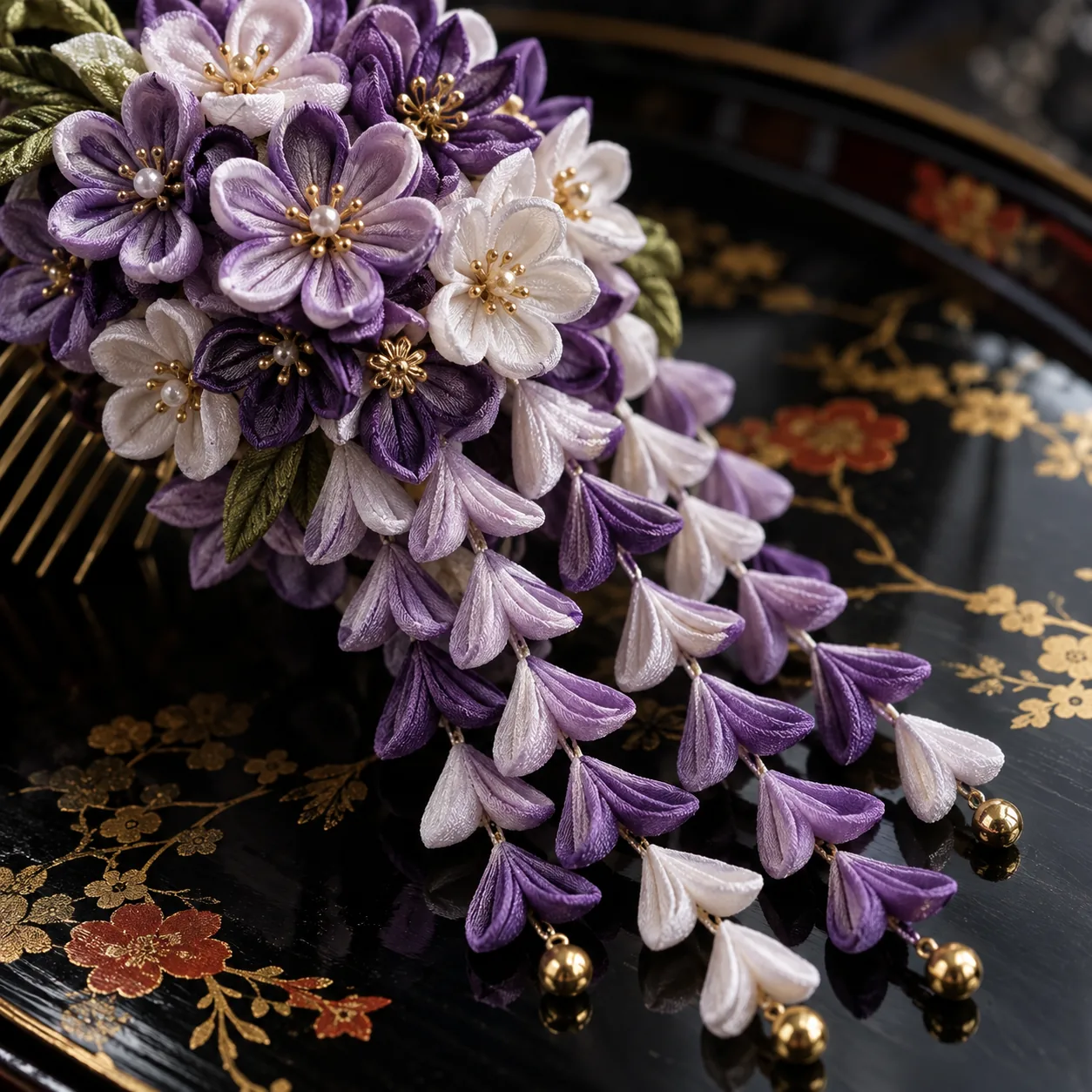
- kanzashi 簪kanzashi · kahn-ZAH-shee
- Hair ornament; maiko wear monthly flower kanzashi.
Sources
- kotohajime 事始めkotohajime · ko-to-hah-JEE-meh
- December 13 year-end thanks rounds, when kagami-mochi is presented to teachers.
Sources
- kyomai 京舞kyomai · KYO-my
- Kyoto-style 'mai' dance of the Inoue school, seen at Gion Kobu and at Gion Corner.
Sources
- maiko 舞妓maiko · MY-ko
- Apprentice geiko in Kyoto's kagai, roughly age 15-20, recognised by own-hair Japanese coiffure, flower kanzashi, long-sleeved trailing kimono, darari obi and okobo.
Sources
- minarai 見習いminarai · mee-nah-RYE
- About a month of learning by watching at ozashiki with one's oneesan.
Sources
- misedashi 店出しmisedashi · mee-seh-DAH-shee
- Debut as a maiko; three days of formal rounds in black crested kimono.
Sources
- nihon buyo 日本舞踊nihon buyo · nee-HON boo-YO
- Japanese classical dance in general; the kagai schools (Inoue, Wakayagi, Onoe, Hanayagi, Fujima) are all lineages within it.
Sources
- obi 帯obi · O-bee
- Kimono sash.
Sources
- ochaya お茶屋ochaya · o-CHAH-yah
- 'Teahouse': a venue that rents tatami rooms for banquets, ordering food from caterers and calling geiko/maiko from okiya. It does not lodge performers.
Sources
- odori をどりodori · o-DO-ree
- The public stage performances of each kagai (Miyako Odori, Kyo Odori, Kamogawa Odori, Kitano Odori in spring; Gion Odori in autumn; plus autumn recitals).
Sources
- okaasan お母さんokaasan · o-KAH-san
- 'Mother': the proprietress of an okiya or ochaya.
Sources
- okiya 置屋(屋形)okiya / yakata · o-KEE-yah
- The lodging house where maiko (and some geiko) live and which manages their engagements, costumes and training costs.
Sources
- okobo おこぼokobo · o-KO-bo
- Tall wooden platform sandals worn by maiko.
Sources
- oneesan お姉さんoneesan · o-NEH-san
- 'Elder sister': the senior geiko or maiko bound to a newcomer by the sister-cup ceremony who guides her.
Sources
- Ookini Zaidan おおきに財団(京都伝統伎芸振興財団)Ookini Zaidan · oh-KEE-nee zai-DAN
- Public-interest foundation founded 1996 to support the five kagai; runs the official five-kagai site, maiko recruitment and Gion Corner.
Sources
- oshiroi 白粉oshiroi · o-SHEE-roy
- White face and neck makeup.
Sources
- otokoshi 男衆otokoshi · o-TO-ko-shee
- Male dresser who ties the maiko's heavy obi and helps her dress; also historically an escort and errand-runner.
- ozashiki お座敷ozashiki · o-zah-SHEE-kee
- A tatami banquet room, and by extension the engagement itself where geiko and maiko entertain.
Sources
- ozashiki asobi お座敷遊びozashiki asobi · o-zah-SHEE-kee ah-SO-bee
- Parlour games such as tora-tora and konpira fune fune played with guests.
Sources
- sakko 先笄sakko · SAHK-ko
- The hairstyle worn for about two weeks before erikae.
Sources
- shigyoshiki 始業式shigyoshiki · shee-GYO-shee-kee
- New-year opening ceremony (Jan 7; Jan 9 in Kamishichiken) in black crested kimono with rice-ear kanzashi.
Sources
- shikomi 仕込みshikomi · shee-KO-mee
- Live-in preparation stage before debut, about a year.
Sources
- Wakayagi-ryu / Onoe-ryu / Hanayagi-ryu 若柳流 / 尾上流 / 花柳流Wakayagi-ryu / Onoe-ryu / Hanayagi-ryu · wah-kah-YAH-gee / o-NO-eh / hah-nah-YAH-gee
- Dance schools of Miyagawa-cho, Pontocho and Kamishichiken respectively.
Sources