06 · Kagai 03
Pontocho
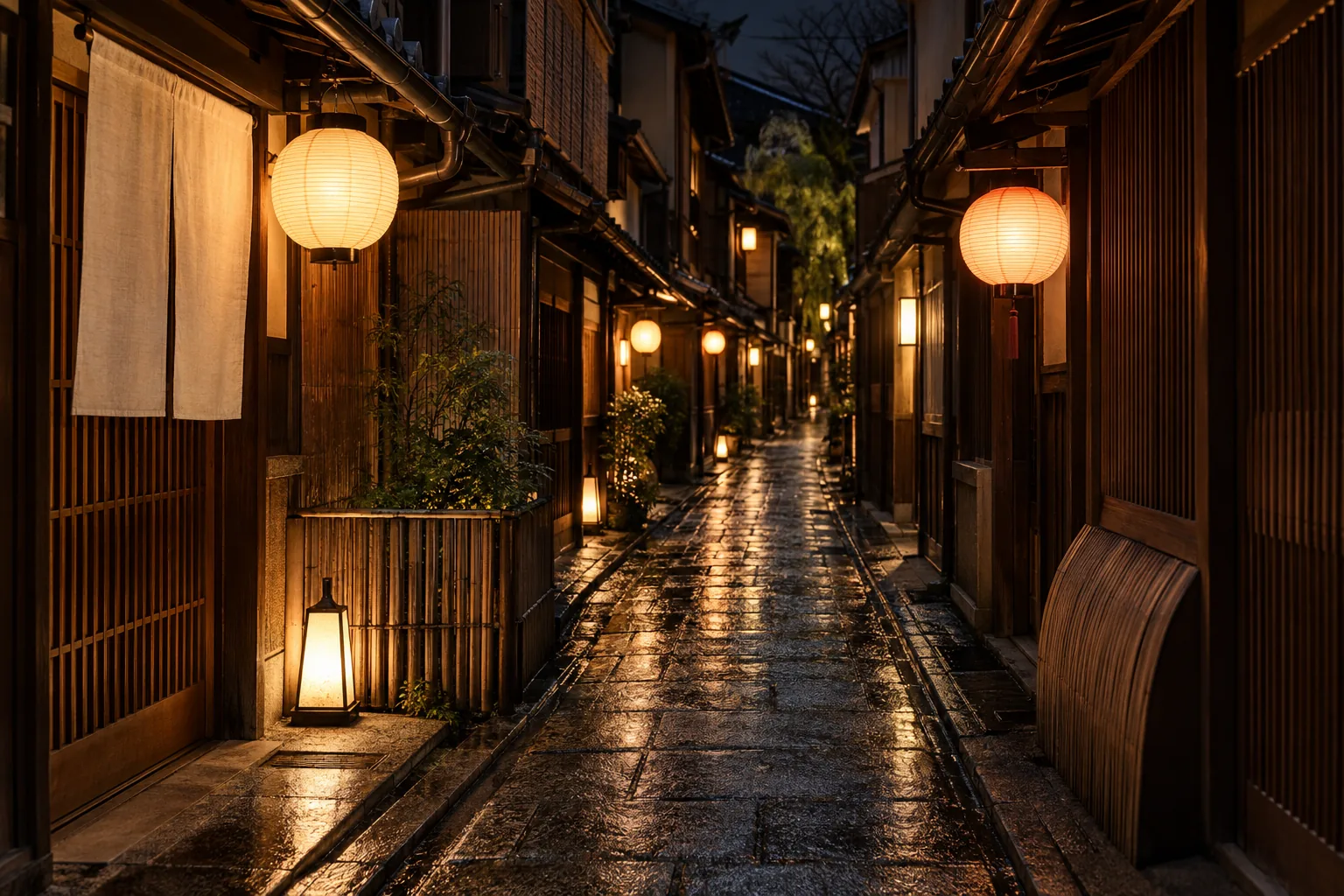
Atmospheric at dusk when lanterns bearing the district's plover crest are lit; the lane is very narrow and busy with diners, and many restaurants have summer riverside decks (kawayuka). The Kaburenjo is a distinctive tiled building at the north end by Sanjo Bridge.
- Location
- A narrow north-south lane about 500 m long on the west (right) bank of the Kamo River in Nakagyo Ward, running from Shijo-dori to one block south of Sanjo-dori, between the river and Kiyamachi-dori. Lined with red-lattice ochaya, okiya and restaurants.
- History
- Pontocho took shape around 1712 on land reclaimed along the river and became a kagai from the late Edo period onward. The origin of the name is uncertain; one common explanation links it to the Portuguese word 'ponto' (point/tip). The Kamogawa Odori was first staged in 1872, the same year as the Miyako Odori, and since 1951-1998 was given twice a year; it is now held each May. The autumn Suimeikai dates from 1930 and takes its name from the clear waters of the Kamo River.
- Dance school
- Onoe school (Nihon buyo)
- Theatre
- Pontocho Kaburenjo (Pontocho-dori Sanjo-sagaru, Nakagyo-ku)
- Crest
- Plover (chidori)
- Performances
- Kamogawa Odori — May
- Suimeikai — Mid-October
- Miyako no Nigiwai (Joint Performance of the Five Kagai) — Late June, one weekend
- Nearest stations
- Sanjo Station (Keihan Line), about 5 min on foot to the Kaburenjo
- Kyoto-Kawaramachi Station (Hankyu Line), about 10 min on foot
- Gion-Shijo Station (Keihan Line) via Shijo Bridge to the south end
- City bus stop 'Kawaramachi-Sanjo' (routes 4/5/7/205)
- Walking notes
- Enter from Shijo-dori (west end of Shijo Bridge) and walk north; the Kaburenjo is at the far north end. The lane is only a few metres wide, so step aside for people going to work and do not block doorways for photos.
- Official site
- https://www.kamogawa-odori.com/
Sources
- 五花街の紹介 | ookinizaidan.com
- 五花街の紹介 | 京都をつなぐ無形文化遺産 (Kyoto City)
- 先斗町・鴨川をどり公式サイト
- 水明会 | 先斗町・鴨川をどり公式サイト
- 第187回 鴨川をどり | 京都観光Navi (Kyoto City)