The list
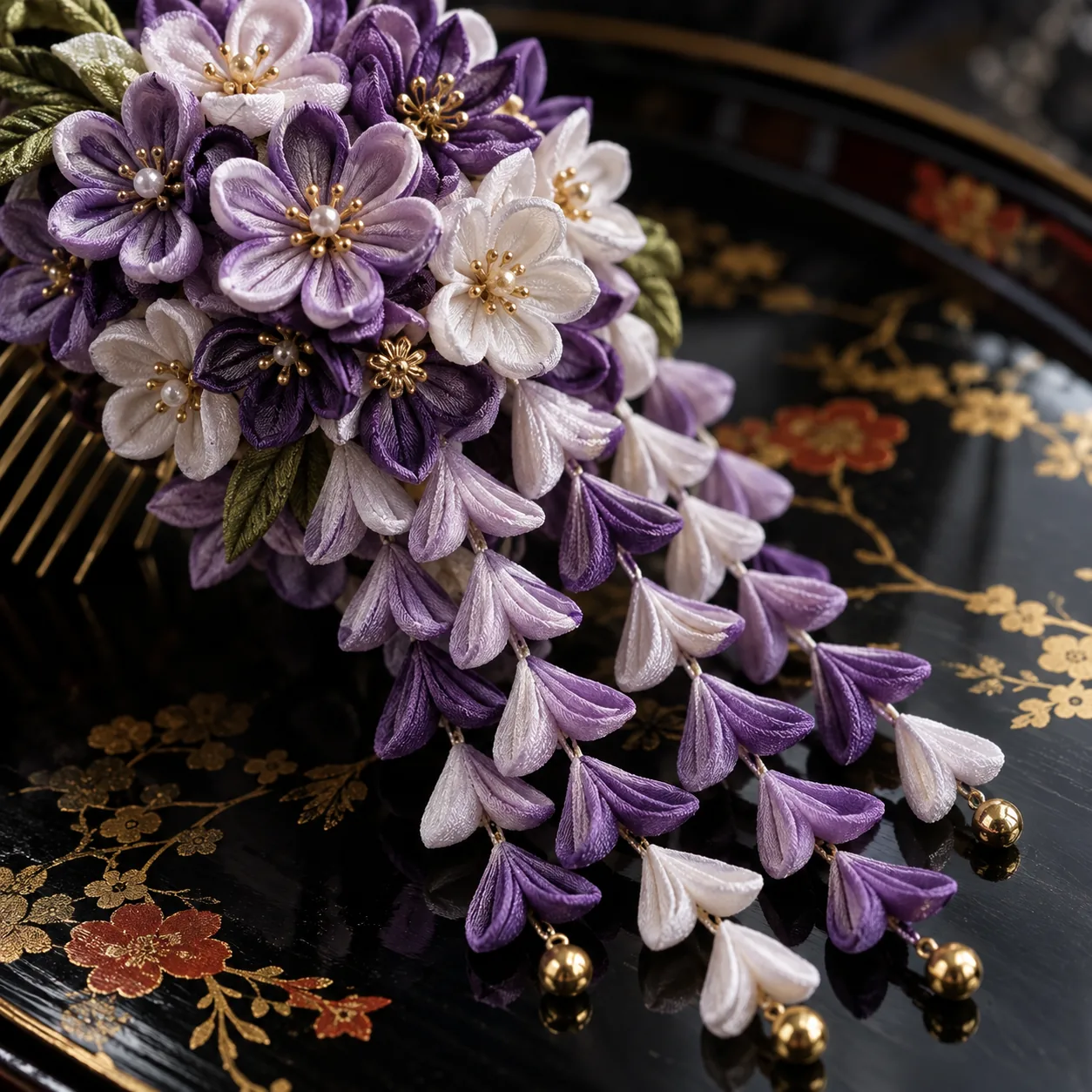
Before a maiko steps out, a kimono has been dyed and sewn with the tucks of a child's garment; an obi of about five metres has been woven, in many cases in the Nishijin district beside Kamishichiken; a kanzashi maker has folded silk into this month's flower; a hairdresser has set her hair to last a week; a dresser has tied the obi; an okobo maker has carved a block of wood and fitted a thong; someone has printed her name slips and, in early summer, her fans.
What is public
The Foundation's pages describe the attire and the basket's contents; kanzashi makers publish the monthly flowers they produce; the Kyoto uchiwa fan house that has made kagai fans since 1872 describes the custom on its own site. What is not public is most of the economics, and this atlas does not guess at it.
Whom we hope to meet
A tsumami-zaiku kanzashi workshop, an okobo maker, and a Nishijin weaver who makes maru-obi for the kagai. Meetings are by their consent; where a maker declines, this note will simply not name them.
Why it belongs in a maiko atlas
Because the culture is not one person in a photograph. It is a supply chain of hands, most of them ageing, and the visitor who understands that will look at the darari obi differently.