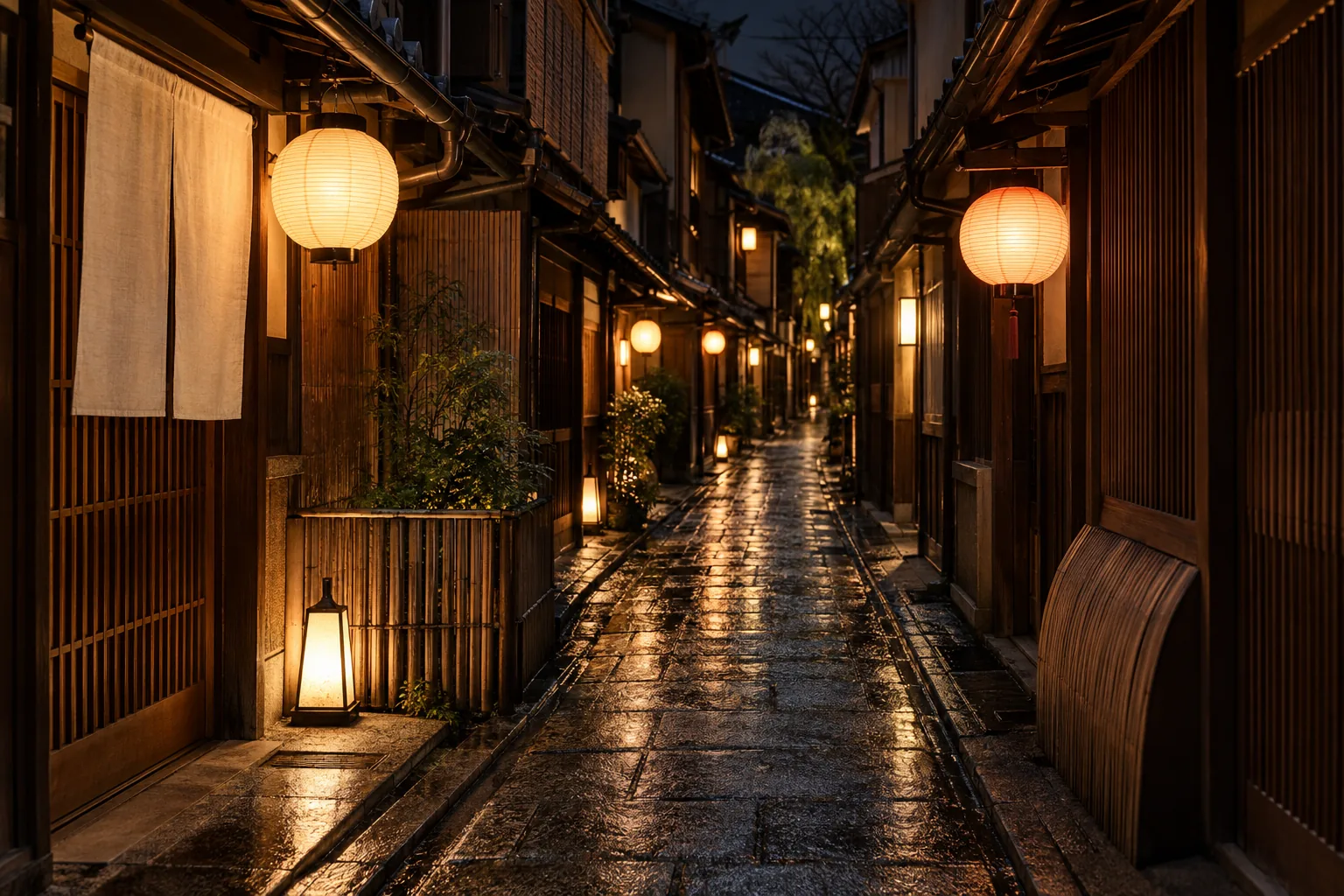
A day's route
Morning at Kamishichiken, when the single lane of teahouses is quiet and the shrine next door is open. Midday across the river to Pontocho, entering from Shijo Bridge and walking north to the tiled Kaburenjo by Sanjo. Afternoon in Miyagawacho, the most residential of the five. Late afternoon in Gion Higashi's short lanes north of Shijo. Early evening on Hanamikoji in Gion Kobu, and then leave: the streets are about to become a workplace.
Public and private
Hanamikoji is a public street and stays open. The small lanes off it in Gion-machi Minamigawa are private property; since 2019 their signs prohibit photography, and since 2024 residents ask tourists not to enter them at all. The 10,000 yen on the signs is a private notice by the district council, not a statutory fine; it is meant as a deterrent, and it is one.
Hours
From about five in the evening, geiko and maiko walk between okiya and ochaya. This is the hour visitors most want to be there and the hour residents most want them to behave. Stand aside. Do not stop anyone. Do not stand in a doorway to frame a picture: it is somebody's front door.
Sounds
Pontocho is two metres wide; Miyagawacho is homes. Voices carry. The kagai is not a theme park, as a resident told reporters in 2024, and it does not close at night.
After the visit
This route will be rewritten with the times we actually walked it, the places we found signs, and anything that has changed on the ground.